Wedding Guest Dress Code Guide: What the Invite Means
A wedding guest dress code guide that turns black tie, cocktail, semi-formal and garden party into the exact length, silhouette and fabric to shop for.
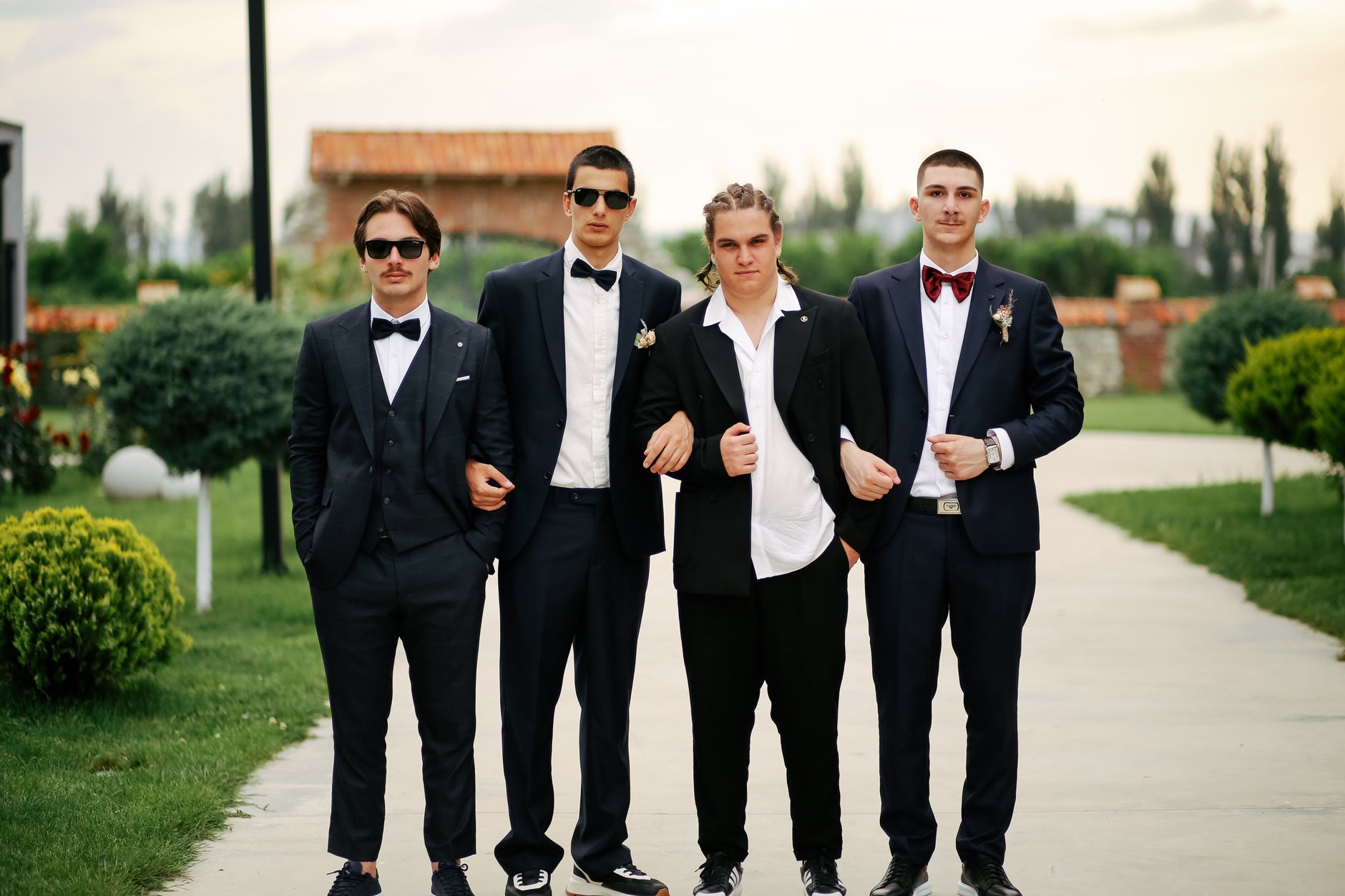
Photo by Photography Maghradze PH on Pexels
The invitation is beautiful. The calligraphy is lovely. And then, down in the corner, in a font the size of a grain of rice: festive cocktail attire. Two words that tell you almost nothing and somehow also imply you'll be the only person who got it wrong.
Here's the short version of this wedding guest dress code guide: the phrase on the invite is really telling you three things — how long the dress should be, how structured the silhouette should look, and how much shine the fabric should carry. Black tie means floor-length and lustrous. Cocktail means knee to midi with some structure. Semi-formal means midi in a matte or lightly textured fabric. Garden party and beach mean midi or maxi in something that moves. Everything else is detail.
That's the cheat sheet. The rest of this is the depth — because the detail is where people actually get stuck, and because "cocktail" at a 6 p.m. hotel ballroom and "cocktail" at a 2 p.m. winery are not the same dress.
How do you decode what the invitation actually means?
Dress codes are shorthand for formality, and formality is mostly a function of three variables the couple already decided: time of day, venue, and what the wedding party is wearing. The dress code phrase is their attempt to compress all of that into two words. Your job is to unpack it back out.
Work through it in this order and you'll rarely miss:
- Read the phrase — that sets your baseline length and fabric.
- Check the ceremony time — anything starting after 5 p.m. shifts one notch dressier than the same words would at noon.
- Check the venue — ballroom and country club push formal; barn, vineyard, backyard and beach pull relaxed.
- Check the season — this governs sleeve length, fabric weight and color more than the dress code does.
- Check the ground — grass, sand, cobblestone and gravel all quietly veto a long hem or a thin heel.
If the invite says nothing at all, default to a midi in a nice fabric. It is the single most forgiving choice in this entire category, and it reads correctly at roughly 80 percent of American weddings.
What does each dress code mean in length, silhouette and fabric?
This is the section to screenshot. Each entry gives you the filters you can actually type into a shopping site.
Black tie
Length: floor. Silhouette: column, A-line or fit-and-flare with a defined waist. Fabric: satin, velvet, crepe, beaded mesh, heavy chiffon.
Black tie is the one code where you should not improvise downward. Floor-length gown, one clear focal point — a draped neckline, a back detail, a bit of beading — and then stop. If a long gown genuinely doesn't work for you, a very formal floor-skimming midi in satin or velvet with serious jewelry is the acceptable substitute. A knee-length dress is not.
Black is entirely fine at a black-tie wedding in the US, despite what your aunt says. Avoid white, ivory, champagne and anything that photographs as white under flash.
Black tie optional / formal
Length: floor or a long midi. Silhouette: anything with structure. Fabric: satin, crepe, velvet, lace over lining.
This is the couple saying "a gown would be lovely, but we won't count it against you." A long dress is the safest read. A dressy midi in a rich fabric with heels and real jewelry is equally correct and often more comfortable for a long evening. Lace works beautifully here, especially if it's lined rather than sheer.
Cocktail attire
Length: knee to midi. Silhouette: fit-and-flare, sheath, or a full 1950s skirt with a nipped waist. Fabric: satin, taffeta, crepe, lace, textured jacquard.
Cocktail is the most common wedding dress code in America and the most misread. People go too casual. The test: would this dress look underdressed next to a man in a suit and tie? If yes, level up. A fitted bodice with a swingy skirt is the workhorse silhouette here — it handles dinner, dancing and a long photo line without demanding you hold your stomach in for six hours.
This is exactly the territory where vintage-inspired cuts earn their keep. The classic 1950s tea-length shape — defined waist, full skirt, hem hitting mid-calf — reads as thoroughly dressed without tipping into gown territory. If that's the silhouette you're after, ZAPAKA's vintage-inspired cocktail and wedding-guest dresses are built around exactly those lines, with lace, tulle and satin versions of the same shape so you can match the fabric to the formality of the venue.
Festive / creative black tie
Length: midi or floor. Silhouette: whatever you like. Fabric: sequins, metallics, velvet, jewel-tone satin.
"Festive" is permission, not a puzzle. It usually appears on holiday-season weddings and means: bring color, bring sparkle, have some fun with it. Emerald, sapphire, burgundy, gold. A sequined midi is the canonical answer. Keep the silhouette simple when the fabric is loud.
Semi-formal / dressy casual
Length: knee to midi. Silhouette: A-line, wrap, sheath. Fabric: crepe, matte satin, lightweight jacquard, good-quality knit.
The dial-back from cocktail. Less shine, less structure, same coverage. A midi wrap dress in a solid color is the uniform here. Save the taffeta for another night; a matte finish is what separates semi-formal from cocktail more than the cut does.
Garden party
Length: midi, occasionally maxi. Silhouette: A-line, tiered, soft fit-and-flare. Fabric: chiffon, cotton sateen, lightweight floral prints.
Daytime, outdoors, usually spring or summer. Florals are genuinely expected rather than merely tolerated. The practical constraint is the ground: grass eats stiletto heels. A block heel or a dressy flat is the move, and a midi keeps the hem off wet lawn.
Beach / destination formal
Length: midi or maxi. Silhouette: flowing, unstructured. Fabric: chiffon, georgette, linen blends, anything breathable.
Heavy satin in humidity is a long afternoon. Look for a lining that isn't clingy, and avoid a hem that drags in sand. Bring a wrap — beach ceremonies at sunset get cold faster than anyone expects.
Barn, vineyard and "elevated casual"
Length: midi. Silhouette: A-line or wrap. Fabric: anything with texture — eyelet, jacquard, crepe.
These venues have gravel, uneven flooring and often no coat check. Midi plus block heel plus a dress you can sit down in on a hay bale without ceremony. Casual does not mean a sundress you'd wear to brunch; it means the formality of a nice dinner.
What should you check on the product page before buying?
Dress codes tell you what to look for. Product pages tell you whether you're actually getting it. A few field notes worth applying before you hit buy:
- Stated length in inches from the shoulder — "midi" means anywhere from 28 to 48 inches depending on the brand. Find the number, then measure a dress you already own.
- Model height — almost always listed. If she's 5'10" and you're 5'3", her midi is your maxi.
- Lining — a lace or chiffon dress without a full lining will need a slip you don't own yet. Look for "fully lined."
- Closure — a back zipper you can't reach alone matters if you're getting ready in a hotel room by yourself. Side zips and stretch bodices are friendlier.
- Fabric composition — polyester satin reads shinier in photos than silk-blend crepe. Shiny is right for evening, wrong for a noon garden ceremony.
- Pockets and boning — boning holds a strapless bodice up and saves you a night of tugging.
- Return window and shipping time — order early enough to allow one exchange. This is the step everyone skips.
What colors should a wedding guest avoid?
The firm one: no white, ivory, cream, champagne or blush-that-reads-white. That's the whole rule that everybody agrees on.
After that it gets regional and personal. All-black is widely accepted in the US, especially for evening weddings. Red is fine at most weddings, though some families read it as attention-seeking — if you're unsure, a deep burgundy carries the same richness with none of the debate. Avoid matching the bridesmaid color if you know it; showing up in the exact shade of sage is a small, avoidable awkwardness. And if the couple has named a palette on the website, treat it as a suggestion, not a requirement, unless they've explicitly asked guests to wear it.
One more: check how the fabric behaves under flash. Pale gold, silver and very light gray can photograph nearly white. If you're buying pale, buy it with some warmth or saturation in it.
Common questions
What does cocktail attire mean for a wedding guest?
Cocktail attire means a knee-length to midi dress with some structure — a fitted bodice, a defined waist, or a sheath cut — in a dressy fabric like satin, crepe, lace or taffeta. It's dressier than office wear and less formal than a gown. Pair it with heels and real jewelry. If it would look underdressed beside a man in a suit and tie, go one level up.
Can a wedding guest wear a long dress to a cocktail-dress-code wedding?
Usually yes, and it rarely looks wrong. A floor-length dress in a simple fabric reads as elegant rather than overdressed at most cocktail weddings, especially evening ones. The exception is a daytime outdoor wedding, where a maxi in heavy satin can look mismatched to the setting. If you want the safest call at cocktail, a midi splits the difference perfectly.
Is it okay to wear black to a wedding?
In the United States, yes. Black is standard for evening weddings, black-tie events and city venues, and it hasn't been considered a faux pas for decades. Lighten the overall look with metallic or colored accessories if you're worried it skews somber, and lean toward a lighter color for a daytime outdoor wedding, where black can feel heavy in bright sun.