Prom Dress Fabric Guide: Lace, Tulle or Satin?
A prom dress fabric guide to lace, tulle and satin — how each one moves, breathes and photographs, plus what to check before you click buy.
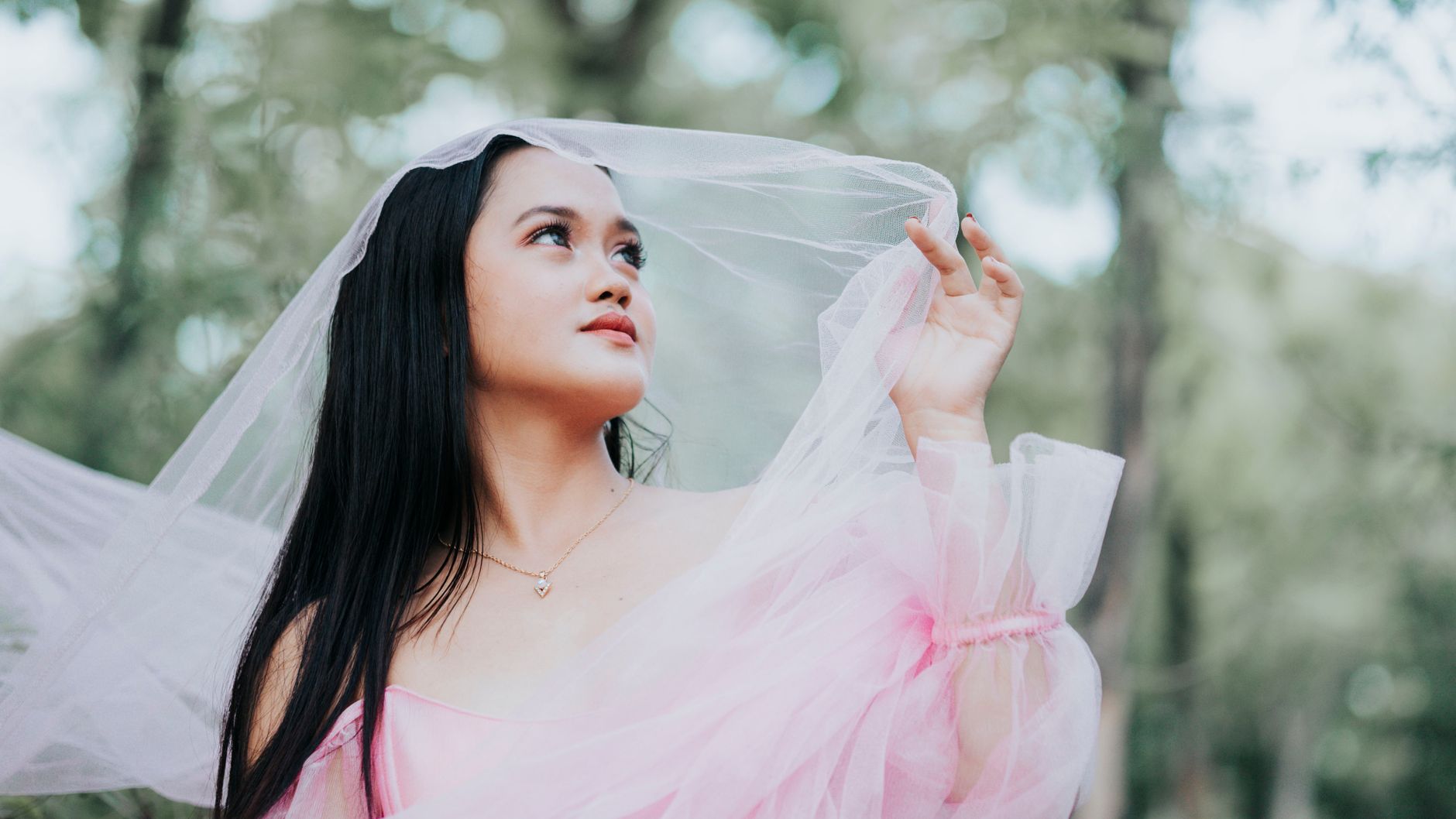
Photo by Art Laurence Luzon on Pexels
You can fall in love with a dress on a screen and still spend the whole night tugging at it. That gap almost always comes down to one thing shoppers skip: fabric. Color gets debated in group chats, price gets compared across five tabs, and the material — the thing that decides whether you can sit down, dance, breathe and look good under a flash — gets a one-word mention on the product page. This prom dress fabric guide is here to fix that.
The short answer: lace reads as texture and detail and photographs beautifully up close, but it can scratch and it rarely stretches. Tulle gives you volume and movement with almost no weight, and it catches light gorgeously in wide shots, though it wrinkles into crush lines and snags on everything. Satin is smooth, heavy and dramatic in photos, but it shows every ripple, every seam and every fingerprint of humidity. None is best. They just fail in different directions, and knowing which failure you can live with is the whole decision.
How does prom dress fabric change how photos turn out?
Cameras don't see fabric the way your bedroom mirror does. A phone flash at close range is a small, hard light source, and hard light loves texture and punishes shine.
Satin is the most reactive. Its finish bounces light back in concentrated highlights, which is why satin gowns look sculptural and expensive in editorial photos taken with big soft lighting — and why a direct flash in a dim gym can blow out a white-hot streak down your hip. The heavier and more matte the satin (look for "matte satin," "duchess satin," or "crepe back satin" on the product page), the more forgiving it is. Slippery, thin charmeuse-style satin is the one that mirrors light hardest.
Lace does the opposite. It's all micro-shadow, so it reads as depth rather than glare. Close-up portraits — the bodice, the sleeves, a hand on a shoulder — are where lace earns its money. In a full-length group shot from fifteen feet away, fine lace can blur into a flat panel, so lace that has a contrast lining or corded, dimensional motifs holds up better at distance.
Tulle is the wide-shot fabric. It picks up ambient light through its layers, softens edges, and gives you actual movement to photograph — the twirl shot exists because of tulle. Glitter tulle and sequin-flecked tulle sparkle under flash in a way that's either magic or chaos depending on how much of it there is. Up close, plain tulle is fairly boring, which is why most designs pair it with a decorated bodice.
A quick note on color and fabric together
The same color behaves differently across materials. Emerald satin looks jewel-bright and almost wet; emerald tulle looks misty and pale because you're seeing air through fibers; emerald lace looks darker and moodier because of all those tiny shadows. If you picked a color from a swatch photo in one fabric, don't assume it translates. Look at the listing photos of that exact material.
Which fabric is most comfortable for a full night of dancing?
Comfort is three separate questions: does it breathe, does it move with you, and does it touch your skin kindly?
- Breathability. Tulle is mostly air, so the skirt itself is cool — but tulle gowns usually carry three to six layers plus a lining, and that stack traps heat. Lace is open by nature, though it's almost always fully lined, so you're really wearing the lining. Satin, especially polyester satin, is the least breathable of the three; it sits flat against skin and holds warmth.
- Movement. Woven satin and most lace have little to no stretch unless they're blended with spandex. Tulle skirts move freely no matter what, so the question is only the bodice.
- Skin feel. Lace can be soft (chantilly, embroidered mesh) or genuinely scratchy (corded and guipure styles), particularly at the neckline and under the arms. Tulle netting on bare skin is the classic itch complaint. Satin is the kindest to touch and the most likely to cling on a humid night.
The practical fix for most of this is lining. A gown lined in a smooth woven — or a tulle skirt with a full satin underlayer — solves both itch and transparency. On the product page, hunt for the word "lined," "fully lined" or "with lining." If a listing never mentions lining at all, assume there isn't much.
The sitting test nobody does
You'll spend more of the evening seated than dancing. Stiff satin and structured lace bodices with boning dig in when you fold forward at a dinner table. Tulle compresses — you'll sit on a small mountain of it, which is fine, but it means the skirt rises and you want enough length that it isn't at your knees when you sit. If a dress has a defined waist seam, check that the waist actually hits your waist; a seam sitting above or below your natural waist is where most "it pinches when I sit" complaints come from.
What should you check on the product page before buying?
You're shopping from photos, so the written details do the heavy lifting. Here's what's worth reading twice:
- The fiber content. "100% polyester" covers nearly all satin and tulle formalwear and is completely normal at this price tier — it just tells you it won't breathe like natural fiber. Any mention of spandex or elastane means stretch, which changes your size decision.
- Lining and layers. Number of tulle layers, whether the bodice is lined, whether there's a built-in bra or cups.
- Closure type. Invisible zipper, corset lace-up back, or both. A lace-up back buys you two to three inches of adjustment in either direction and is genuinely useful when you're buying without trying on. A plain zipper does not forgive.
- Boning and structure. Boned bodices stay put on strapless designs. Unboned strapless is a night of hiking it up.
- Length and how it's measured. Most listings give floor length for someone around 5'6" without heels. If you're shorter or taller, or wearing four-inch heels, do that math before you order.
- The flat measurement chart, not the size letter. Bust, waist and hip in inches beat "size 8" every time. Compare against a dress you already own that fits.
- Care instructions. "Dry clean only" is common for satin and lace. Tulle usually can't be ironed at all — only steamed from a distance.
If you like the vintage end of formalwear — lace bodices, tea-length skirts, 1950s silhouettes that are easier to move in than a column gown — ZAPAKA's prom and party dresses are a good place to see these fabrics side by side on similar shapes, which makes the differences much easier to judge than flipping between five different brands.
Which fabric suits your silhouette and your night?
Choose lace if…
You want detail that reads in portraits, you like sleeves or an illusion neckline, or you want something that doesn't look like every other dress in the room. Lace over a contrasting lining (black lace on champagne, for example) gives depth that a single-color gown can't. Skip it if you run hot in anything lined, or if you know textured fabric bothers your skin.
Choose tulle if…
You want volume, twirl and the big romantic silhouette. Tulle is also forgiving through the hips because it floats rather than clings. Ball gowns and A-lines live here. Skip it if you're traveling with the dress — tulle arrives creased, and getting crush lines out takes steam and patience — or if you'll be in tight spaces where a wide skirt is a hassle.
Choose satin if…
You want the sleek, modern, high-drama look: slip dresses, bias-cut columns, sharp mermaid shapes. Satin drapes like liquid and photographs as pure shape. Skip it if you'd rather not think about smoothing lines all night, or if the venue is hot — satin and heat are not friends.
Blends and combinations
Plenty of gowns solve this by mixing: a lace or sequined bodice on a tulle skirt, satin bodice with tulle overlay, or lace appliqué scattered across tulle. These hybrids are usually the safest buy, because you get close-up detail where the camera lingers and movement where it counts.
How do you keep the dress looking good all evening?
A few field notes from the practical side of formalwear:
- Hang the dress the moment it arrives. Don't leave it folded in the box until the day before.
- Steam, don't iron, anything with tulle, sequins or delicate lace. A handheld steamer held a few inches away and moved constantly does the job.
- Satin wrinkles from sitting in a car. Consider changing at the venue or laying the skirt flat across the back seat rather than folding it.
- Take a small safety pin, double-sided fashion tape and a lint roller. Tape handles a shifting neckline; the lint roller matters more than you'd think on dark satin.
- Order early enough to allow for a hem or a bodice nip. Alterations are what turn an online dress into one that looks made for you, and tailors book up around prom season.
- Keep the packaging until you've tried it on. Return windows are shorter than you remember.
Common questions
Is satin or tulle better for prom photos?
Both photograph well, differently. Satin gives sleek, sculptural shapes and strong highlights — excellent in soft light, risky under a harsh direct flash, which can create hot white streaks. Tulle reads soft and dimensional, catches ambient light through its layers, and gives you real movement for twirl shots. For close-up portraits, satin or lace wins; for full-length and group photos, tulle.
Does a lace prom dress itch?
It depends on the lace type and the lining. Soft embroidered mesh and chantilly lace feel fine against skin, while corded or guipure lace has raised, firmer threads that can scratch at the neckline, armholes and waist seam. Most lace gowns are fully lined, so the only bare-skin contact is at the edges. Check the listing for "fully lined" before ordering.
What prom dress fabric is coolest to wear in a hot venue?
Fabric with the fewest layers against your skin. A lightly lined lace or a single-layer tulle skirt lets more air move than heavy polyester satin, which sits flat and traps warmth. Count layers on the product page: a six-layer tulle skirt plus lining is warmer than a simple satin slip. Sleeveless and open-back designs also make a bigger difference than the fabric itself.
If you're still narrowing things down, it's worth browsing a few dresses in each fabric on the same body shape rather than deciding from a mood board — the flock tends to find the right dress faster that way. Take your time, read the measurement chart, and happy hunting.