Prom Dress Fabric Guide: Lace, Tulle or Satin?
A prom dress fabric guide to lace, tulle and satin: how each one moves, breathes, wrinkles and photographs under flash, plus what to check before buying.
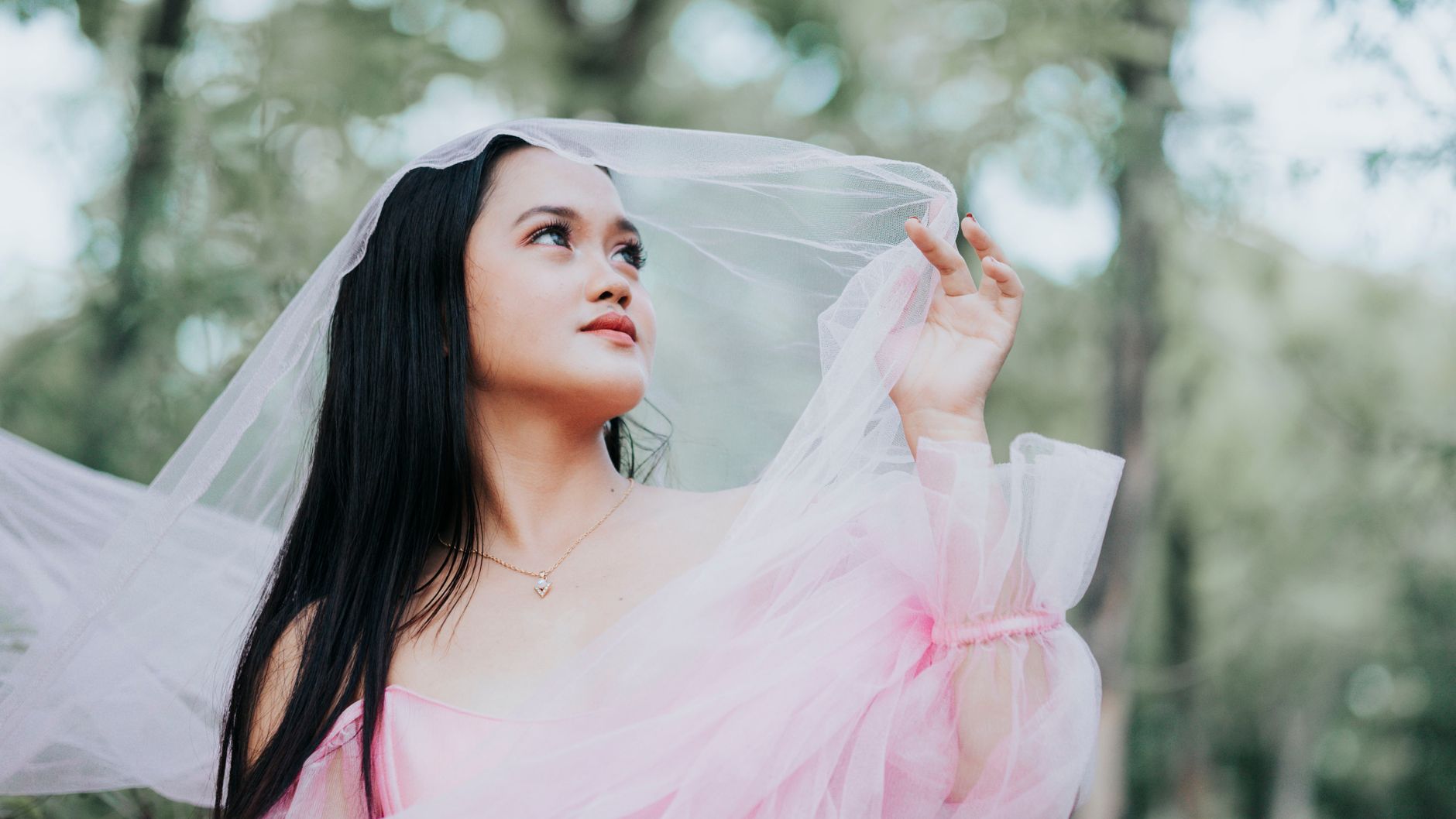
Photo by Art Laurence Luzon on Pexels
You can fall in love with a dress on a product page and still spend the whole night tugging at it. Color and price get all the attention, but any honest prom dress fabric guide starts somewhere else: the material decides whether you can sit through dinner, dance for three hours, and still look like yourself in the photos.
Short answer, if you only read this far. Lace reads as texture and detail, photographs beautifully up close, and depends almost entirely on the lining underneath for comfort. Tulle gives you volume and movement without weight, hides a lot, and loves a wide shot — but it snags and it can feel scratchy where it touches skin. Satin is the smooth, liquid one: gorgeous drape, strong color payoff, and the least forgiving fabric in the room when it comes to lumps, creases and camera flash. Everything after this is how to pick between them for your body, your venue and your camera roll.
What does each prom dress fabric actually do?
Fabrics behave differently in three ways that matter on prom night: how they hang, how warm they are, and how they bounce light.
Lace
Lace is a surface, not a structure. It's almost always laid over something else — satin, mesh, crepe — and the fabric underneath is what determines fit, stretch and breathability. Corded or Chantilly lace has a soft, fine pattern that photographs as delicate shadow. Guipure (sometimes sold as Venice lace) is heavier, with bold motifs and no mesh between them, so it reads sculptural even from the back of a dance floor.
Lace is the most forgiving fabric for close-up photos because the pattern breaks up light. It's the least forgiving against skin if the lining is skimpy — scalloped edges at the arm and neckline can rub over several hours. On a product page, look for the words "fully lined" and check whether the lace is stretch lace or rigid. Rigid lace with a non-stretch lining means you want your true measurements, not your optimistic ones.
Tulle
Tulle is net. Its whole job is to hold air. Soft bridal-weight tulle falls in gentle clouds; stiffer nylon tulle stands away from the body and holds a defined shape. Layer count matters more than anything else — a three-layer skirt moves, an eight-layer skirt makes an entrance and takes up most of a car's back seat.
Practical notes: tulle breathes well because it's mostly holes, which makes it a sensible pick for a warm gym or a spring ballroom. It also catches on rings, bracelets, zippers and chair hardware, and a pulled thread doesn't un-pull. Glitter tulle sheds. Look for a soft lining layer at the hip and thigh, where stiff net does the most scratching.
Satin
Satin is a weave, not a fiber, which is why the quality range is enormous. Polyester charmeuse is shiny and slippery and inexpensive. Duchess or mikado satin is heavier, more matte, and holds an architectural shape — think clean column gowns and sharp bow details. Stretch satin with a few percent elastane is the comfortable middle ground and the one most prom styles use now.
Satin delivers the richest color of the three. Deep jewel tones look deeper, and a simple silhouette looks expensive. The trade-off is honesty: satin shows every seam line, every bit of underwear, and every crease from a four-hour drive. It's also the warmest of the three, especially unlined polyester.
Which fabric photographs best under flash?
Prom photos are usually taken in bad light with a direct flash — a hotel lobby, a backdrop in a school hallway, a phone at arm's length. That's a specific kind of lighting, and fabrics respond to it very differently.
- High-shine satin can blow out under a direct flash. The flash hits the smooth surface and bounces straight back, turning a rich emerald into a bright white streak across the hip or bust. Matte and heavier satins handle it far better.
- Tulle goes slightly translucent under flash, which looks dreamy in a full-length shot and can be surprising in a close-up — the lining underneath becomes visible as a shape. If the skirt is pale, check that the lining is the same tone, not a contrasting nude.
- Lace is the flash-friendliest of the three. Texture scatters light, so you get detail instead of hot spots. It's also the only one of the three that still looks interesting in a photo cropped above the waist.
- Sequins and glitter overlays behave like tiny mirrors. Stunning in motion and in video, chaotic in a still photo with flash.
Here's the simple field test before you commit: find a photo of the dress taken with a flash, not just the soft studio shots. Many stores now include customer photos, and those are shot in exactly the conditions you'll be photographed in. A dress that looks good in an unflattering customer photo will look good in yours.
How do I choose based on comfort and the venue?
Comfort on prom night is mostly about four things: heat, sitting, walking and bathroom logistics. Nobody puts that on a product page, so you work it out from the description.
Heat. Polyester satin lined in polyester is the warmest combination. Tulle is the coolest. Lace sits in the middle and depends on its lining. If your venue is a packed gym in May, weight matters more than you think — a heavy mikado gown is a long evening.
Sitting. Satin creases where you fold it, and those creases stay for the rest of the night. Tulle and lace recover almost instantly. If there's a sit-down dinner before the dancing, that's a real argument for texture over shine.
Walking and dancing. Check the slit, the hem length relative to your shoe height, and whether the skirt has a lining that moves with it. Stiff tulle with a narrow lining can make long strides awkward. A column satin skirt with no slit limits your stride to about the width of the hem.
Logistics. Invisible zippers on satin can be fragile. Corset backs with lace-up panels adjust generously but need a second pair of hands. Built-in cups mean you're not fighting strapless bra straps all evening — worth searching the description for.
If you want to compare the same silhouette across several fabrics, a specialist helps. ZAPAKA's lace and vintage-inspired formal dresses lean into structured bodices, tulle skirts and 1950s shapes, with the fabric and lining usually spelled out in the listing — which is exactly the detail you need to make this call. For something closer to current trends, often in stretch satin and slip silhouettes, Princess Polly's formal and occasion dresses drop new styles constantly and keep returns straightforward, which matters when you're ordering a fit you can't try on first.
What should I check on the product page before buying?
Here's the short list our flock keeps coming back to. Most of these are one Ctrl+F away.
- Fiber content. "100% polyester" tells you it will be warm and wrinkle-resistant. Any elastane at all means some give. Silk content means dry clean only and a higher price.
- Lining. "Fully lined" versus "partially lined" versus silence. Silence usually means minimal.
- Built-in bra cups or boning. Changes what you need underneath, and changes how a strapless bodice stays up.
- Closure type. Zipper, corset lacing, or a combination. Lacing buys you a size of adjustment in either direction.
- Model height and size worn. Lets you translate the hem length to your own frame. A floor-length gown on a 5'10" model is a puddle hem on someone 5'4".
- Measurement chart in inches, not just S/M/L. Formal sizing runs smaller than everyday sizing across most of the market.
- Care instructions. Steam-only is common for tulle. Satin often can't take direct iron heat.
- Return window and condition. Order early enough that you can send one back and try another.
A quick rule of thumb
Want drama in wide shots and a cool evening? Tulle. Want detail that survives close-ups and a flash? Lace. Want a sleek, grown-up silhouette and the richest color? Satin — and go matte or stretch rather than high-shine charmeuse if you can.
Common questions
Which prom dress fabric is least likely to wrinkle?
Tulle is the most wrinkle-resistant because it's net — it springs back almost immediately. Lace recovers well too, especially guipure. Polyester satin resists wrinkles in storage but creases sharply where you fold it while sitting, and those creases tend to stay. Heavier mikado and duchess satins hold shape better than lightweight charmeuse.
Is satin or tulle better for a warm venue?
Tulle is cooler. It's an open net, so air passes through the skirt even when there are several layers. Satin, especially polyester satin with a polyester lining, traps heat against the body. If your prom is in a crowded gym or a late-spring ballroom, tulle or a lace-over-mesh bodice will feel noticeably lighter over a long evening.
How far in advance should I order a prom dress online?
Six to eight weeks is a comfortable window. That leaves room for standard shipping, one exchange if the fit is off, and a trip to a tailor for hemming — most floor-length gowns need hemming to your actual shoe height. If you're ordering from a made-to-order listing rather than stock, add a few more weeks and check the stated production time.
Browse the lace, tulle and satin options when you have a free evening and your measuring tape handy. No rush — the right fabric is usually the one you forget you're wearing by the second song.