Prom Dress Fabric Guide: Lace, Tulle or Satin?
A prom dress fabric guide to lace, tulle and satin — how each one moves, breathes, wrinkles and photographs, plus what to check before you order.
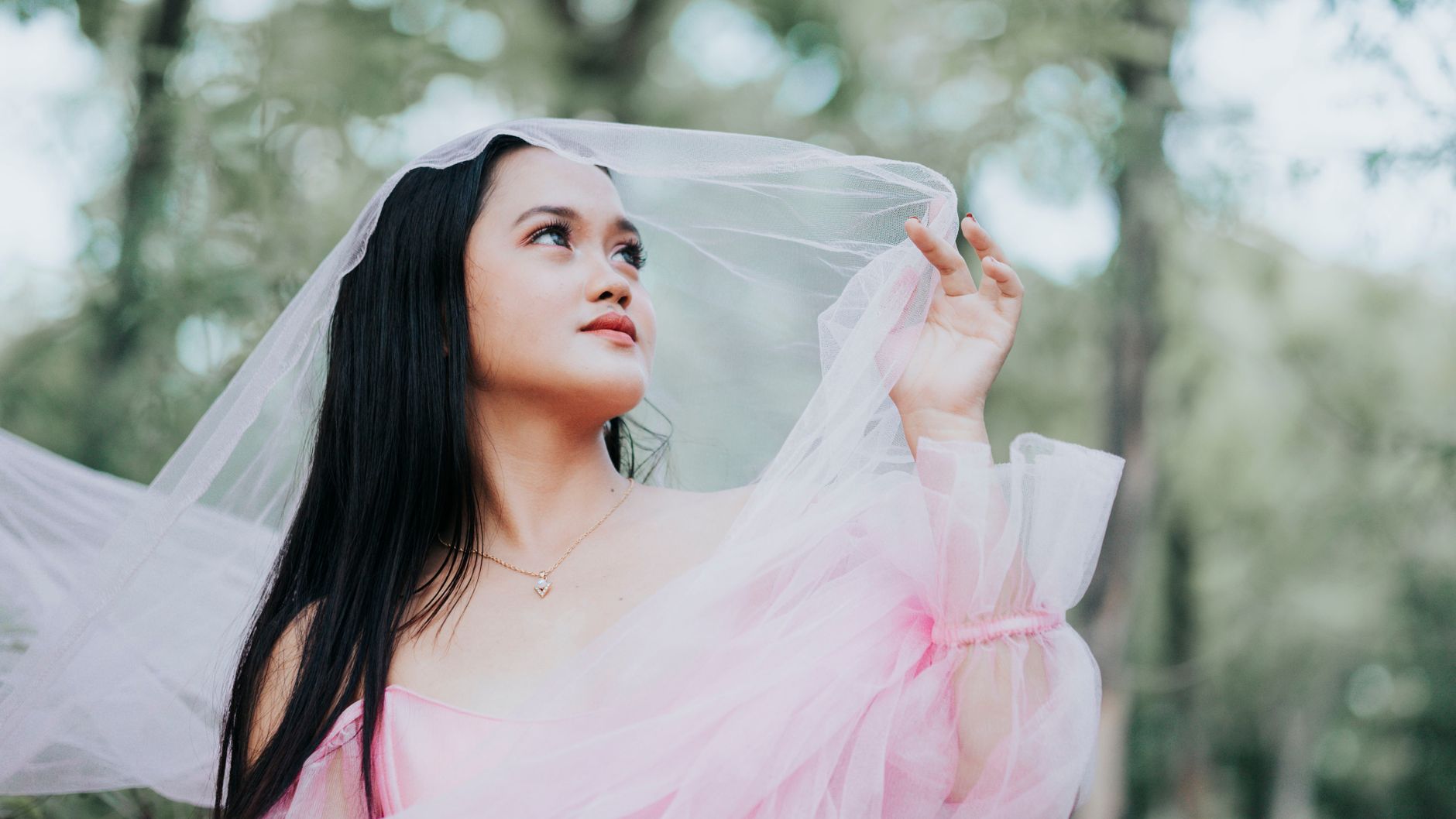
Photo by Art Laurence Luzon on Pexels
You can fall in love with a dress on a product page and still spend the whole night tugging at it. Color gets all the attention, price gets the rest, and the thing that actually decides how the evening goes — the fabric — barely gets a glance. This prom dress fabric guide is the part most shoppers skip: how lace, tulle and satin behave once there's a body inside them, a dance floor under them and a camera flash pointed at them.
The short answer, if you only read this far: satin photographs like liquid and reads expensive, but it shows every line and every wrinkle. Tulle gives you volume and movement with almost no weight, hides more than it reveals, and is the most forgiving in warm rooms. Lace adds texture and detail that holds up in close-up photos, but it lives or dies by the lining underneath it. Everything below is how to tell which one suits your night.
How does each prom dress fabric actually photograph?
Prom photos happen in three very different lighting situations, and fabrics don't treat them equally.
Satin is reflective by design. In soft window light or golden hour, that sheen is the whole point — it pools, it catches highlights, it looks like something out of an old film still. Under a direct flash, though, bright satin can blow out into a white patch, and heavily saturated colors can look flatter than they do in person. Matte satin and crepe-back satin are the compromise: they keep the weight and the drape but reflect more gently.
Tulle does something satin can't — it reads as depth. Layer after layer, it photographs as soft shadow and dimension, and it's the fabric that makes a twirl look like a twirl in a still image. It also behaves under backlight: stand with a window or string lights behind you and a tulle skirt glows at the edges. The tradeoff is that tulle can look busy in a tight headshot, where you're mostly seeing bodice anyway.
Lace is the close-up fabric. All that texture — the scallops at the hem, the appliqué on a sleeve, the pattern across a neckline — is what cameras pick up from three feet away. Corded and beaded laces catch light along the raised threads and give a photo somewhere for the eye to land. From across a ballroom, though, fine lace can visually disappear into whatever lining sits beneath it, which is exactly why the lining color matters so much.
The color-plus-fabric interaction nobody warns you about
The same color behaves differently in different fabrics. Black satin reads sharp and graphic. Black tulle reads soft and a little romantic. Pale blue satin can look almost silver under flash, while pale blue tulle stays pastel. If you've seen a color you love in one fabric and you're ordering it in another, assume it will shift a shade or two in the photos — check customer images on the product page, which are usually taken in normal room lighting rather than a studio.
Which fabric is most comfortable for a full night?
Prom is four to six hours of standing, sitting in a car, eating, dancing and standing some more. Comfort comes down to three things: breathability, stretch and weight.
- Breathability: Tulle wins easily. It's an open mesh, so air moves through it even when there are six layers. Satin — especially polyester satin, which is most of what's on the market — traps heat against the skin. Lace itself breathes, but the lining under it usually doesn't.
- Stretch: Look for "stretch satin," "scuba," or any fabric listed with 3–5% spandex or elastane. A non-stretch woven satin has to fit almost perfectly to be comfortable, because there's no give at all when you sit down.
- Weight: A heavy satin ballgown with a built-in crinoline is a workout. A tulle skirt of the same volume is a fraction of the weight. If you want a big silhouette and you plan to dance, tulle is the practical choice.
One more comfort note that applies to all three: boning. A lightly boned bodice helps a strapless dress stay up without you thinking about it. Heavy boning plus a non-stretch fabric is where the night goes wrong around hour three. Product pages often list this — look for "boned bodice" or "built-in bra cups" in the description.
What should you check on the product page before ordering?
Online dress listings bury the useful details below the photos. Here's the checklist worth running through every time:
- Fiber content. "Polyester satin" and "silk satin" are completely different animals in price, drape and heat. Most prom satin is polyester, which is fine — just know it won't breathe like silk.
- Lining. Is the dress fully lined, partially lined, or unlined? Unlined lace needs a slip. Fully lined tulle means the skirt won't itch at the knees.
- Closure type. A hidden back zipper is standard. A corset back with lace-up panels gives you several inches of adjustment, which is genuinely useful if you're ordering ahead or between sizes.
- Length and model height. Many listings tell you the model's height and which size she's wearing. That single line is the best length predictor you'll get.
- Stretch. Listed as a percentage, or described as "no stretch" / "slight stretch." Non-stretch means order for your largest measurement.
- Care instructions. Dry-clean-only matters if you're borrowing, reselling, or wearing it again.
- Return window. Order early enough that the window is still open after you've tried it on with shoes.
Where to browse by fabric
If you want to shop the fabric first and the color second, two of the stores in our flock make that easy. ZAPAKA's lace and vintage-inspired formal dresses lean into texture — 1950s silhouettes, lace bodices, tulle skirts and the kind of structured waistlines that photograph well from the front and the side. It's a good place to start if the dress you have in your head involves detail rather than pure sheen. For a more current, trend-led take — slip shapes, satin minis and maxis, the silhouettes that turn up on social feeds — Princess Polly's party and formal dress range drops new styles constantly and has a straightforward returns setup, which matters when you're buying something you can't try on first.
How do lace, tulle and satin hold up to wrinkles, snags and spills?
This is the unglamorous section, and it's the one that saves prom photos.
Satin creases, and it creases visibly. A car ride will put fold lines across the lap of a satin skirt, and they show in photos. Hang the dress the moment you arrive, and steam rather than iron — direct heat on polyester satin can leave a permanent shiny mark. Satin also shows water spots, so be careful with drinks and with over-enthusiastic steaming.
Tulle barely wrinkles at all, which is its quiet superpower. It can get crushed in a garment bag, but it bounces back by hanging. Its weakness is snagging — rings, bracelets, watch clasps and chair hardware all catch it. A small snag in a middle layer is usually invisible; one in the top layer is not.
Lace sits in between. It resists creasing but the raised threads and any beading can catch on jewelry, zippers and velcro. If your lace is beaded, check the stitching along the hem and seams when the dress arrives, since that's where loose threads usually start.
Pack a tiny kit: a few safety pins, a travel lint roller, double-sided fashion tape and clear nail polish for a run in a lining. It weighs nothing and it has saved countless evenings.
Which fabric fits your night best?
A quick field guide, since every prom is a little different:
- Outdoor photos, warm venue, lots of dancing: tulle skirt with a fitted bodice. Light, breathable, forgiving, and it moves on camera.
- Sleek, grown-up, lots of posed photos: matte or crepe-back satin in a slip or column shape. Order for fit and plan on seamless undergarments.
- Vintage or detail-forward look: lace over a lined bodice, ideally with a defined waist. Pick a lining color that contrasts the lace enough to show the pattern.
- Can't decide: a combination dress — lace bodice, tulle skirt, satin sash — is extremely common in formalwear for exactly this reason, and it gives you all three textures in one photo.
Whichever way you lean, order earlier than feels necessary. Alterations take time, returns take time, and the only genuinely stressful version of this is the one that arrives three days out. Browse the dress stores we've spotted above when you've got a weekend to think it over — the fabric line in the description is the one worth reading twice.
Common questions
Is satin or tulle better for a prom dress?
It depends on your night. Satin drapes close to the body, reads sleek and polished, and photographs beautifully in soft light — but it traps heat and creases easily. Tulle is lightweight, breathable and adds volume without weight, making it the easier choice for a warm venue or a lot of dancing. Many dresses combine both: a satin bodice with a tulle skirt.
Does lace make a prom dress itchy?
Good-quality lace over a smooth lining is comfortable all night. Discomfort usually comes from unlined lace sitting directly on skin, or from stiff, heavily corded lace at the neckline and underarms. Check the product page for "fully lined," and if the dress is unlined, plan on a slip. A quick pass along the seams when it arrives will tell you how the trim is finished.
Which prom dress fabric wrinkles the least?
Tulle wrinkles the least — it's an open mesh that recovers its shape simply by hanging. Lace is next, resisting creases though it can snag on jewelry and zippers. Satin wrinkles most visibly, especially after sitting in a car, and the fold lines show in photos. Hang satin as soon as you arrive and steam rather than iron it, since direct heat can mark polyester satin permanently.