Prom Dress Fabric Guide: Lace, Tulle or Satin?
A prom dress fabric guide to lace, tulle and satin — how each one moves, breathes, wrinkles and photographs, plus what to check before you buy.
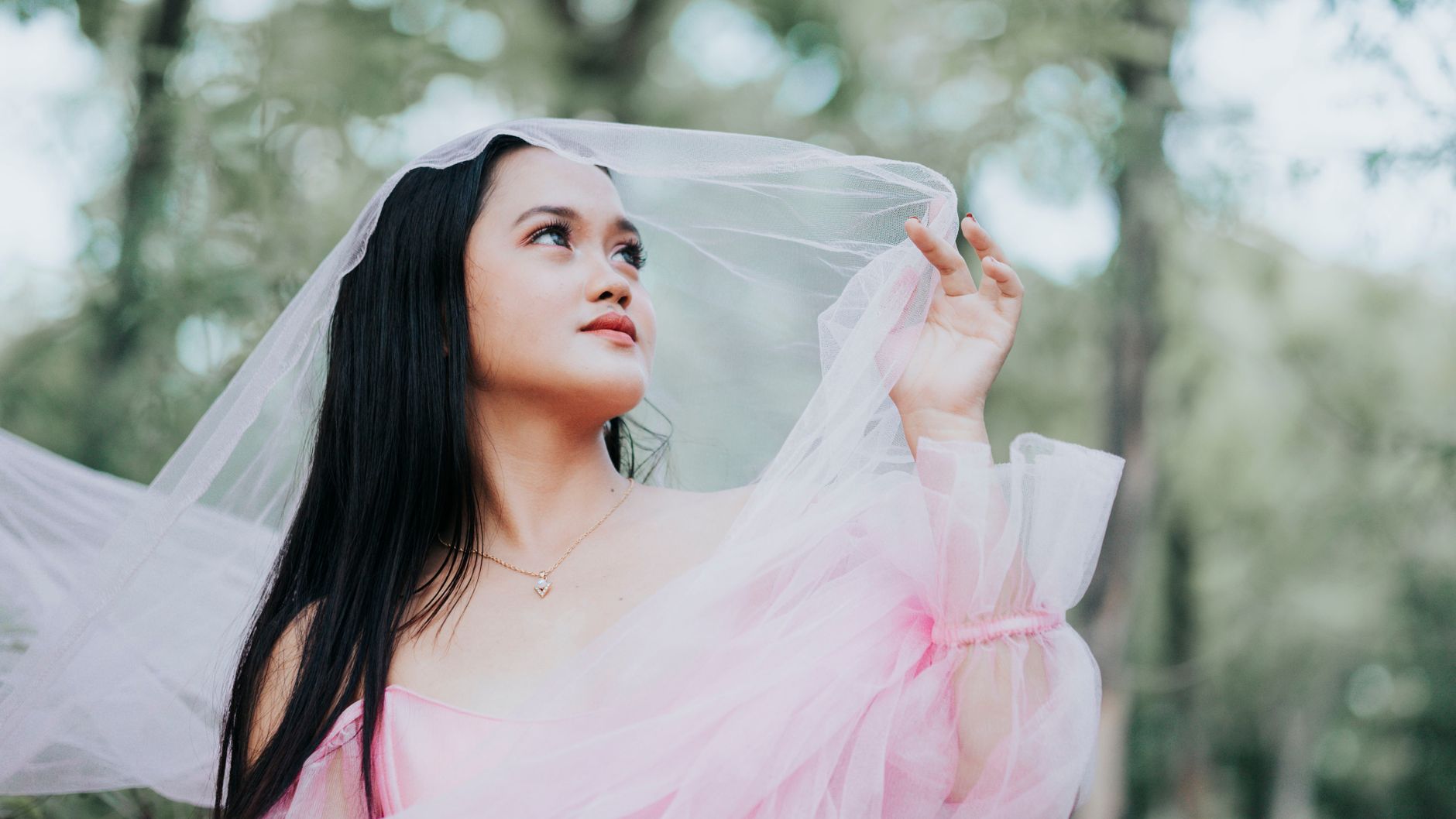
Photo by Art Laurence Luzon on Pexels
You can pick a color from a thumbnail. You cannot pick a feel. That is the gap most shoppers fall into: two dresses look nearly identical on screen, and four hours into the night one of them is still floating while the other has turned into a warm, creased sleeve. Any useful prom dress fabric guide starts there — not with the shade, but with the cloth, because fabric decides how a formal dress moves, how warm it gets, how it wrinkles in a car seat, and how it behaves when a phone flash hits it.
Short answer, if you only read this far: satin is sleek, drapes heavy and reflects light, so it photographs with a glow but shows every lump and crease. Tulle is airy and forgiving, adds volume without weight, and photographs soft — but it can scratch and it crushes if you sit on it wrong. Lace sits in the middle: textured, breathable, flattering in close-up shots, and the most variable in quality from one dress to the next. Everything below is how to tell which one suits your night, your body and your camera roll.
What does each prom dress fabric actually feel like to wear?
Dresses get judged on a hanger and lived in for six hours. Here is the honest wear profile of each.
Satin: smooth, structured, and warmer than you expect
Satin is a weave, not a fiber — which is why "satin" can mean anything from featherlight polyester charmeuse to heavy duchess satin with the stiffness of card stock. The common thread is a glossy face and a matte back.
- Movement: it falls rather than floats. A bias-cut satin slip pours down the body; a duchess satin ball gown holds its shape and barely moves at all.
- Temperature: most prom satin is polyester, which does not breathe much. In a crowded gym in May, that matters. Look for a lined-but-not-interlined construction, or a silk-blend if your budget allows.
- Creasing: this is satin's real weakness. Lightweight charmeuse creases where you sit and keeps the crease. Heavier satin resists it better.
- Forgiveness: low. Smooth, shiny cloth reads every seam line underneath. Seamless underwear is not optional with satin, it is the whole plan.
Tulle: light, big, and surprisingly practical
Tulle is netting. On its own it is nearly weightless, which is why a skirt with five layers of it can look enormous and still feel like wearing air.
- Movement: the best in the category. Tulle swishes and holds a shape when you spin, which is why it dominates prom photo galleries.
- Temperature: cool, because it is mostly holes. The lining underneath is what will or won't make you overheat.
- Scratch factor: the big variable. Stiff nylon tulle can feel like a scouring pad against bare legs. Soft tulle — sometimes labeled "illusion tulle" or "soft English net" — is dramatically more comfortable. If the product page does not say, read reviews for the word "itchy."
- Forgiveness: high. Layers blur everything underneath.
Lace: textured, breathable, and wildly variable
Lace is almost always an overlay on top of a lining, so what you feel is usually the lining — unless the lace sits directly on skin at the sleeves, back or neckline.
- Movement: depends entirely on the base. Lace over tulle floats. Lace over satin falls heavy. Corded lace with a dense pattern has real body of its own.
- Temperature: the open pattern breathes, which makes lace sleeves far more wearable than solid ones.
- Comfort traps: cheap lace has stiff cording and scratchy edges, especially at armholes and the neckline. A scalloped, finished edge is a good sign; a raw cut edge under a strip of elastic is not.
- Forgiveness: high in close-ups, moderate in full-length shots. Pattern breaks up the silhouette.
Which fabric photographs best under prom lighting?
Prom photos happen in three very different light conditions, and the fabric behaves differently in each.
Outdoors, golden hour, before the dance. Everything looks good here. Satin glows along its curves, lace catches side light and shows off its pattern, tulle goes slightly translucent and picks up a halo. This is the easy one.
Indoors with a phone flash. The hard one. Direct flash on bright satin creates a hot white blowout exactly where the light hits — across the chest or the hip — and the camera compensates by darkening your face. Matte and textured fabrics avoid this entirely. If most of your photos will be flash shots in a dim room, lace and tulle are safer bets, and a matte or crepe-back satin is a smart compromise if you love the silhouette.
Under colored uplighting or a DJ rig. Shiny fabrics take on the color of the room. A champagne satin can go green under green wash lighting. Textured fabrics hold their own color more stubbornly because they scatter the light.
How color and fabric interact
A few patterns worth knowing before you commit:
- Deep jewel tones — emerald, garnet, sapphire — look rich in satin because the sheen gives the color depth. The same shades can read flat and cheap in dull polyester.
- Pastels and nudes do their best work in tulle and lace, where layering creates subtle variation instead of one plastic-looking block of color.
- Black satin is extremely easy to under-light. It can swallow all detail in a dark room, leaving a silhouette. Black lace keeps its pattern visible.
- White and ivory satin blow out faster than any other combination under flash. If you want pale and shiny, test it with your own phone before the night.
One field note from the flock: take a flash photo of yourself in the dress in a dim hallway at home, during the return window. Five seconds, and it tells you more than any product description.
What should you check on the product page before buying?
Online formalwear descriptions are short, but the details that matter are usually there if you know what to scan for.
- Fiber content, not just the weave name. "Satin" tells you the surface. "100% polyester" tells you how it will breathe. "Silk blend" or "acetate" behave differently again.
- Lining. A fully lined tulle skirt is comfortable; an unlined one needs a slip. Lace over a nude lining photographs as sheer; lace over a matching lining photographs as solid.
- Stretch. Any mention of elastane or spandex, even 3–5%, changes the fit story completely. Woven satin with zero stretch has to fit correctly out of the box.
- Boning and built-in cups. Strapless satin without internal structure will migrate downward all night. Look for "boned bodice" or "built-in bra."
- Closure type. An invisible zipper with a hook-and-eye is standard. Corset lace-up backs buy you two sizes of adjustability, which is genuinely useful when you are ordering blind.
- Care instructions. "Dry clean only" on a tulle gown is normal. On a satin dress it is a hint that the fabric is delicate and will water-mark.
- Measurements in inches, garment-flat. Better than a size chart. Compare to a dress you already own and love.
- Length and heel height assumptions. Floor-length gowns are usually cut for a 3-inch heel. Note the model's height if listed.
Where to browse by fabric
Two of our Apparel stores cover different ends of this. If you want structured, vintage-leaning formalwear — the kind where lace overlays and full tulle skirts are the point rather than an afterthought — ZAPAKA's lace and tulle prom styles are organized by silhouette and era, which makes it easy to compare how a fabric behaves across A-line, fit-and-flare and ball gown shapes. For sleeker, more current satin slip dresses and modern column shapes, Princess Polly's formal and going-out range refreshes constantly and has straightforward returns, which is worth a lot when you are guessing at fit from a screen.
How do you avoid the three most common fabric regrets?
Regret one: it wrinkled on the drive over. Lightweight satin is the usual culprit. Mitigate it by hanging the dress in the car rather than sitting in it, or by choosing a heavier satin, a crepe-back satin, or tulle, which essentially cannot hold a crease.
Regret two: I was too hot to dance. Usually a fully lined polyester satin with long sleeves, or a tulle skirt with a heavy satin lining. Look for cotton or viscose lining, open-back designs, or lace sleeves instead of solid ones.
Regret three: it looks nothing like the photos. Most often a lace quality issue — the product shot used dense corded lace and the delivered dress has a flatter printed-looking mesh. Reviews with customer photos are the only reliable defense. Scan for images rather than star ratings.
And a practical one that is not really a regret: order early. Formalwear fit almost always needs a small alteration — a hem, a bodice taken in — and tailors book up around prom season. Having the dress three weeks out instead of three days out is the single cheapest upgrade available.
Common questions
Is satin or tulle better for a prom dress?
Satin suits sleek, column and slip silhouettes and photographs with a glossy sheen, but it creases easily and shows everything underneath. Tulle suits full skirts, feels lighter and cooler to dance in, and hides more. If you want drama and movement, choose tulle. If you want a smooth, modern line, choose satin.
Does lace make a prom dress itchy?
Good lace does not. Discomfort usually comes from stiff cording or unfinished cut edges at the armholes and neckline where lace touches bare skin. Look for scalloped, finished edges and a full lining, and check customer reviews for mentions of scratchiness. Lace used as an overlay above a soft lining is generally very comfortable to wear.
What prom dress fabric does not wrinkle?
Tulle is the most wrinkle-resistant common formalwear fabric because its netted structure will not hold a crease. Chiffon and heavier duchess satin also resist creasing reasonably well. Lightweight charmeuse satin wrinkles the fastest and keeps the mark, so hang it for travel rather than sitting in it for long rides.