Prom Dress Fabric Guide: Lace, Tulle or Satin?
A prom dress fabric guide to lace, tulle and satin — how each one moves, breathes, wrinkles and photographs, plus what to check before you buy.
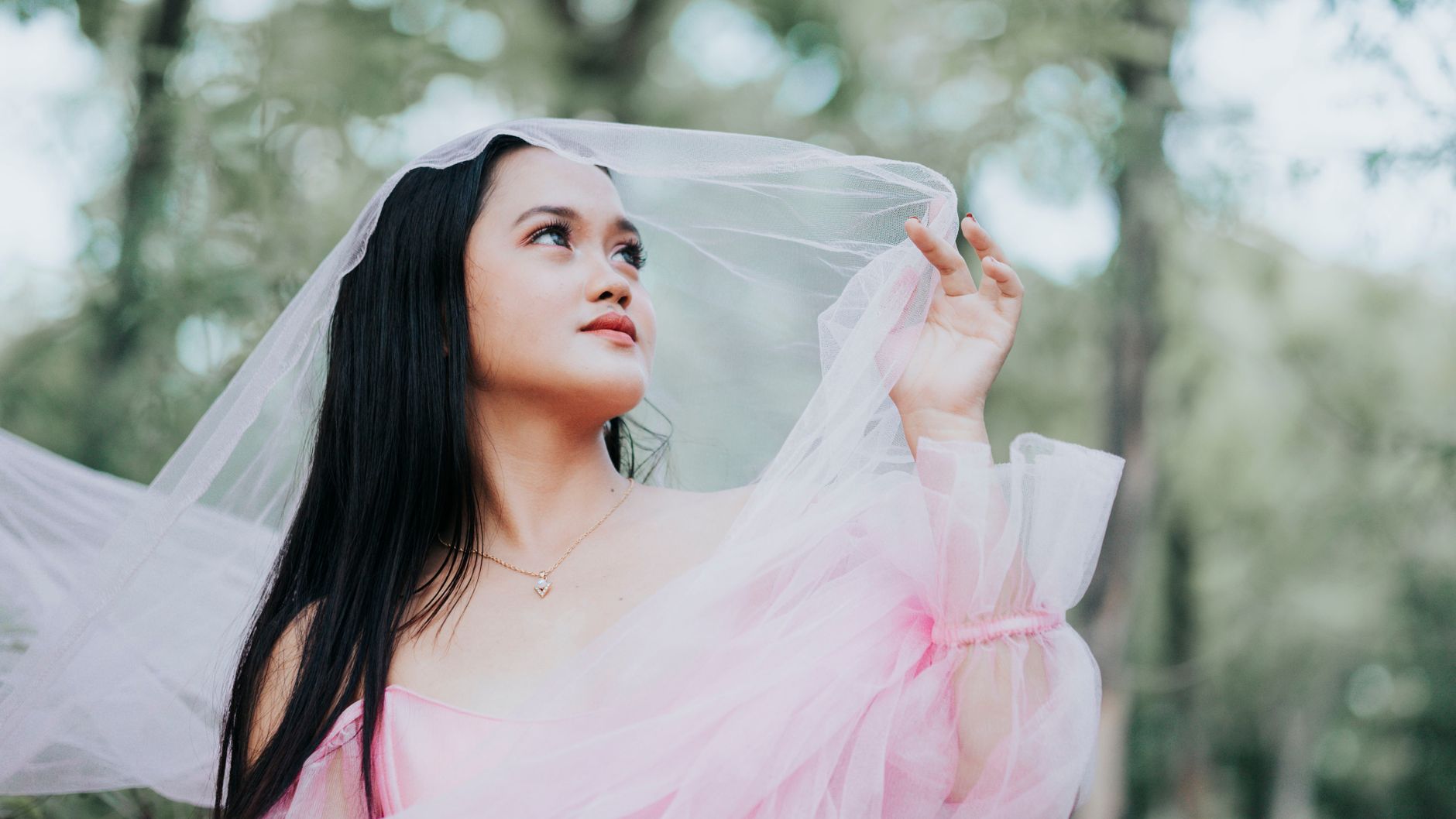
Photo by Art Laurence Luzon on Pexels
The dress that looks unbeatable on a hanger can be the one you're tugging at by 9 p.m. — and the one that photographs like a sheet of aluminum under the gym lights. That's almost never a styling problem. It's fabric. This prom dress fabric guide is about the three materials you'll meet most often — lace, tulle and satin — and what each one actually does once there's a body, a dance floor and a camera flash involved.
The short answer, if you only read this far: satin is the most dramatic on camera but the least forgiving on texture and heat; tulle hides everything, moves beautifully and photographs soft; lace sits in the middle, flattering and breathable, but it reads as texture rather than shine in photos. Most shoppers compare color and price, scroll past the fabric line in the product description, and then wonder why the dress feels nothing like the picture. The fabric line is the part worth reading twice.
What does each prom dress fabric actually do on the body?
Fabric decides three things at once: drape (how it falls), hand (how it feels against skin), and reflectance (how it bounces light back at a lens). Color is a two-minute decision. Fabric is the one that decides whether you sit down comfortably at dinner.
Satin
Satin is a weave, not a fiber — which is why "satin" can mean anything from a heavy, structured polyester to a fluid silk blend. The weave floats threads across the surface, which is where the shine comes from. Practical consequences:
- It shows everything. Seam lines, underwear edges, even the shape of a hand on your waist can print into the surface. Heavier satin with a little body hides more than thin, slinky satin.
- It creases and keeps the crease. A long car ride in a polyester satin dress leaves lap lines that don't fall out on their own.
- It runs warm. Polyester satin traps heat and doesn't wick. In a packed room, you'll feel it.
- It slides. Strapless satin needs real internal structure — boning, a grippy band, or a fitted bodice — or you'll spend the night adjusting.
In return, satin gives you a silhouette nothing else matches: clean columns, sculpted bodices, that liquid pour down a bias-cut skirt. If you want the dress to look expensive from twenty feet away, satin does it.
Tulle
Tulle is netting — layers of it. It has essentially no weight, which is why ballgown skirts can be enormous without being heavy. What it does well:
- It forgives. Layered tulle skims rather than clings, so it doesn't telegraph anything underneath.
- It breathes. Open mesh moves air, so even a huge skirt is cooler than you'd expect.
- It moves on camera. Tulle catches air when you turn. Photos taken mid-spin are the whole reason this fabric exists.
The catches: cheap tulle is scratchy against bare legs, so look for a lined skirt or a soft "illusion" tulle. It also snags on bracelets, rings and chair corners, and a snag in netting is visible from across the room. And it takes up space — car seats, bathroom stalls and crowded tables all become projects.
Lace
Lace is the quiet overachiever. It's usually an overlay on a lining, so you get pattern and texture without transparency. Corded or embroidered lace adds visual weight to a bodice, which balances a fuller skirt. It's generally breathable because of the open structure, and it hides minor lumps and bumps better than satin because the eye reads pattern, not surface.
Two things to watch. First, lace has a scale: a large, bold motif reads beautifully in person but can look busy in a tight headshot, while a fine, dense lace photographs as a soft texture. Second, the lining underneath is doing half the work — a scratchy or badly cut lining ruins a lovely lace dress. If you like the vintage-leaning look of lace bodices and fuller skirts, a dress shop built around 1950s silhouettes and lace prom styles is a sensible place to start browsing, because the whole catalog is organized around those shapes rather than treating them as an afterthought.
Which fabric photographs best under prom lighting?
Prom photography is a specific, unkind situation: a bright direct flash, a dark room, and a camera that doesn't care about your feelings. Here's how each fabric behaves.
Satin is highly reflective. A direct flash creates a bright hot spot and deep shadow right next to it, which exaggerates every curve and crease. That can be gorgeous — it's why satin looks sculptural in editorial photos, where the lighting is controlled — but a phone flash at close range is not controlled. Satin photographs best with light coming from the side or slightly above, and at a distance. If your photos are being taken outdoors before sunset, satin is a strong pick. If they're all flash-in-the-face at the door, consider a matte or crepe-back satin instead of high-shine.
Tulle is semi-transparent, so flash passes through the outer layers and lights up the skirt from inside. It reads soft and dimensional on camera, and it hides the hot-spot problem entirely. It's the most forgiving fabric for amateur photography. Pale tulle can go slightly translucent in strong backlight, so check the lining length if that matters to you.
Lace reads as texture. It doesn't blow out under flash, and it keeps detail at distance. The one thing to know: very fine lace over a skin-tone lining can photograph as plain nude fabric from across the room — the pattern disappears. If you want the lace to be visible in group photos, pick a contrasting lining or a bolder motif.
A quick matching cheat sheet
- Outdoor golden-hour photos: satin wins. The shine turns warm instead of harsh.
- Indoor flash, close range: tulle or lace. Matte surfaces don't blow out.
- Lots of movement shots: tulle, or a chiffon-skirted dress — anything that catches air.
- Tight portraits and headshots: lace or a textured bodice. Detail near the face carries the photo.
- Full-length solo shots: satin's long, clean lines make the body read as one elegant column.
How do you shop for fabric when you can only see a photo?
Online, you're reading product pages, not touching cloth. These are the specific things worth checking before you add to cart.
- Find the fiber content. Polyester satin: shiny, warm, creases hard. Matte or crepe satin: softer shine, drapes better. Silk-blend satin: beautiful, pricier, more delicate. "Stretch satin" usually has spandex, which forgives fit errors.
- Look for the word "lined." On tulle and lace, this is non-negotiable for comfort. If the listing doesn't say, the detail photos often show the lining edge at the hem.
- Check for structure words: boning, built-in cups, corset back, elastic smocked back. A corset or lace-up back buys you several inches of adjustability, which is a real advantage when you're ordering sight unseen.
- Read the size chart, not the size letter. Formalwear sizing runs smaller than everyday sizing, and it varies wildly between brands. Measure your bust, waist and hips and compare to the actual chart on that product page.
- Zoom on the detail shots. You can usually tell stiff tulle from soft tulle by whether the hem stands away from the body or collapses toward it.
- Check the return window and whether it covers formalwear. Some retailers exclude occasion dresses. Know before, not after.
- Allow for hemming time. Order early enough that a tailor can take in a bodice or shorten a hem — fit does more for a dress than fabric ever will.
One field note from watching how these dresses actually get worn: if you're deciding between two dresses and one has pockets, a sturdy lining or a lace-up back, take that one. Those details matter more at hour four than the shade of blue did at checkout.
What about comfort over a five-hour night?
Prom isn't a photo shoot; it's dinner, a car, photos, dancing, and standing around outside at the end. Comfort comes down to heat, mobility and maintenance.
Heat: open-structure fabrics (tulle, lace) move air. Dense polyester satin doesn't. If your venue is small or you dance hard, weight that heavily.
Mobility: a straight satin column with no slit limits your stride. Check for a slit, a kick pleat, or stretch in the fabric. A full tulle skirt gives you total freedom of movement — just not through narrow doorways.
Maintenance: satin needs a careful sit-down and a hanging spot. Tulle needs you to watch your jewelry. Lace needs almost nothing, which is its underrated superpower.
If you want to see a lot of current silhouettes quickly before committing, browsing a shop with new formal styles landing constantly is a useful way to work out which shapes you're drawn to — then go find that shape in the fabric that suits your night.
Common questions
Is satin or tulle better for a prom dress?
It depends on your night. Satin gives a sleek, dramatic silhouette and photographs beautifully in soft or outdoor light, but it creases, shows body lines and runs warm. Tulle is lighter, cooler, hides more and looks soft under a camera flash, but it takes up space and can snag. Pick satin for elegance, tulle for comfort and movement.
Does satin show every lump and bump?
High-shine, thin satin does, because the reflective surface highlights any change in the surface underneath. Heavier satin, matte satin and crepe-back satin are far more forgiving. Smooth seamless underwear helps, as does a lined dress with internal structure. If you prefer not to think about it at all, a lace overlay or layered tulle skirt skims the body instead of clinging to it.
Which prom dress fabric wrinkles the least?
Tulle wrinkles the least — netting has almost no surface to crease, and it bounces back after being sat on. Lace is also resilient, especially corded or embroidered lace. Polyester satin wrinkles the most and holds those creases stubbornly, so if you have a long drive to the venue, plan to hang the dress in the car rather than fold it across your lap.
Whatever you land on, decide the fabric before you fall in love with a color — it's the part that has to last all night. When you're ready to browse, the dress shops in our lineup are a good place for the flock to start.