Prom Dress Fabric Guide: Lace, Tulle or Satin?
A prom dress fabric guide to lace, tulle and satin: how each one moves, breathes, wrinkles and photographs, plus what to check before you order online.
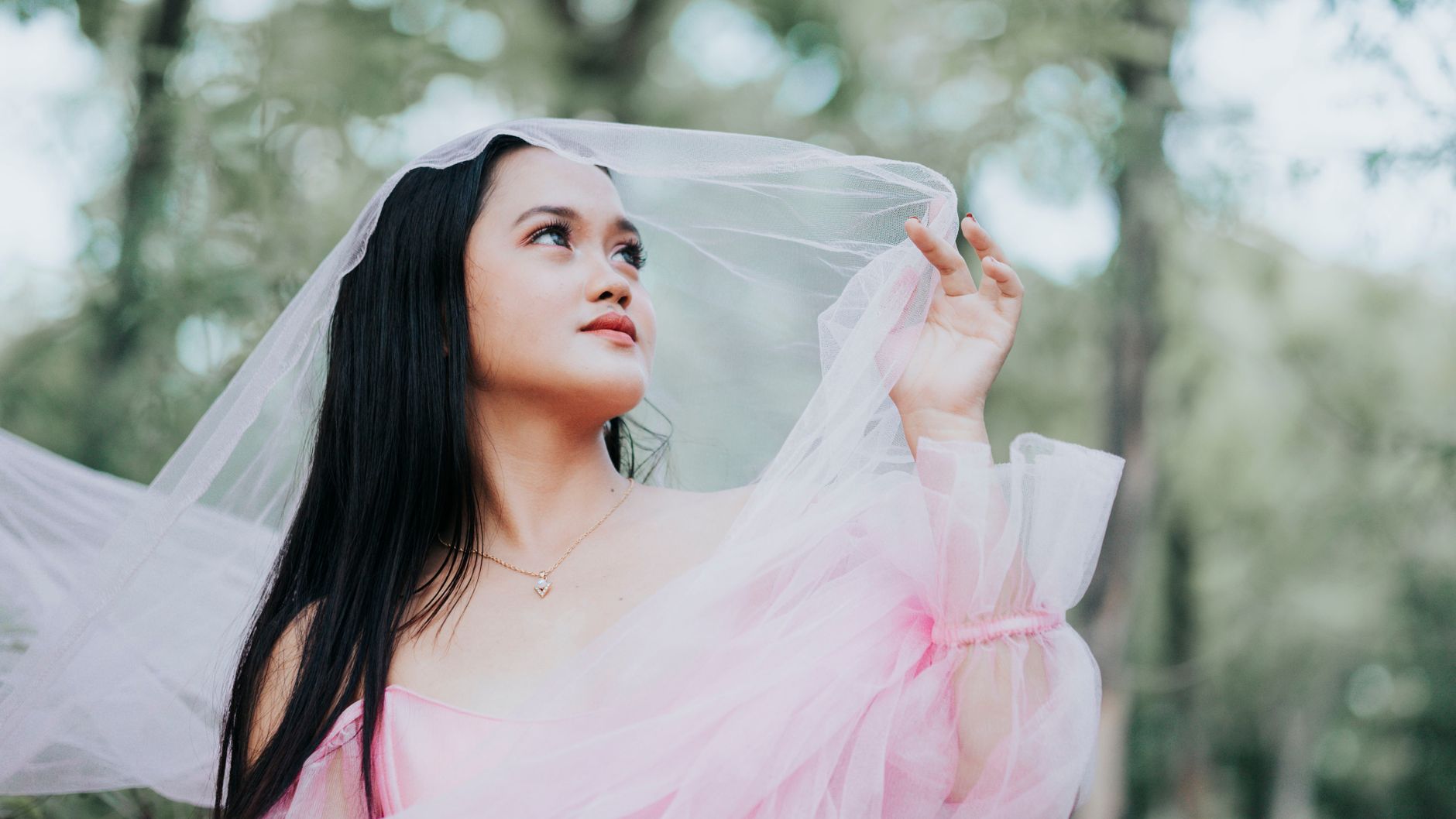
Photo by Art Laurence Luzon on Pexels
Two dresses, same shade of emerald, same price range, same size. One of them you forget you're wearing by 9 p.m. The other one you're tugging at in every single photo. The difference almost never comes down to color — it's the cloth. A good prom dress fabric guide starts there, because fabric decides how a formal dress moves, how warm it gets in a packed gym, and what it does under a camera flash.
The short answer: satin photographs with a liquid sheen and skims the body, but it shows every wrinkle and sit-crease. Tulle gives you volume and movement without weight, hides a lot, and is the most forgiving in photos — but it can be scratchy without a good lining. Lace adds texture that reads beautifully up close and keeps a dress from looking flat in flash photography, though it's usually layered over something else, which affects breathability. Most dresses mix two of the three, and that's often the smartest buy.
Below is what each fabric actually does over a six-hour night, and the things worth checking on a product page before you hit order.
What does satin do to your photos and your comfort?
Satin isn't a fiber — it's a weave, which is why the word covers everything from a stiff, papery polyester to a fluid silk-blend charmeuse. That's the first thing to decode on a listing. "Satin" alone tells you almost nothing; "stretch satin," "matte satin," "charmeuse" or "mikado" tell you a lot.
Here's the quick translation:
- Stretch satin — has elastane in it, hugs the body, moves with you. Most comfortable of the satins, least forgiving over the midsection.
- Matte satin / duchess satin — heavier, holds a structured shape, less shine. Wrinkles less visibly than high-shine, and the camera is kinder to it.
- Charmeuse — the slinky, high-shine bias-cut kind. Gorgeous drape, incredibly easy to crease, and it reveals everything underneath.
- Mikado — crisp, almost sculptural, popular for structured bodices and column skirts. Barely moves, which is the point.
Satin and the camera
Satin is the fabric that most rewards and most punishes flash photography. Direct flash hits the shine and blows out a bright strip down whatever it lands on — usually the hips or the front of the skirt. In soft light or golden-hour outdoor photos, that same shine reads as pure luxury. If your photos will mostly be indoor flash shots, a matte or lightly textured satin is the safer bet. If you've got an outdoor photo session planned, go shinier.
The sitting problem
Nobody warns you about this one. Satin creases where you fold it, and those creases don't fall out quickly. Thirty minutes in a car plus an hour at a dinner table equals visible lap lines. Mitigations that actually work: pick a fuller skirt so the fabric isn't stretched tight across your thighs, choose a darker color (creases catch light and show most on pale satins), and look for a skirt with a slight A-line rather than a pencil shape.
Satin also doesn't breathe. Polyester satin especially traps heat. If your venue is a crowded room in late spring, factor that in.
Is tulle the most comfortable prom dress fabric?
For sheer wearability, tulle is hard to beat — with one condition. Tulle is net, so air passes straight through it, and a tulle skirt weighs a fraction of what the same volume of satin would. You can dance in it, sit in it, and it springs back. It doesn't crease in any meaningful way, which makes it the most travel-friendly and the most photo-proof option at hour five.
The condition is lining. Raw tulle against bare legs is genuinely itchy, and cheap tulle is the scratchiest of all. On a product page, look for the words "lined," "soft tulle," "illusion tulle" or "English net." Look for a satin or jersey lining under the skirt that extends at least to the knee. If the description says nothing about lining, assume there isn't much.
How tulle photographs
Tulle is the forgiving one. Layers of net diffuse light rather than reflecting it, so you get soft edges and no hot spots. It also creates shape in motion — the reason every twirl photo on the internet is a tulle skirt. Pale tulle in multiple layers can read slightly flat in dim indoor light, so if your venue is dark, a dress with some contrast (an embellished bodice, a lace overlay, a horsehair-trimmed hem) gives the camera something to grab.
Volume math
Layer count matters more than people expect. Three to five layers give you a soft bell. Eight or more pushes into ballgown territory and starts getting heavy at the waist, where all the weight hangs. If you're under about 5'4", a very full tulle skirt can swallow your frame — a horsehair hem or a tiered A-line keeps the volume controlled.
One practical note: tulle snags. Keep it away from velcro, jewelry clasps and chair hardware, and don't let anyone with a corsage pin near the skirt.
When is lace the right choice for a formal dress?
Lace is a texture decision more than a silhouette decision. It's almost always an overlay — lace on satin, lace on mesh, lace appliqués scattered over tulle — so what sits underneath matters as much as the lace itself.
What lace does exceptionally well is survive a camera. Texture gives flash something to catch, so a lace bodice photographs with depth where plain fabric can go flat and shapeless. It's also the most flattering option in close-up shots, which is most of the photos you'll actually keep.
Types worth knowing:
- Chantilly — fine, delicate, soft against skin. Drapes well, reads romantic.
- Guipure / Venise — heavier, no net backing, bold motifs. Structured and graphic; great on a fitted bodice.
- Corded lace — raised outlines on a net base. The most dimensional in photos.
- Stretch lace — has give, comfortable in fitted sleeves and bodices, less crisp in definition.
Comfort-wise, lace itself is usually fine; the lining under it decides everything. A lace bodice over a stiff polyester lining will be warm. Lace sleeves are a smart middle ground if you want coverage without heat — they're semi-sheer and let air through in a way a satin sleeve never will. Vintage-leaning cuts tend to lean hard on this, and if that's the direction you're going, ZAPAKA's lace and 1950s-inspired prom styles are a good place to see how lace behaves over different underlayers, from full-skirt silhouettes to fitted cocktail shapes.
Which fabric should you pick for your night?
Run your actual evening through these questions rather than shopping by mood board:
- How long is the drive? Over 30 minutes seated, skip high-shine satin or accept the creases.
- Indoor flash or outdoor photos? Flash favors matte satin, lace and tulle. Natural light favors shine.
- How warm is the venue? Crowded indoor room: tulle or lace sleeves over a breathable lining. Air-conditioned ballroom: satin is fine.
- Are you dancing all night? Tulle and stretch satin move. Mikado and heavy duchess satin do not.
- How tall are you? Shorter frames: fewer tulle layers, or a column satin with a slit. Taller frames can carry serious volume.
- Do you want to re-wear it? Lace and matte satin read as "event dress" long after prom. Eight-layer tulle mostly doesn't.
What to check on the product page before ordering
Online fabric descriptions vary wildly in honesty. These are the specifics worth hunting for:
- A named fabric, not just "satin" or "mesh" — the more specific the listing, the more the seller actually knows.
- Fiber content. Polyester satin is warmer than a silk blend; 100% polyester tulle is stiffer than a nylon-blend soft tulle.
- The word lined, and where the lining ends. "Fully lined" beats "partially lined."
- Boning in the bodice, if it's strapless — a strapless dress with no structure will slide all night.
- Stretch. Any mention of elastane or "stretch" dramatically changes sizing and comfort.
- Care instructions. "Dry clean only" is standard for formalwear but tells you the fabric is delicate.
- Model height and the size worn, where listed — this tells you where the hem will fall on you.
- Photos in more than one lighting setup. If every image is a studio shot, you don't know how it behaves under flash.
If your taste runs more modern — slip silhouettes, corset bodices, contemporary satins with fresh colorways landing constantly — Princess Polly's formal and occasion dresses cover that end, and the listings tend to be clear about stretch and lining.
Common questions
Does satin or tulle wrinkle more?
Satin wrinkles considerably more. Because satin is a smooth woven fabric, folds press into it and the crease catches light, making it visible in photos. Tulle is a net and springs back from folding almost completely, which is why it travels and sits so well. If you're worried about creasing, choose matte satin over high-shine, and darker colors over pale ones.
What is the coolest prom dress fabric for a hot venue?
Tulle is the most breathable because air passes straight through the netting, as long as the lining underneath is lightweight rather than heavy polyester. Lace sleeves are the next best option — semi-sheer and far cooler than solid fabric. Polyester satin traps the most heat, so if the room will be warm and crowded, a lighter silhouette is worth prioritizing.
Which prom dress fabric photographs best with flash?
Lace and matte satin handle direct flash best. Lace has texture that gives the light something to catch, creating depth instead of a flat silhouette, and matte satin reflects evenly without hot spots. High-shine charmeuse can blow out into bright white patches under flash, though it looks spectacular in soft or natural light outdoors.
Our flock keeps a running list of apparel shops worth bookmarking — have a browse when you're ready, and read the fabric line before the price line.