Prom Dress Fabric Guide: Lace, Tulle or Satin?
A prom dress fabric guide to lace, tulle and satin: how each one moves, breathes, wrinkles and photographs, plus what to check before you order.
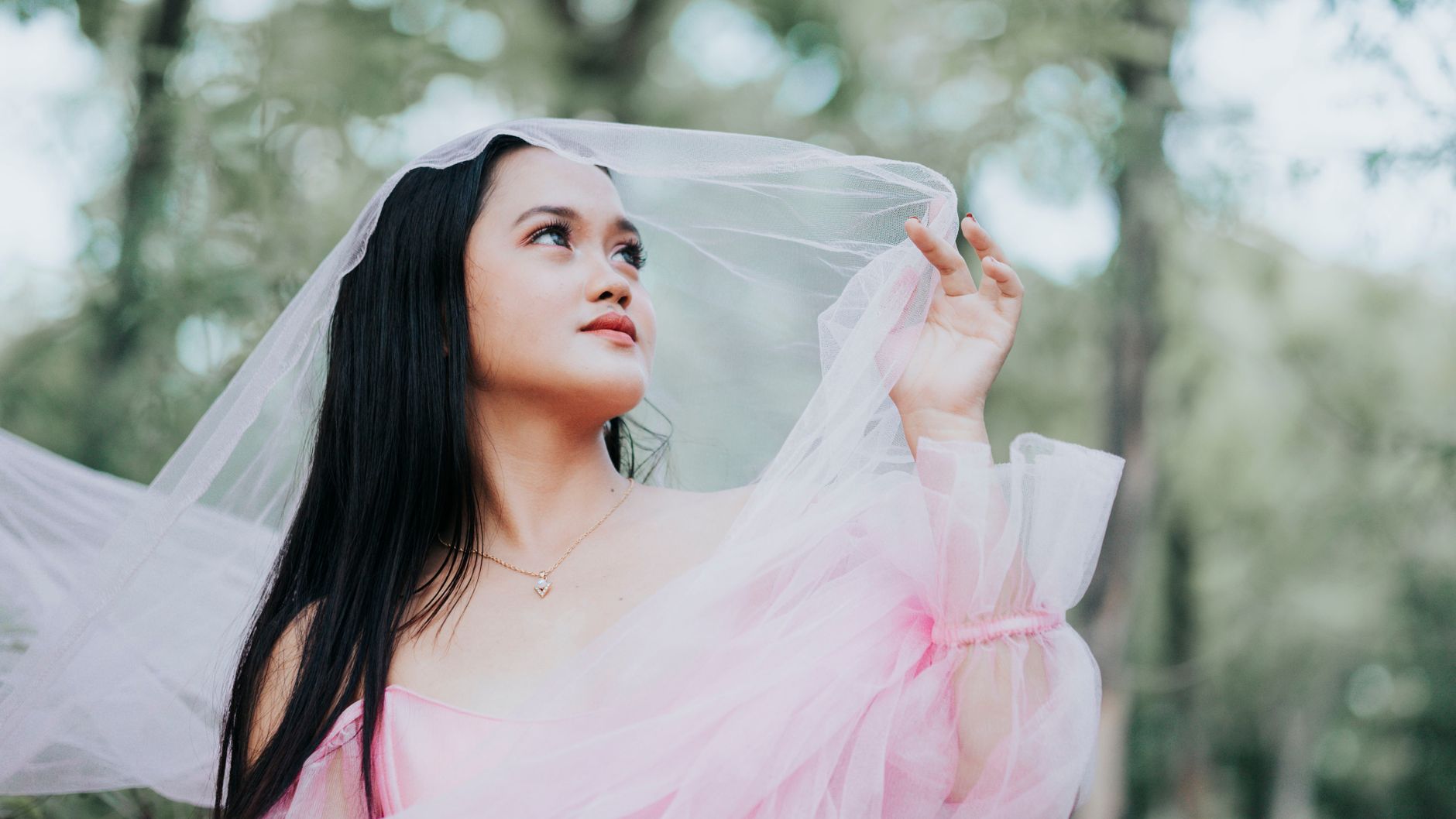
Photo by Art Laurence Luzon on Pexels
Two dresses can look nearly identical on a product page and behave like completely different garments in a hot gym at 10 p.m. One floats when you turn; the other grips every rib and shows the outline of your phone through the skirt. That gap is almost always fabric, which is why a prom dress fabric guide is worth five minutes before you add anything to a cart.
Short answer: lace gives you texture and camera-friendly detail with good airflow, tulle gives you volume and movement without weight, and satin gives you that liquid, light-catching drape but is the least forgiving of heat, wrinkles and underwear lines. Most of the dresses you'll shortlist are actually a combination — satin bodice, tulle skirt, lace overlay — so the real skill is knowing which fabric is doing which job on the dress in front of you.
How does each fabric actually move and breathe?
Think of a formal dress as three jobs: hold a shape, move when you move, and sit against skin for six straight hours. Fabrics are good at different ones.
Lace
Lace is openwork, so it's naturally the most breathable of the three — air passes through the pattern. What matters more than the word "lace" is the base: lace is almost always mounted over a lining, and that lining is what touches you. A cotton-blend or soft mesh lining breathes; a polyester satin lining does not.
The other variable is the lace itself. Corded and embroidered laces have raised threads that can feel scratchy under the arms and along a zipper. Chantilly and soft stretch laces lie flat and are kinder to skin. If a dress has a high neck or long lace sleeves, look for the words "stretch lace" or "soft net" — rigid cotton lace in those spots is where people start tugging at themselves by the second song.
Tulle
Tulle is the lightest option by a mile, and it's the only one that genuinely moves on its own. Layers are what create the shape, not stiffness — a skirt with six to eight soft layers will sway, while a skirt with two layers plus horsehair braid or a built-in hoop will hold a bell shape and barely budge.
The catch is scratch factor and bulk. Cheaper nylon tulle can feel like a scouring pad against the back of the knees; soft tulle (sometimes labeled "illusion tulle" or "soft net") is noticeably gentler. Also budget for space: a big tulle skirt does not fold neatly into a car's back seat, and sitting through dinner in one takes a bit of choreography.
Satin
Satin is a weave, not a fiber, which is why two "satin" dresses can feel worlds apart. Polyester satin is shiny, slick and warm. Matte satin and crepe-back satin have a softer sheen and more weight, so they hang in a smooth column instead of clinging. Silk-blend or stretch satin moves best and costs more.
Satin is the least breathable of the three and the most honest about what's underneath — seams, pockets, shapewear edges, everything. It also creases when you sit, and a crease across the lap can stay there. None of that makes it a bad choice. It just means satin rewards a good fit and a cool room.
Which fabric photographs best under prom lighting?
Prom photos happen under three very different light sources, and fabric reacts to each one differently.
- Direct flash (the photo booth, a friend's phone): satin throws back a hot white streak wherever the light hits. It can look dramatic — or it can blow out an entire hip. Matte satin and crepe handle flash far better than high-shine poly.
- Golden hour outside (the pre-prom driveway shoot): this is tulle's moment. Backlighting turns layered tulle translucent and glowy, and lace shows every bit of its pattern as a silhouette.
- Dim colored uplighting (the venue itself): texture reads better than color here. Lace, beading and sequins catch what little light there is. Flat matte fabrics can go muddy and read almost black on camera.
Color behaves differently by fabric too. A deep jewel tone looks richest in satin because the sheen gives it depth. Pastels and nudes tend to look washed out in satin but lovely in tulle, where the layers build the color up gradually. Black lace over a contrast lining — champagne, blush, red — photographs with more dimension than black lace over black.
One field note from scrolling a lot of product pages: if a listing only shows the dress on a white studio background, you're seeing the fabric's most flattering possible light. Look for a customer photo or a video on the listing before you decide how shiny something really is.
What should you check on the product page before ordering?
Formal dresses are frequently bought online and returned in a panic. A careful read of the listing prevents most of that. Here's what's worth hunting for:
- The full fabric composition, not just the headline word. "100% polyester" tells you it will be warm. "Polyester with 5% spandex" tells you it has give. A listed lining fabric is a good sign — it means someone thought about it.
- Whether it's lined, and how far. Fully lined, partially lined, or lace over nude mesh are three very different levels of coverage.
- Closure type. A full-length zipper with a hook-and-eye is adjustable at the fitting stage. A corset back with lace-up panels gives you a couple of inches of flex in either direction — genuinely useful if you're ordering months ahead.
- Built-in support. "Boned bodice," "removable cups," or "built-in bra" matter enormously for strapless styles. Without boning, a strapless satin bodice relies entirely on fit.
- Stretch or no stretch. Rigid satin needs to be right the first time. Stretch lace and jersey-lined styles forgive a half size.
- Length and the shoes you'll wear. Most formal dresses are cut for a heel of roughly 3 to 4 inches. If you plan to dance in flats, measure the hem drop and assume you'll need a hem.
- Care instructions. Dry clean only is common and perfectly normal, but it affects what you can do about a spilled drink that night.
- The size chart's actual measurements, in inches, compared against your bust, waist and hollow-to-hem. Never buy formalwear off a letter size alone.
If you're browsing silhouettes before you commit to a fabric, the lace, tulle and satin formal dresses at ZAPAKA are a useful place to see how the same color reads across different materials — the catalog leans vintage-inspired, with a lot of 1950s shapes, tulle skirts and lace bodices side by side. For shorter, more current party silhouettes in satin and slip styles, Princess Polly's dress range turns over quickly and covers the mini-and-midi end of the formal spectrum.
How do you match fabric to your venue and your night?
Before fabric, answer two questions: how warm will the room be, and how much do you plan to dance?
Hot venue, lots of dancing. Favor lace with a breathable lining, or a tulle skirt with a lightweight bodice. Avoid a fully lined polyester satin column — it holds heat and shows every damp spot.
Cool venue, sit-down dinner, formal photos. Satin earns its place here. The drape is at its best when you're standing and walking, and a cool room solves its main weakness.
Outdoor photos, unpredictable weather. Tulle dries fast and shakes out. Satin shows water spots. Lace is somewhere in the middle but can snag on patio furniture and car doors.
You want the dress to do something on camera. Tulle for movement shots. Lace for close-ups and detail. Satin for the long, clean, standing-still portrait.
Mixed-fabric dresses: who's doing what
Most prom dresses are hybrids, and that's usually good news. A satin bodice gives structure where you want it smooth; a tulle skirt gives movement where you want air. Lace appliqués on tulle add detail without adding weight. When you look at a hybrid, ask which fabric sits against your torso for six hours — that's the one that determines comfort, regardless of what the skirt is doing.
Ordering timeline
Give yourself at least four to six weeks before the night. That covers shipping, one return or exchange, and a trip to a tailor. Alterations are where an online dress becomes a dress that fits you: taking in a bodice, shortening a hem and adding bra-strap holders are all quick, inexpensive jobs. Satin and lace both tailor well. Multi-layer tulle hems are more labor, so build in extra days if you're shortening one.
Common questions
Is satin or tulle better for a prom dress?
It depends on the room and the look. Satin drapes in a smooth, light-catching column and photographs beautifully in cooler venues, but it holds heat, creases when you sit and shows what's underneath. Tulle is lighter, far more breathable and moves when you dance, though it takes up a lot of space and some versions feel scratchy against skin.
Does lace make a prom dress itchy?
Some lace does. Corded and embroidered laces have raised threads that can irritate skin at the neckline, underarms and zipper. Soft stretch lace, Chantilly and illusion-net styles lie flat and feel much gentler. Check the listing for the lining too — lace is nearly always mounted over a lining, and that lining is what actually touches you all night.
What prom dress fabric wrinkles the least?
Tulle is the most wrinkle-resistant of the three; layers shake out on their own and rarely hold a crease. Lace over a lined base also recovers well. Polyester satin wrinkles most visibly, especially across the lap after sitting, and the shine makes every fold obvious. Crepe-back and matte satins hide creases better than high-shine finishes.
Fabric is the part of a formal dress you can't see in a thumbnail and can't un-feel once you're wearing it. Narrow down how you want the night to go first, then pick the material that behaves that way — and when you're ready to browse, take a slow scroll through our hand-picked apparel stores with the fabric notes open in another tab.