Prom Dress Fabric Guide: Lace, Tulle or Satin?
A practical prom dress fabric guide: how lace, tulle and satin move, breathe and photograph, plus what to check on the product page before you buy.
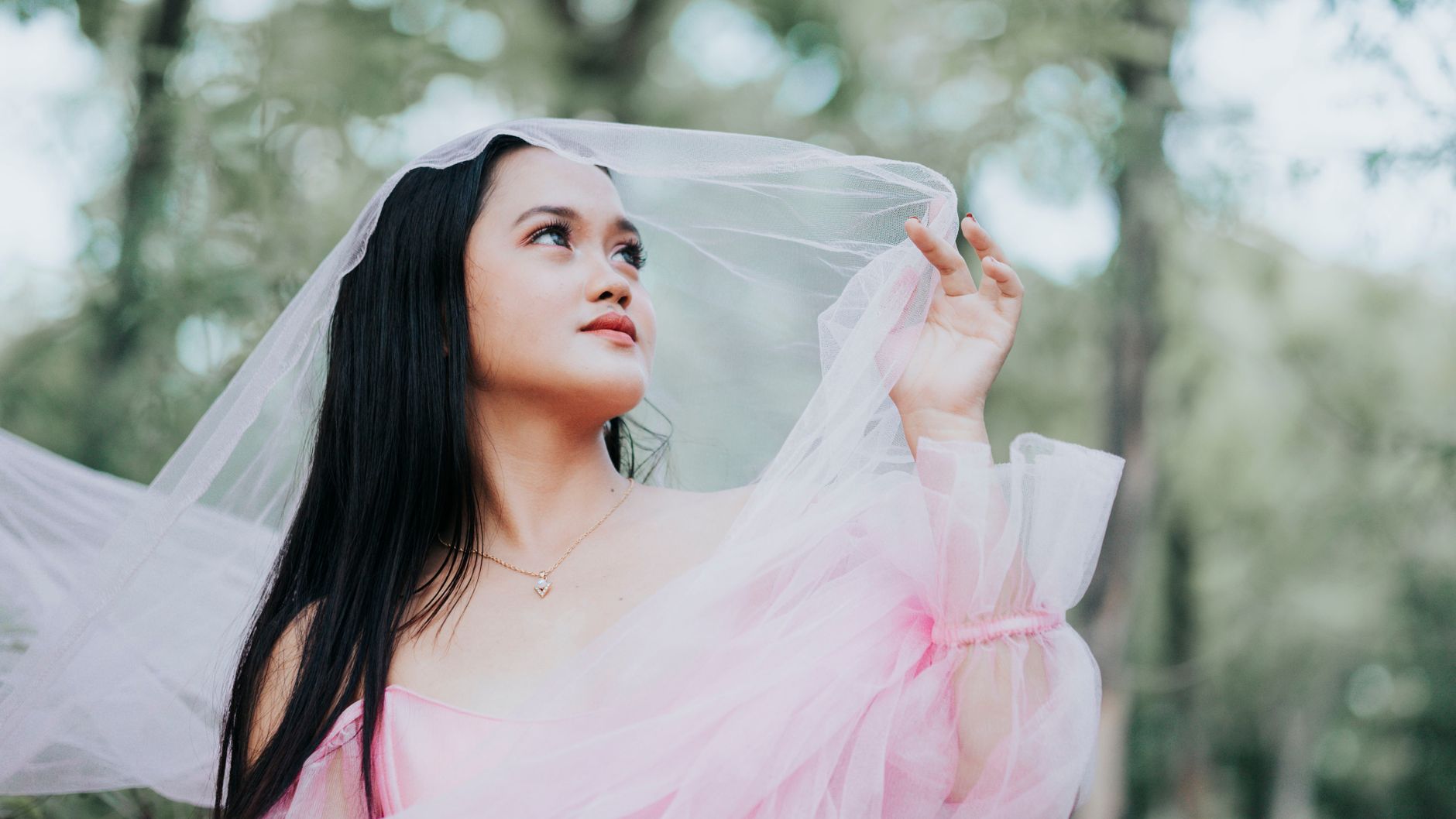
Photo by Art Laurence Luzon on Pexels
The dress that looked incredible on the hanger can still go sideways three hours into the night — clinging in the heat, creasing across the lap, or throwing a hot white stripe across every flash photo. Almost none of that is about the color or the cut. It's about the cloth. A prom dress fabric guide is the thing most shoppers skip, and it's the single biggest predictor of whether you'll be tugging at a hem or forgetting you're even dressed up.
Short version: satin is sleek, structured and reflective — gorgeous in photos but unforgiving on texture and heat. Tulle is airy and dramatic, hides a multitude of things, and photographs with soft depth, but it takes up space and can scratch. Lace is detailed and romantic, usually the most breathable of the three, and reads beautifully up close while sometimes flattening out from across a gym. Most of the dresses you're looking at are actually a combination — a satin lining under a tulle skirt, a lace bodice on a satin column — so knowing how each layer behaves tells you how the whole dress will behave.
What does each prom dress fabric actually feel like to wear?
Forget the product photos for a second and think about four hours of standing, dancing, sitting in a car and sitting at a table.
Satin
Satin isn't a fiber, it's a weave — that's why satins vary so wildly. The weave floats threads across the surface to create shine, and the fiber underneath decides everything else. Polyester satin is the most common at this price point: durable, vivid in color, holds a sculpted shape, and traps heat against the skin. Silk or silk-blend satin breathes far better and drapes with more fluid weight, but costs considerably more and spots if you spill.
The two satin varieties worth knowing by name:
- Charmeuse — lightweight, very liquid, high shine. Drapes close to the body and shows every underlying line. Slip dresses and bias-cut columns.
- Duchess (or duchesse) satin — heavy, stiff, matte-ish luster. Holds a ball-gown skirt out on its own. Structured, architectural, warm to wear.
- Stretch satin — a few percent elastane woven in. Forgiving on fit, more comfortable to sit in, slightly less of that glassy sheen.
Satin creases where you fold. If you're being driven forty minutes to the venue, a heavy satin skirt will show the seat belt and the lap crease when you stand up. That's not a defect — it's the cloth.
Tulle
Tulle is a fine net, and the fiber matters here too. Cheap nylon tulle is crisp, slightly stiff and can feel scratchy against bare legs; soft or "illusion" tulle in polyester or a nylon blend is much gentler. Layers are the whole story — three layers reads floaty, eight or ten reads ballgown, and the lining underneath is what keeps it from itching.
Tulle is genuinely cool to wear because air moves through it. It's also the most spatially demanding: you will think about doorways, car seats and who's standing behind you. It snags on rings, watches, zippers and splintered bleachers, and a snag in net is permanent in a way a satin wrinkle isn't.
Lace
Lace is almost always a surface layer over something else, so comfort depends on that something else. The lace itself is open and breathable; the lining decides whether you're warm. Corded lace has raised thread outlining the pattern and gives real dimension. Chantilly-style lace is finer and flatter with a soft scalloped edge. Guipure (sometimes sold as Venise) is heavier, with motifs joined by bars and no sheer ground — it has body and sculpts rather than drapes.
Lace is the most forgiving of the three on a long night. It moves with you, it doesn't crease the way satin does, and the pattern breaks up light so it hides minor creasing and the odd smudge. Watch the edges, though — unfinished scalloped hems and sleeve openings can scratch, and lace over a shiny lining can show the lining's wrinkles right through.
How does each fabric photograph under flash and gym lighting?
Prom photos happen under three very different lighting setups and fabrics react differently to each: harsh direct flash from a phone, colored uplighting in a dim venue, and flat daylight at the pre-prom photo session in someone's yard.
Satin and direct flash are the classic conflict. A smooth, high-shine surface bounces a point light source straight back, so you get a bright blown-out streak down the front of the dress and loss of detail in the folds. It isn't ruinous — it's actually why satin looks so luxurious in editorial shots, where the light is large and soft. For phone flash, a matte or low-luster satin, a crepe-back satin worn matte side out, or a textured satin behaves far better.
Tulle photographs with depth. Layers of net catch light at different distances from the camera, which makes a skirt look dimensional rather than flat. It's the most flattering of the three in motion shots and the one that genuinely rewards a twirl photo. In dim venues, pale tulle can go slightly translucent against bright backlighting, which is worth knowing if the lining is short.
Lace is a close-up fabric. In a half-body shot or a portrait, corded and guipure lace read as rich texture. From across a room at a wide angle, fine all-over lace can blur into a single flat tone. If you want the detail to land in group photos, look for lace with bigger motifs, contrast lining, or beading worked into the pattern.
Two color notes worth more than any fabric rule. First, deep saturated colors photograph with more contrast under colored uplighting than pastels do — a pale blush can pick up whatever color the DJ's lights are throwing. Second, bright white and very pale ivory can over-expose under flash while faces stay correctly lit, which is why off-white, champagne and soft neutrals tend to be easier.
Which fabric suits your venue, your season and your plans?
Match the cloth to the night rather than to a trend. A few honest pairings:
- Hot venue, no air conditioning, lots of dancing — lace over a cotton-blend or breathable lining, or a single-layer soft tulle. Skip heavy duchess satin.
- Cool spring evening, formal ballroom — structured satin earns its keep here. The weight hangs properly and holds its shape all night.
- Long drive to the venue — lace, crepe, or tulle. Satin will crease in the seat.
- Outdoor photos on grass or gravel — tulle hems pick up dirt and snag; a lined satin or lace hem survives better. Consider hem length versus your shoes.
- You want to re-wear it — lace and simple satin slip shapes have the longest second life. Ten-layer tulle does not go to a graduation dinner.
Vintage-leaning shapes are their own category here, and worth a look if you want something that doesn't match six other dresses in the room. ZAPAKA's 1950s-inspired prom and formal dresses lean into lace bodices, tea-length tulle skirts and structured satin silhouettes, with the fabric and lining usually spelled out in the description — handy when you're comparing how two similar-looking dresses will actually wear. For something closer to current party dressing, the fast-moving formal and occasion racks at Princess Polly skew toward satin slips, stretch-satin mini and midi shapes and sheer overlays, with straightforward returns if the fit isn't right first time.
What to check on the product page before you order
This is where buying online either works or bites. A good listing tells you most of what you need; the gaps tell you something too.
- The fiber content, not just the fabric name. "Satin" means nothing on its own. "100% polyester satin" and "95% polyester, 5% elastane" wear very differently.
- Whether it's lined, and in what. "Fully lined" on a tulle or lace dress is the difference between comfortable and itchy. Unlined lace needs its own slip.
- Stretch. Any elastane at all changes how you sit and dance. Zero stretch means the size chart must be right.
- Closure type. Invisible zipper, corset back with lacing, or pull-on. Corset backs give you a couple of inches of adjustment either way — useful when ordering months ahead.
- Boning or built-in cups. Named in the description on most structured bodices. Matters for strapless styles.
- Garment length and the model's height. A dress photographed on a 5'10" model floor-skims; on 5'3" it's a train. Many listings give both the model height and a garment length in inches.
- Care instructions. "Dry clean only" is normal for formalwear and worth knowing before the night, not after.
- Review photos from real buyers. Phone photos under ordinary lighting tell you more about shine level than any studio shot will.
One more field note from the flock: order earlier than feels necessary. Hems, straps and bodice take-ins are quick alterations, but a tailor's calendar in April is not.
Common questions
Which prom dress fabric is coolest to wear?
Lace over a lightweight breathable lining and soft single-layer tulle are generally the coolest, because air moves through the open structure. Heavy duchess satin and dense polyester linings hold warmth against the skin. If the venue runs hot, check the lining fiber as carefully as the outer fabric — that's usually what decides comfort.
Does satin photograph badly with flash?
High-shine satin can bounce direct phone flash back as a bright streak, washing out detail in the folds. It isn't unflattering in softer light, where the sheen reads as luxurious. If most of your photos will be phone flash in a dim venue, a matte, crepe-back or textured satin keeps more detail than a glossy charmeuse.
Does tulle or satin wrinkle more?
Satin wrinkles far more. It creases wherever it folds, so a long car ride will show lap and seat-belt lines when you stand. Tulle is a net and essentially doesn't crease, though layers can flatten in storage and usually recover when hung. Lace sits in between and hides creasing well because of its pattern.
If you're still narrowing things down, it's worth opening two tabs and comparing the same silhouette in two fabrics — the vintage-leaning lace and tulle pieces alongside a stretch-satin slip — and reading the fiber and lining lines before the price. Browse when you have time to think about it; the right fabric tends to announce itself once you know what you're looking at.