Prom Dress Fabric Guide: Lace, Tulle or Satin?
A practical prom dress fabric guide to lace, tulle and satin — how each one moves, breathes and photographs, plus what to check before you order.
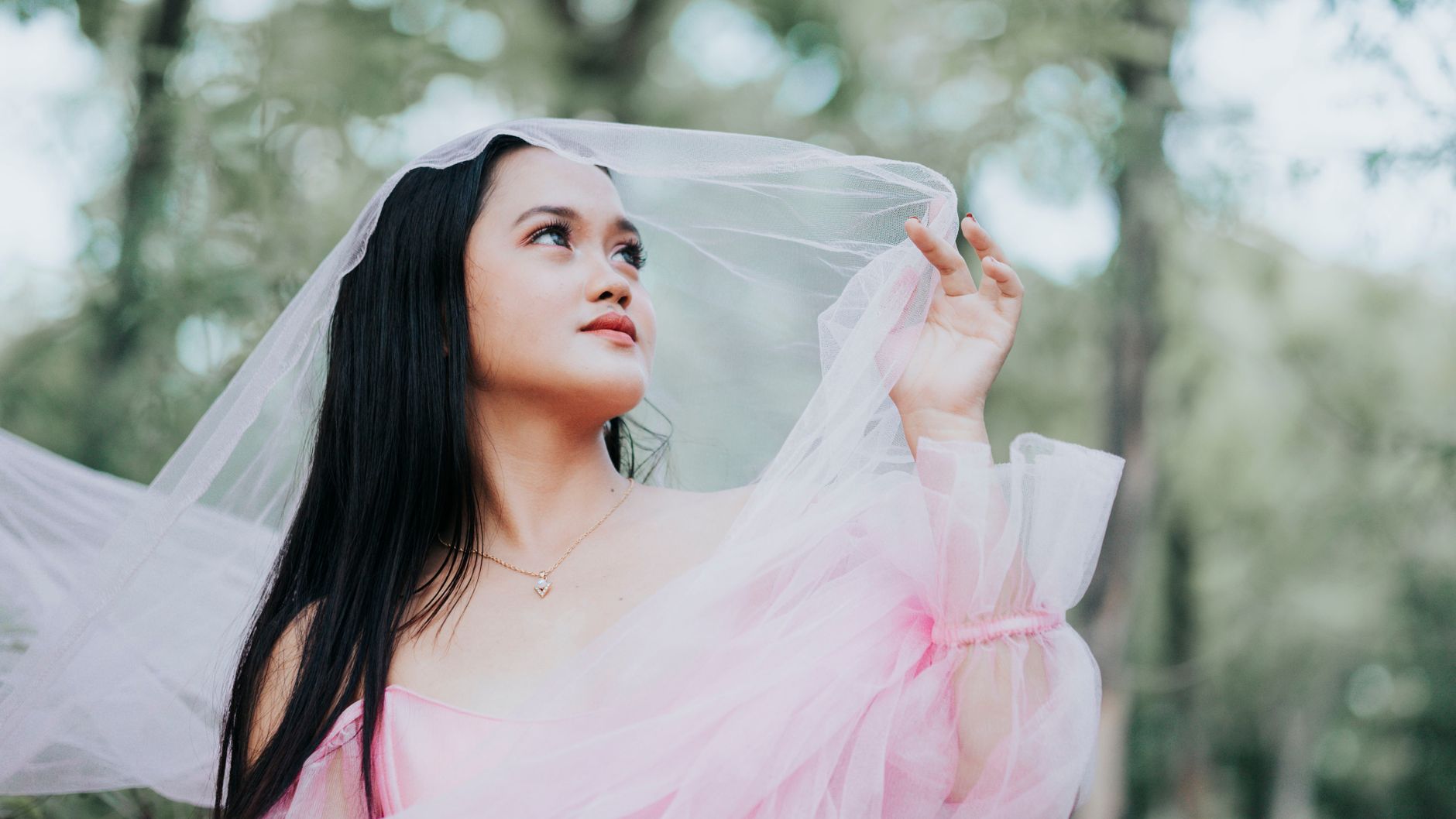
Photo by Art Laurence Luzon on Pexels
The dress that looked incredible on the hanger can still go sideways at 9pm, when the gym is warm, the photographer is shooting under a ring light, and you've been sitting in a plastic chair for forty minutes. Nine times out of ten the culprit isn't the cut or the color — it's the fabric. So here's a prom dress fabric guide built around the three materials you'll meet most: lace, tulle and satin.
Short answer first. Satin photographs like liquid and drapes close to the body, but it shows every seam line, every crease and every fingerprint, and it runs warm. Tulle gives you volume and movement, hides the midsection, and reads soft and dreamy on camera — but it catches on everything and takes up half a car. Lace adds texture that keeps a photo from looking flat, breathes better than you'd expect over a lining, and forgives wrinkles almost entirely — though cheap lace can scratch and the pattern can get busy in close-ups. Most of the "mystery" discomfort people blame on sizing is really a fabric choice that didn't match the night.
How do lace, tulle and satin actually feel to wear?
Comfort at a formal is mostly about three things: heat, weight and how much the fabric restricts you. Fabrics differ wildly on all three.
Satin
Satin is a weave, not a fiber, which is why two satin dresses can feel like completely different garments. Polyester satin is the common one — smooth, high-shine, inexpensive, and it traps heat because the fibers don't move moisture anywhere. Silk satin breathes far better and has a softer, less mirror-like glow, and it costs accordingly. Then there's stretch satin, usually poly with a few percent spandex, which is the most forgiving version to sit down in.
What satin asks of you: smooth undergarments, because it will outline a seam from across a room. It also creases where your body folds — hip crease, lap, back of the knee — and those creases photograph as shadows. Nothing wrong with that, just know it's coming.
Tulle
Tulle is netting, so air moves straight through it. The skirt itself is rarely the heat problem; the lining and any built-in horsehair braid or crinoline underneath is. A tulle ball gown can be genuinely cool to wear on the legs while the bodice is the warm part.
The trade-off is logistics. Tulle snags on rough chair edges, on jewelry, on a date's watch clasp. It compresses in a car and springs back unevenly. And soft bridal-style tulle feels lovely against skin, while stiff decorative tulle can feel like fiberglass on bare arms — a real difference you can only judge from product photos showing the skirt in motion, or from reviews that mention "scratchy."
Lace
Lace is almost always a surface layer over something else, so your comfort is decided by what's underneath. A lace overlay on a jersey or mesh lining breathes well and moves with you. The same lace bonded to a stiff polyester lining does not.
Corded lace and guipure lace have raised threads that give beautiful texture but can rub at the underarm and neckline. Chantilly and soft eyelash lace sit flatter and feel softer. If a dress has lace appliqués sewn onto tulle, check whether the appliqués sit where a strap or a seatbelt would cross.
Which prom dress fabric photographs best?
This is where the stakes are real, because the photos outlive the night. Each material reacts differently to the two lighting situations you'll face: harsh direct flash, and dim colored uplighting.
- Satin under flash: spectacular or blown out, with little in between. High-shine poly satin creates hot white highlights along the hips and bust. It looks sculptural in a good shot and shapeless in a bad one. Matte satin and crepe-back satin are far more reliable if you're not sure who's holding the camera.
- Satin in dim light: excellent. It picks up whatever ambient light exists and reads as a rich, deep color. Jewel tones especially.
- Tulle under flash: very kind. The layers scatter light instead of bouncing it back, so you get soft gradients rather than hotspots. Light colors can go slightly translucent at the edges, which usually looks ethereal rather than wrong.
- Tulle in dim light: can disappear. Dark tulle in a dark room loses its shape entirely and the skirt becomes a silhouette. Fine if you like a silhouette.
- Lace under any light: the most consistent performer. The texture gives the camera something to grab, so the dress never looks like a flat block of color. The one caution is scale — a very fine lace pattern can turn into visual static in a full-length shot taken from fifteen feet away. Larger motifs hold up better at a distance.
One more thing the flock figured out the hard way: color-on-camera shifts by fabric. The same nominal "emerald" reads brighter in satin, deeper in lace, and softer in tulle. If you're coordinating with someone else's suit or a group photo, compare the actual fabric, not the color name.
What should you check on the product page before ordering?
Online formalwear listings bury the useful details. Here's what to actually look for, in order:
- The fiber content line. "100% polyester" tells you it will run warm. A listed spandex percentage of 2–5% means the dress has give. Silk or viscose content means better breathability and a softer drape.
- Whether it's lined, and with what. "Fully lined" is good news for lace and tulle. "Unlined" on a lace dress means you're wearing a slip you have to source yourself.
- Closure type. An invisible zipper on satin can pucker if the dress is snug. Lace-up corset backs buy you a couple inches of adjustment, which matters if you're ordering months ahead.
- Number of tulle layers. Listings sometimes say it. Three to five layers gives shape without being unmanageable; eight-plus is a statement and a logistics project.
- Length and hem finish. Satin hems drag and show dirt. Tulle hems are usually raw-cut and fine with it.
- Care instructions. "Dry clean only" on a dress you want to wear twice is worth knowing before you buy, not after.
- Review photos from real buyers. The single most useful signal, because they're shot in ordinary rooms under ordinary light — much closer to what your photos will look like than a studio image.
Where should you shop for each fabric?
Different stores lean different directions, and that's genuinely useful information when you've decided on a material.
If you've landed on lace — or on a structured, old-Hollywood silhouette where the fabric does the talking — ZAPAKA's vintage-inspired prom and formal dresses are built around exactly that territory: 1950s shapes, lace overlays, tulle skirts with real volume, and the kind of defined waistlines that photograph cleanly. It's a good place to browse if you want something that doesn't look like everything else in the hallway.
If you're after something more current — satin slip shapes, body-skimming cuts, the styles that turn up on your feed in March — Princess Polly's fast-moving dress range refreshes constantly and has straightforward returns, which matters a lot when you're guessing at fit in a fabric with no stretch.
Whichever way you go, order early enough to have a backup. Formal sizing is inconsistent across brands, and the margin for error is smaller in satin than in anything else you'll try on.
A quick way to decide
If you tend to run hot, or the venue is a gym in late spring: tulle skirt, lace bodice, skip heavy satin.
If you want the dress to look expensive in photos and you don't mind being careful: satin, preferably matte or crepe-back, in a jewel tone.
If you want to stop thinking about the dress after hour one: lace over a soft lining, with a little stretch in the seams.
If you want the twirl: tulle, five layers or so, and plan your car ride.
Common questions
Which prom dress fabric is coolest to wear?
Tulle is generally the coolest on the legs because air passes straight through the netting, though any built-in lining or crinoline underneath will add warmth. Lace over a lightweight mesh or jersey lining also breathes well. Polyester satin traps the most heat, since the fibers move very little moisture away from the skin.
Does satin or tulle wrinkle more?
Satin wrinkles far more. It creases wherever your body folds — the lap, the hip, the back of the knee — and those creases show as visible shadows in photographs. Tulle barely wrinkles at all; it may compress in a car but usually springs back on its own within a few minutes of standing up.
What fabric is best for prom photos?
Lace is the most consistent across lighting conditions because its texture keeps the dress from reading as a flat block of color. Tulle softens harsh flash beautifully but can lose its shape in dim rooms. Satin looks richest in low, ambient light but can produce blown-out highlights under direct flash, especially in high-shine polyester.