Interchangeable Watch Bezels: What Swap Systems Change
Interchangeable watch bezels promise a new look in seconds. Here's how tool-free swap systems work, what to check for play, alignment and water resistance.
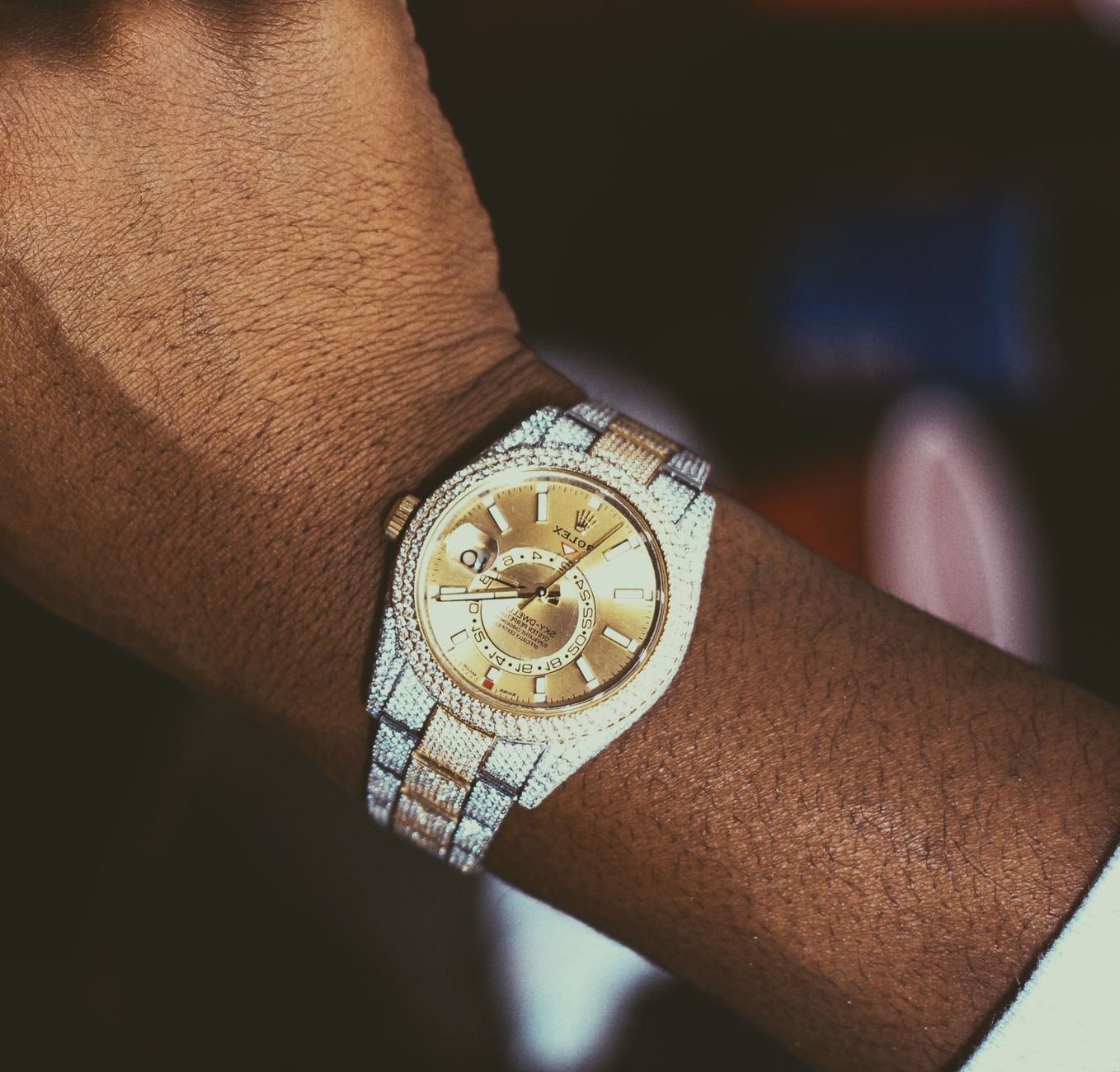
Photo by OUR LORD BISHOP. on Pexels
Most people who own more than one watch own them for the same reason they own more than one pair of shoes: the dive bezel that looks right on a boat looks a little loud at a dinner table. Interchangeable watch bezels are the industry's answer to that problem — pop off the ring around the crystal, press on a different one, and the same case reads brushed steel one hour and matte black the next. No screwdriver, no case-back opening, no trip to a watchmaker.
The short answer for anyone shopping: a tool-free bezel changes the look of a watch in about ten seconds and changes almost nothing about how it keeps time. What it does affect is the mechanical tolerance of the bezel itself and, in some designs, how the watch handles water. A well-executed swap system uses a sprung retention ring or a bayonet-style twist lock that seats with an audible click and leaves zero rotational slop. A poorly executed one rattles. Knowing which you're looking at before you buy is mostly a matter of reading the product page carefully and asking three specific questions, which is what the rest of this piece is for.
How does a tool-free bezel swap actually work?
Strip away the marketing and there are only a handful of mechanisms in play.
The sprung-ring press fit. A traditional bezel is held to the case by a tension ring — a split circle of spring steel sitting in a groove. Press the bezel on and the ring compresses, then expands into place. Removing one normally takes a case knife and a steady hand. Quick-swap versions replace that hidden ring with a stronger, serviceable retention system designed for repeated cycles, so the bezel lifts off with thumb pressure at a specific release point rather than requiring a pry tool.
The bayonet twist-lock. Lugs on the underside of the bezel drop into slots machined in the case, then a short rotation — often just a few degrees — locks them under a lip. This is the same principle as a camera lens mount, and when it's cut well it's the tightest of the bunch, because the load sits on machined metal rather than on spring tension.
The push-button release. A recessed button or lever on the case side disengages a catch. Fewer brands use this because it means another opening in the case, but it's the most foolproof to operate one-handed.
Whichever system a brand uses, the part doing the real work is the interface between bezel and case — how many contact points, how tight the machining, and whether the click spring (the toothed ring that gives a rotating bezel its ratchet) lives in the bezel or in the case. That last detail matters more than most buyers realize. If the click spring is in the removable bezel, every swapped ring carries its own action, so a 120-click dive bezel and a smooth-turning GMT ring can share one watch. If the spring lives in the case, all your bezels feel identical no matter what they look like.
The clearest current example of the category is a mechanical watch line built around a patented tool-free bezel system — Tsarbomba designs whole collections so a single case accepts several bezel profiles, and the brand has picked up design recognition including a 2023 MUSE Gold award. It's a useful reference point even if you end up buying elsewhere, because seeing how one brand documents its swap mechanism teaches you what a thin product page is leaving out.
What should you check for play, alignment and water resistance?
Three failure modes account for nearly every complaint about swap systems. Here's how to spot each one before it becomes yours.
Rotational and vertical play
Play is movement where there shouldn't be any. With a rotating bezel, a tiny amount of back-play between clicks is normal and even expected — the ratchet has to have somewhere to sit. What isn't normal is vertical lift (the bezel rocking up off the case when you press one edge) or lateral wobble.
When a watch arrives, test it in this order:
- Press each of the four quadrants of the bezel in turn with a fingernail. Nothing should tilt or tick.
- Try to rotate a fixed bezel. If it's meant to be stationary, it should feel welded on.
- Rotate a unidirectional bezel one full turn and listen. Clicks should be evenly spaced and equally firm — one soft or mushy click usually means a tired click spring.
- Swap and re-seat three or four times in the first week. Quick-swap systems tend to reveal their flaws on the second or third cycle, not the first, and that's still inside most return windows.
Alignment against the dial
This is the detail collectors argue about and casual buyers notice a month later. On a dive-style bezel, the pip or triangle at 12 should sit directly over the dial's 12 marker. A swap system introduces a second chance for misalignment, because the bezel now indexes to the case at a discrete set of positions rather than being pressed on and adjusted once at the factory.
Good news: bayonet designs are usually better here than traditional press fits, because the lug-and-slot geometry only allows one seated position. Press-fit swap systems can be rotated a hair during installation. Look for language on the product page about indexed or keyed seating — a brand that has solved this tends to say so, because it's a genuine engineering point.
Water resistance
Here's the part worth being unromantic about. A bezel is not usually what keeps water out of a watch — the crystal gasket, case-back gasket and crown seal do that. In most designs, removing the bezel exposes the crystal's retaining ring but not the movement. That's why plenty of swap-system watches still carry meaningful water resistance ratings.
But "in most designs" is doing work in that sentence. What to look for:
- A stated water resistance figure in meters or ATM, not vague phrases like "splash safe."
- Confirmation that the rating applies with the bezel installed and seated — and never swap a bezel with wet hands or near a sink.
- Screw-down crown specified separately. A screw-down crown is a bigger factor in real-world water resistance than the bezel ever will be.
- A gasket that is user-replaceable or serviceable, since any seal degrades with age.
Treat a 100m-rated swap watch the way you'd treat any 100m watch: fine in the rain and the shower, not a tool for scuba diving unless the brand says so explicitly.
Who actually gets use out of an interchangeable bezel?
Honest field notes from the flock: this feature is genuinely great for some people and completely wasted on others.
It earns its keep if you:
- Own one or two watches and want them to cover a wide range of occasions. One case, three bezels, is cheaper and less cluttered than three watches.
- Already swap straps constantly. If you're the person with a drawer of NATOs and rubber, bezels are the same instinct one layer up, and a bezel change alters a watch's character far more than a strap does.
- Travel light. A dress ring and a sport ring take almost no luggage space.
- Like gear you can take apart. Some of the appeal is simply tactile.
You're better off with a fixed bezel if you:
- Actually time things underwater or in a workshop, where a bezel that's meant to come off is one more variable you don't want.
- Value long-term resale and originality — the collector market rewards untouched, factory-original configurations.
- Have a single watch you wear every day without thinking about it. The swap will happen twice and then never again.
- Prefer the thinnest possible case. Swap hardware usually adds a fraction of a millimeter to the bezel stack.
Questions worth asking before you buy
Whatever brand you're looking at, these five answers should be findable on the product page or in the FAQ. If none of them are, that tells you something too.
- How many bezel styles fit this specific case, and are they sold separately?
- Is the swap mechanism rated for a number of cycles, or described as serviceable?
- Does the water resistance rating assume the bezel is installed?
- Is the click spring in the bezel or the case?
- Are replacement bezels likely to stay available, or are they tied to one limited collection?
That last one is the sleeper. An interchangeable system is only interesting if there's something to interchange with. A brand that builds a whole catalog of bezels around a consistent case standard is offering a platform; a brand that ships two rings in a box is offering an accessory. Both are fine — just buy the one you meant to.
Common questions
Do interchangeable watch bezels affect water resistance?
Usually less than people expect. Water resistance mostly comes from the crystal gasket, case-back seal and crown, not the bezel, so many swap-system watches carry standard ratings. Check that the stated figure in meters or ATM applies with the bezel seated, confirm whether the crown screws down, and always swap bezels dry and away from water.
How do you tell if a swap bezel is seated correctly?
Listen and look. A correctly seated bezel gives a definite click or stop, sits flush with the case all the way around, and won't rock when you press each quadrant with a fingernail. On a dive-style ring, the 12 o'clock pip should line up with the dial's 12 marker. Any tilt, gap or wobble means re-seat it.
Are interchangeable bezels worth it over a fixed bezel?
It depends on how you wear watches. If you own few watches and want one case to cover casual, dressy and sporty looks, a swap system is genuinely useful. If you wear one watch daily, time things seriously, or care about factory-original resale value, a fixed bezel is simpler and gives you one less part to keep track of.
If you want to see how a full swap-bezel system is put together — case standards, bezel styles, the whole platform idea — Tsarbomba's mechanical watch collections are a straightforward place to browse and compare against whatever else is on your shortlist. No rush; bezels will still be there next week.