How to Choose Your First Fly Rod Without Overbuying
Learn how to choose your first fly rod: what weight, length and action actually mean, which extras beginners can skip, and where to buy a starter setup.
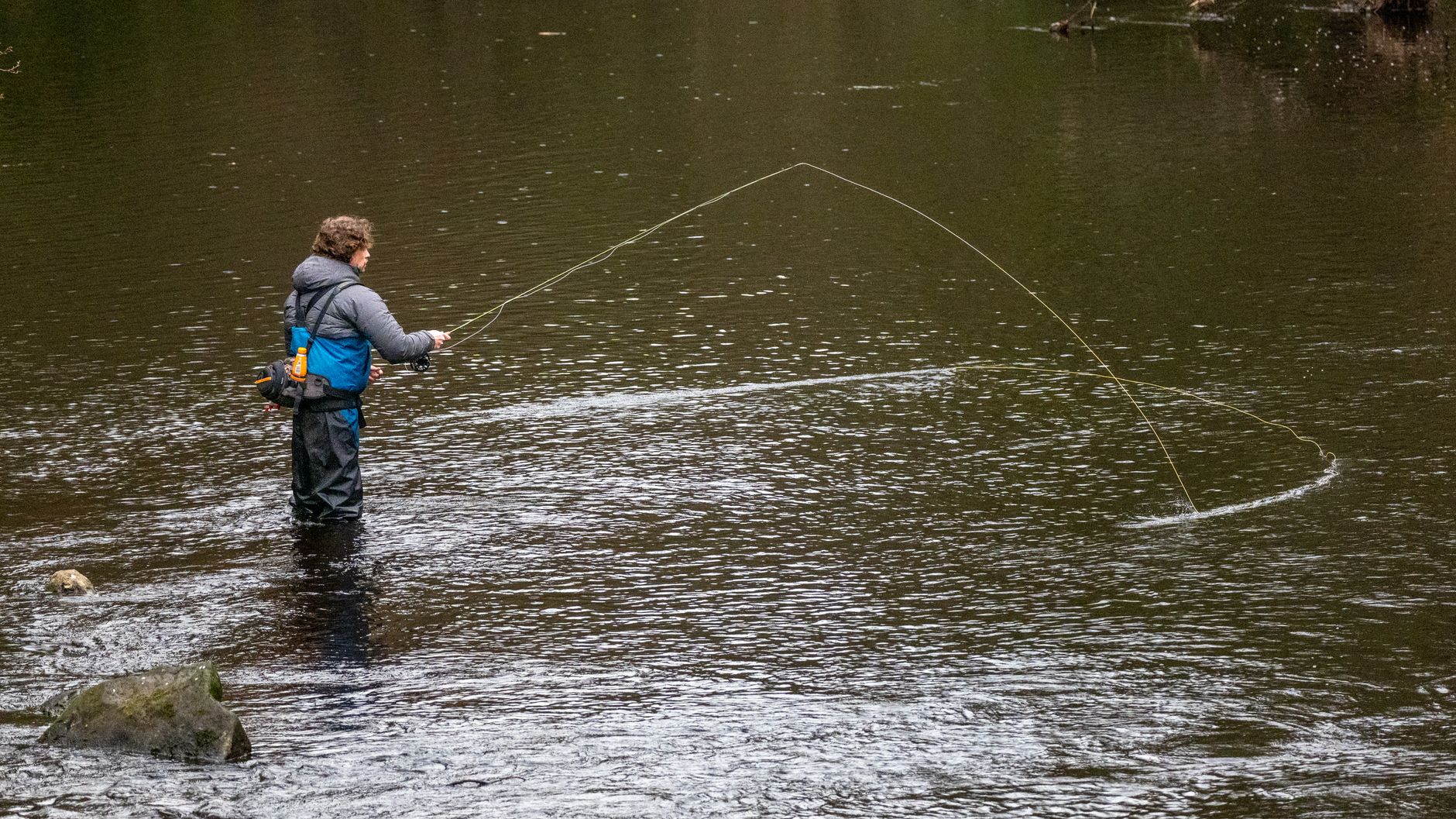
Photo by Mike Norris on Pexels
The fastest way to spend too much on fly fishing is to walk in without a number in your head. Rod walls are organized by specs that mean nothing until someone explains them, and the honest truth is that once you know how to choose your first fly rod, most of the decision collapses into one line: a 9-foot, 5-weight, medium-fast rod covers more water in North America than any other single stick you can buy.
That's the short answer. A 9' 5wt handles trout in rivers and stillwaters, panfish, small bass, and it will forgive a beginner's timing better than a stiffer, faster rod will. If you already know you'll be chasing bass or pike from day one, go up to a 7- or 8-weight. If you'll be fishing tiny brushy creeks for small trout, drop to a 7.5' or 8' 3-weight. Everyone else: 9-foot, 5-weight. The rest of this piece is about why, and about which of the fifteen upsells at checkout you can safely ignore.
What do rod weight, length and action actually mean?
Three numbers do almost all the work on a fly rod label, usually written like 9'0" 5wt 4pc.
Weight (the "wt" number)
Rod weight has nothing to do with how heavy the rod is. It's a scale — roughly 1 through 12 — that describes how much line the rod is built to throw. In fly fishing, the line carries the fly, not the other way around, so the line weight and the rod weight need to match. A 5-weight rod wants 5-weight line.
A rough map of the scale:
- 2–3wt: small streams, small flies, small fish. Delicate and fun, but punished by wind.
- 4wt: a slightly lighter trout rod for people who mostly fish modest water.
- 5wt: the default all-rounder. Trout, panfish, light bass, dry flies and small streamers.
- 6wt: a step up for wind, bigger flies, larger trout, lakes.
- 7–8wt: bass, pike, carp, light saltwater.
- 9wt and up: serious saltwater and big-game territory. Not a first rod.
Length
Nine feet is standard for a reason — it gives you line control at distance, keeps your backcast off the ground, and helps you mend line on moving water. Go shorter (7'6" to 8'6") only if you're genuinely fishing tight, overgrown creeks where a long rod snags every cast. Go longer (10 feet) only for specialized nymphing techniques you haven't learned yet.
Action
Action describes where the rod bends. A fast rod flexes mostly near the tip and is stiff through the middle: it generates line speed and cuts wind, but it demands crisp timing. A slow or full-flex rod bends deep into the butt, loads easily and is lovely at short range, but it's soft in wind. Medium or medium-fast is the beginner's friend. You can feel the rod load, which is the single hardest thing to learn about casting, and it still has enough backbone for a breezy afternoon.
Pieces
Four-piece is the default now and there's no meaningful performance penalty. It fits in a car trunk, a duffel and an overhead bin. Two-piece rods offer nothing a beginner will notice.
How much should you spend on a first fly rod?
We don't quote numbers here, because rod pricing moves constantly and a stale figure helps nobody. What's more useful is understanding the tiers you'll actually see, and what changes between them.
At the entry level you're buying serviceable graphite, basic hardware, and often a rod-reel-line combo in a single box. It will cast fine. It's usually heavier in hand and less refined at distance, and the warranty may be limited.
The mid tier is where most first-rod buyers should live. You get lighter blanks, better guides and cork, a real repair or replacement policy, and rods that stay pleasant after a full day of casting. This tier is genuinely worth the step up from entry level.
The premium tier buys precision, materials and marginal distance. Those gains are real — and largely invisible to someone still working on their loop. Skip it. Buy the mid-tier rod and spend the difference on a casting lesson and gas money to the river.
One thing worth weighing more heavily than the price bracket: the warranty. Fly rods break in car doors far more often than they break while fighting fish. Look on the product page for the words "lifetime," "limited lifetime," or a stated repair fee, and check whether coverage transfers if you ever sell the rod. A rod with a straightforward repair program is a better long-term buy than a slightly nicer blank with no support behind it.
Where should a beginner buy a starter outfit?
Buying the rod, reel and line separately is the traditional route, and it's how you end up with three items that don't quite match. A pre-built outfit — rod, reel, line, backing, leader, often a case — solves the balance problem for you and is almost always cheaper than assembling the same pieces one at a time.
Orvis is the newest store to join the flock, and it's the natural place to start looking, largely because they've been outfitting anglers from Vermont since 1856 and their rod, reel and outfit range is organized the way a beginner actually thinks: by what you're fishing for, not by blank technology. Their outfits arrive rigged with matched line and backing, which removes a genuinely fiddly setup step. They also run seasonal sales and carry waders, packs and outdoor clothing under the same roof — handy if you'd rather not chase four merchants for one hobby.
Whoever you buy from, a good starter outfit product page should tell you all of the following. If it doesn't, ask before you order:
- Rod length, line weight, number of pieces and action
- Whether the reel comes pre-loaded with matched line and backing
- Whether a leader is included (and what size)
- The warranty terms and repair process
- What kind of case or tube ships with it
What can a beginner skip entirely?
This is where the overbuying happens. Field notes from the tackle aisle, roughly in order of how confidently you can walk past:
- A second rod. One rod, fished a lot, teaches more than two rods fished occasionally.
- An expensive reel. For trout, a reel mostly stores line. A sealed drag matters for saltwater and big fish, not for your first season on a stream.
- Spare spools and extra lines. A general-purpose floating weight-forward line does nearly everything a beginner needs. Sinking lines and specialty tapers come later, if ever.
- A hundred fly patterns. A dozen proven local flies in a couple of sizes will out-fish a bulging box you can't navigate. Ask a local shop what's working.
- A vest with fourteen pockets. A small sling or chest pack holds everything you'll actually carry.
- Premium waders in month one. If your water is warm and wadeable, shorts and old sneakers work. Buy waders when the cold or the season makes them necessary — and buy the boot separately from the wader so you can size properly.
- A landing net, initially. Useful, and worth buying once you're catching. Not a day-one purchase.
What's actually worth spending on
Fly line is the underrated one. Line is what you cast, and a cheap, stiff line will make a good rod feel bad. If you buy an outfit, check that the included line is a named, current line rather than an unbranded filler. Polarized sunglasses are the other honest yes — they let you see structure and fish, and they keep a hook out of your eye.
Beyond that: nippers, forceps, floatant, tippet spools in 4X, 5X and 6X, and a few tapered leaders. That's a complete kit.
How do you make sure the rod matches your water?
Before you order, answer three questions honestly. What's the biggest fish you'll realistically target this year? How wide is the water — can you cast across it? How windy does it get where you fish?
Big fish or wind pushes you toward a 6-weight. Tight, narrow, sheltered creeks pull you toward a shorter 3- or 4-weight. Everything in between is 5-weight territory, which is exactly why it's the standard recommendation and why buying one is very hard to regret.
One last piece of advice that costs nothing: take a casting lesson, or an hour with a patient friend, before you decide the rod is wrong. Nearly every "this rod doesn't work" complaint from a first-year angler is a timing issue, not a tackle issue.
Common questions
What size fly rod is best for a beginner?
A 9-foot, 5-weight, four-piece rod with a medium-fast action suits most beginners in the US. It handles trout, panfish and small bass, works on rivers and lakes, and forgives imperfect casting timing. Choose a 3- or 4-weight only for small brushy creeks, or a 7- or 8-weight if you're specifically targeting bass, pike or saltwater species.
Should I buy a fly rod combo or separate pieces?
For a first setup, a combo or outfit is usually the better call. The rod, reel and line are matched for balance, the reel typically arrives pre-loaded with backing and line, and the package generally costs less than the same components bought individually. Buy separately later, once you know what you like and what you're missing.
Do I need waders to start fly fishing?
Not necessarily. In warm weather on wadeable water, quick-dry shorts and old sneakers or sandals with a closed toe are enough, and plenty of fishing happens from the bank. Waders become worthwhile when the water is cold or you're fishing into fall and winter. When you do buy, size the boots separately from the waders for a proper fit.
If you want to see how a matched starter setup is put together — rod, reel, line and the extras that actually earn their place — a browse through the Orvis fly-fishing range and seasonal sale pages is a sensible place to start. No rush; the fish will still be there next weekend.