Electric Trike Cargo Capacity: Baskets, Limits, Groceries
Electric trike cargo capacity explained: typical basket sizes, rider and load weight limits, and how much of a real grocery run actually fits in the back.
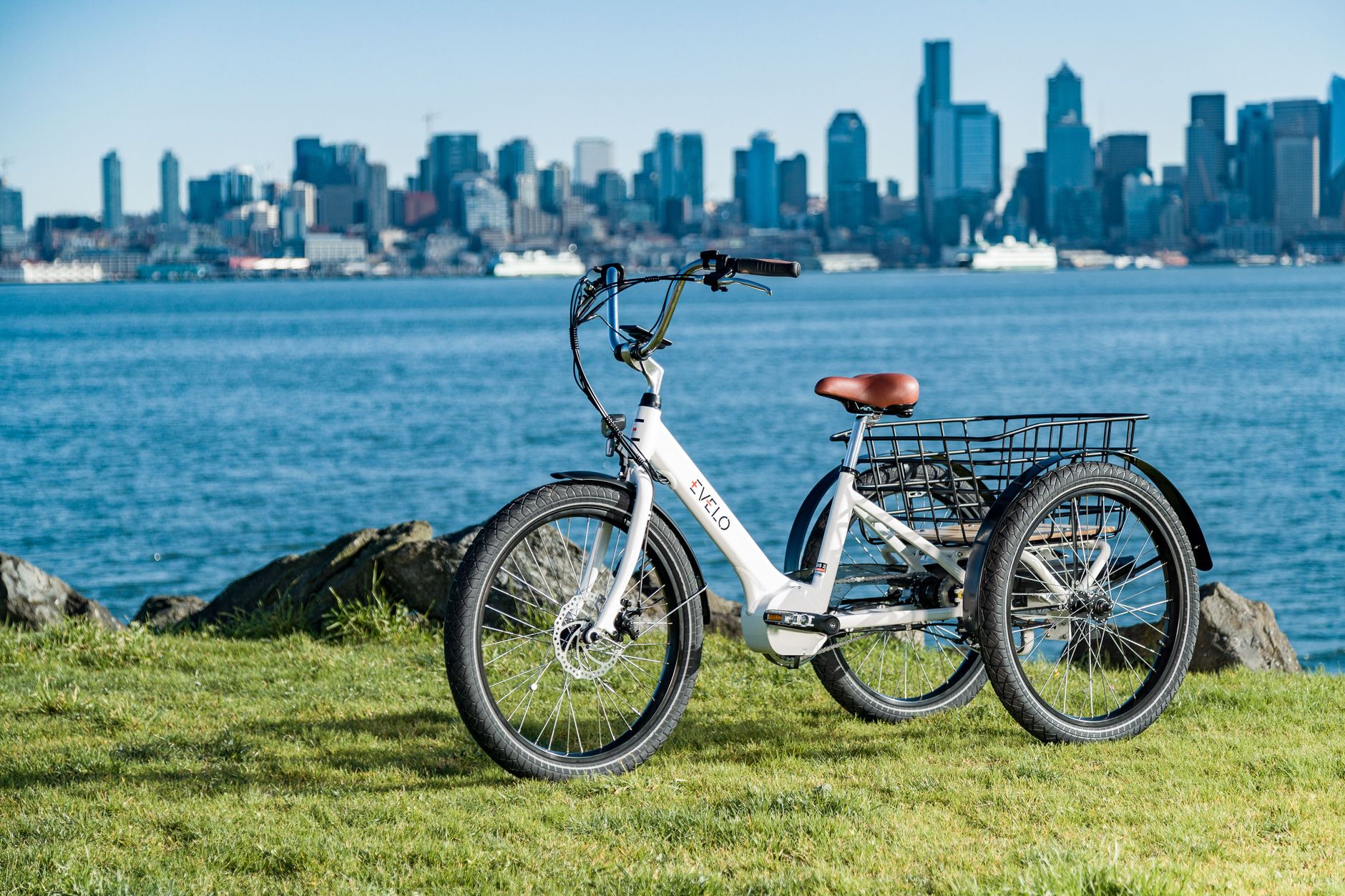
Photo by Team EVELO on Pexels
A full grocery run is roughly four paper sacks, one of which is doing its best to fall over. That is the number worth holding in your head when you shop, because electric trike cargo capacity — not top speed, not motor wattage — is what decides whether the trike replaces a car trip or just goes for pleasant loops around the block. The short answer: most adult electric trikes carry a rear basket somewhere in the range of 20 to 24 inches wide, 14 to 18 inches deep and 10 to 13 inches tall, rated for roughly 50 to 100 lb, which comfortably swallows two to four bags of groceries.
The longer answer is that the rated basket number and the useful number are rarely the same. A basket can be rated for 100 lb and still be miserable to load if the sides are shallow, the frame flexes, or the rack sits so far behind the rear axle that the front wheel goes light on a hill. So below: how to read basket dimensions on a spec sheet, how the three weight limits on a trike relate to each other, and how to plan a shop that actually fits.
What is a typical electric trike cargo capacity?
Adult three-wheelers generally publish three separate numbers, and shoppers tend to notice only one of them.
- Total payload / max load — usually 330 to 450 lb on adult trikes. This is rider plus cargo plus whatever you strapped to the handlebars. It is a frame-and-fork figure.
- Rear basket or rack capacity — commonly 50 to 100 lb. This one is limited by the rack welds and the basket floor, not the frame.
- Front basket capacity — if fitted, much smaller: 10 to 25 lb, because weight there steers with the wheel and affects handling far more per pound.
Do the arithmetic before you fall for a photo. If a trike lists 400 lb total and 80 lb rear basket, a 220 lb rider still has plenty of frame headroom — but the basket caps out at 80 lb regardless. Groceries rarely hit that; a case of water, a bag of soil or a 40 lb bag of dog food gets there fast. Adult trikes designed around errands and comfortable riding, like the step-through electric trikes built for adults and seniors, usually publish both figures on the product page — if a listing gives you only one, treat that as a gap in the information, not a bonus.
How the basket volume translates into bags
Rough field notes for planning, using standard US paper grocery sacks (about 12 x 7 x 17 inches) and reusable totes (about 13 x 8 x 14 inches):
- 20 x 14 x 10 in basket — two paper sacks side by side, or three totes if you pack them low. Roughly one small weekly shop for one person.
- 22 x 16 x 12 in basket — three sacks, or two sacks plus a milk jug and a bread loaf on top. The most common size, and the most useful.
- 24 x 18 x 13 in basket — four sacks, or three plus a backpack. This is the "I do the shop for the household" size.
- Add a front basket — worth about one extra tote of light, awkward items: bread, greens, a bag of crisps, your jacket.
Note the height figure specifically. A 10-inch wall means paper sacks stand proud and tip on a corner unless you strap them; 12 to 13 inches holds a standing sack far better. Depth beats width for stability, because narrow-and-deep keeps mass closer to the centerline.
Which basket specs should you check on the product page?
Manufacturers describe baskets with wildly different enthusiasm, so build yourself a short checklist and apply it to every listing you open.
- Internal dimensions, in that order: width x depth x height. If only external dimensions are given, subtract about an inch overall for wire thickness and rim flare.
- Basket material and mesh. Steel mesh baskets are the norm. Look for a mesh gap of roughly an inch or less, otherwise small items — lemons, batteries, a bag of nuts — go for a walk on rough tarmac.
- Whether the basket is removable. A basket you can lift off and carry into the kitchen changes the whole errand. Some are bolted permanently; some clip.
- Rack mounting points. Four-point mounting to the rear frame is far more reassuring than two bolts into a fender bridge.
- Rated capacity stated as a number. "Large capacity" is marketing. "Rear basket: 80 lb" is a spec.
- Fold-down or hinged sides. Rare, useful — lets you slide a flat box in rather than lifting it over a wall.
- Tie-down anchors. Even two hooks on the rim make a bungee net practical, and a bungee net is the single cheapest upgrade to any trike.
The measurements the spec sheet leaves out
Three dimensions matter enormously and are almost never listed, so measure or ask:
Loading height. How high off the ground is the basket floor? Somewhere around 26 to 32 inches is typical. If you are lifting a heavy bag over a 34-inch rim, that is a real consideration for anyone who is careful about their back.
Overall trike width. Adult trikes typically run 28 to 34 inches across the rear axle. That is your gate width, your shed door, your bike-lane bollard and your lift. Measure the tightest gap on your regular route before you buy, not after.
Basket overhang behind the axle. The further behind the rear axle the load sits, the more it levers weight off the front wheel. Baskets that sit between or just above the rear wheels handle loaded far better than ones cantilevered out the back.
How do you plan a grocery run on an electric trike?
The trike will carry more than you expect. The failure mode is almost never weight — it is shape, balance and things rolling around.
Load heavy and dense at the bottom and as far forward in the basket as it will go: tins, bottles, milk. Bags of produce and bread go on top. Eggs go in the front basket or a pannier where nothing can settle onto them. If you are carrying anything long — a broom, a curtain rail, a baguette with ambitions — lay it along the length of the basket rather than across, so it does not clip a car mirror.
Then strap it. A cargo net with six hooks costs very little and stops the entire problem. Reusable totes with flat bottoms and stiff sides beat paper sacks by a wide margin on a trike; the ones that fold flat and stand up on their own are the ones to keep in the basket permanently.
Two practical habits worth adopting:
- Load after you pay, at the trike, not in the shop. Sorting bags at the rack takes thirty seconds and saves you a repack in a car park.
- Ride the loaded route once before you rely on it. A loaded trike brakes differently, corners with more roll, and needs a wider line. Nothing dramatic — just different, and worth a dry run on a quiet street.
What about range when the basket is full?
Extra weight costs range, especially on hills and with stop-start riding. Manufacturer range figures are almost always measured with a light rider, on flat ground, in the lowest assist level — treat the published number as a ceiling rather than an expectation, and assume meaningful reduction when you are fully loaded and using higher assist. For errands within a few miles of home this rarely matters. If your shop is a longer round trip with a climb on the way back, a larger battery capacity in amp-hours is the spec to prioritize over motor wattage.
Which trike setup suits your kind of errand?
The short local shop, twice a week. A standard 22-inch rear basket and a small front basket is plenty. Prioritize a low step-through frame and easy mounting over cargo volume — you will be getting on and off constantly.
The full weekly shop. Go for the largest rear basket offered, 12-inch-plus walls, and a rear rack rated 80 lb or more. Consider a trike with a rear basket sitting between the wheels rather than behind them.
Garden center, hardware, bulky-and-awkward. Fold-down basket sides and solid tie-down points matter more than volume. Bags of compost and flat-packed boxes are shape problems, not weight problems.
Errands plus a passenger's worth of stuff. Check the total payload figure carefully, and look at whether the model supports a rear rack extension or panniers in addition to the basket.
If you are comparing models, the flock's usual advice is to open two listings side by side and compare the six numbers that matter: rear basket internal dimensions, rear basket capacity, total payload, overall width, step-over height and battery amp-hours. Everything else is nice to know. Those six decide whether the trike does the job you bought it for. When you are ready to browse, our Outdoor store's adult and senior trikes is a sensible place to start.
Common questions
How much weight can an electric trike basket hold?
Rear baskets on adult electric trikes are typically rated between 50 and 100 lb, with 80 lb being common. That is separate from the trike's total payload, usually 330 to 450 lb, which covers rider and cargo together. Front baskets are rated much lower, often 10 to 25 lb, because weight there affects steering. Always check both numbers on the product page.
How many bags of groceries fit in an electric trike?
A common 22 x 16 x 12 inch rear basket holds about three standard paper grocery sacks, or four reusable totes packed low. A larger 24 x 18 inch basket takes roughly four sacks. Adding a small front basket gains you about one extra tote of light items. Basket wall height matters as much as floor area, since shallow walls let bags tip.
Are electric trikes wide enough to fit through a standard gate?
Adult electric trikes usually measure 28 to 34 inches across the rear axle. Standard residential gates and doorways are often 32 to 36 inches, so most trikes fit, but the margin can be tight. Measure the narrowest point on your regular route — gate, shed door, side passage, lift — and compare it to the trike's listed overall width before ordering.