Electric Trike Storage: Space, Weight and Winter
Electric trike storage catches new owners out: they're wide, heavy and awkward. Measure your space, plan the lift, and learn how to park a trike over winter.
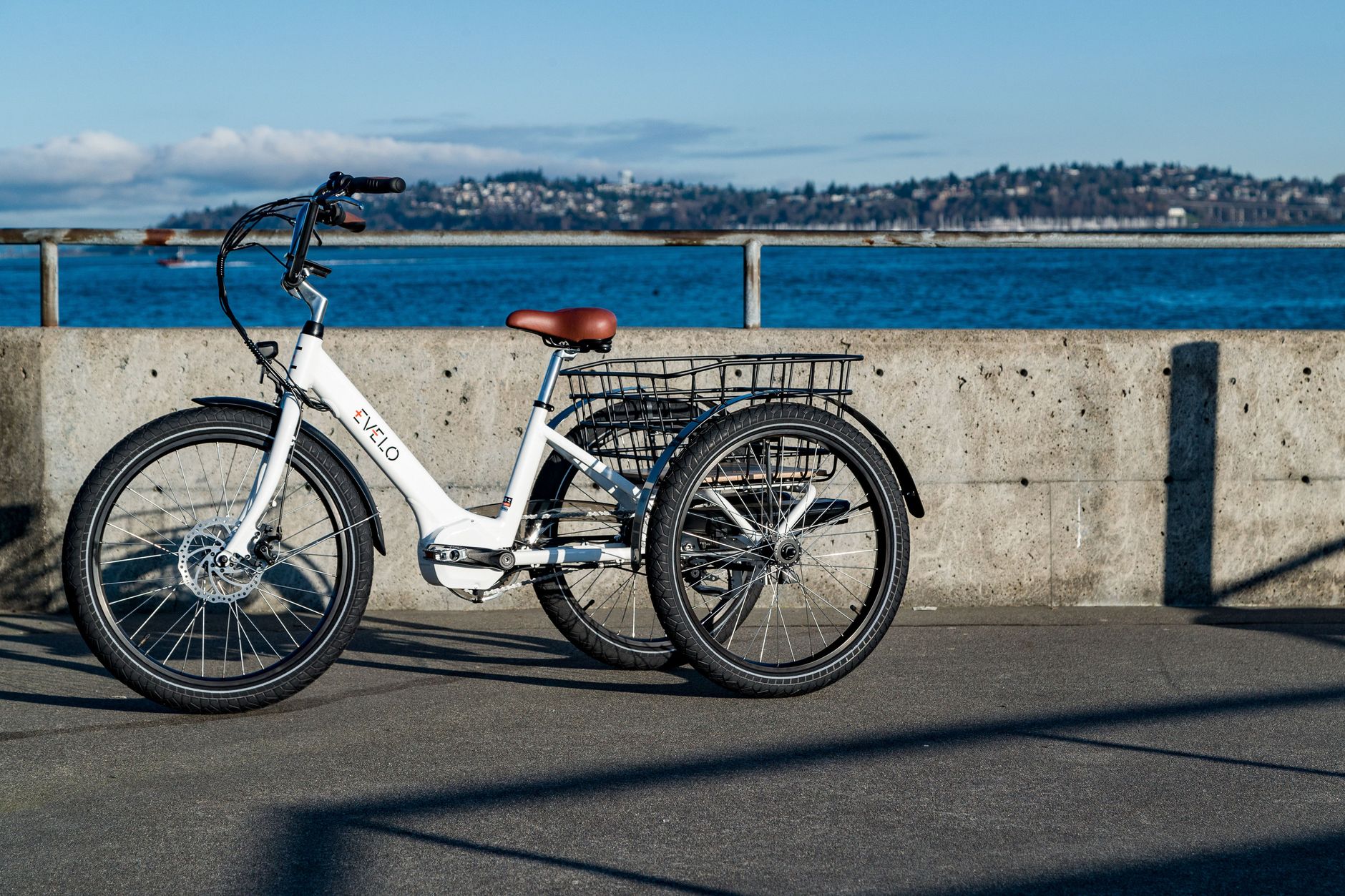
Photo by Team EVELO on Pexels
The tape measure comes out after the delivery driver leaves. That's the pattern: the trike arrives, it's magnificent, and then somebody tries to roll it through a 30-inch garden gate and discovers the rear axle is wider than the opening. Electric trike storage is the part of the purchase nobody plans for, because bikes have trained us to think two wheels wide and a hook in the ceiling.
Here's the short answer. Most adult electric trikes sit somewhere between 30 and 36 inches across the rear axle, run 65 to 80 inches long, and weigh 70 to 100 pounds before you add a basket of shopping. They cannot be hung on a wall, they will not fit a standard bike rack, and they need a flat parking footprint roughly the size of a chest freezer with walking room around it. Measure your doorways, your gate and your parking spot before you order, and check the product page for rear width, total length, folded dimensions if any, and shipping weight. Everything below is the detail behind those numbers.
How much space does an electric trike actually need?
Think in three measurements, not one.
Rear axle width is the number that decides whether the trike gets into the building at all. It is usually the widest point, wider than the handlebars on many models. Manufacturers list it, but they sometimes list frame width instead — if the spec sheet says "width" without saying where it was measured, assume it means the rear track and add an inch for tire bulge and any rear rack overhang.
Overall length matters for garages shared with a car. A trike that is 78 inches long parked nose-in behind a sedan can still leave the garage door unable to close. Measure from the front tire to the back of the cargo basket, not to the back of the frame.
Turning space is the one people forget entirely. A trike does not pivot on the spot the way a bike does when you lift the back wheel. You steer it in and out, and that needs clearance on both sides. A useful rule of thumb: allow the rear width plus about a foot of swing room on each side wherever you'll be maneuvering.
Now go and measure the pinch points in your own route:
- The garden gate or side passage (the classic failure point — many are 30 to 32 inches)
- Any interior doorway the trike must pass through, measured between the door stops with the door fully open
- The gap between your car and the garage wall
- Shed doors, which are often narrower than they look because of the frame
- Any step, threshold or lip — a two-inch lip is nothing on a bike and a real shove on a trike
- Ceiling height if you're considering a lift or a raised platform
If a folding model is on your shortlist, read the folded dimensions carefully. Folding on a trike usually means the frame hinges and the handlebars drop; the rear track generally does not narrow much. A folded trike is shorter and easier to get into a van, not suddenly slim enough for a hallway.
Where people realistically park them
Garage bay, back corner, nose-in against the wall — the most common answer and the easiest. A shed works if it is a real shed with a wide door and a level floor, less so if it is a lean-to with a raised timber threshold. Covered patios and carports are fine in mild climates with a proper cover. Apartment dwellers have the hardest job: a ground-floor storage cage or bike room is the realistic option, because getting 80 pounds into a lift and along a corridor is a daily chore that gets old fast.
A note on floors. Trikes park happily on concrete, but a rubber mat or a couple of interlocking gym tiles under the wheels keeps damp concrete from wicking into tires and keeps grit off the garage floor. It also gives you a visible parking box so the trike keeps ending up in the same spot rather than creeping into the car's space.
Can you lift a trike, and what do you do if you can't?
Assume you can't, and plan accordingly. A 90-pound machine with no natural balance point is not a wall-hanger. There are no hooks, hoists or vertical racks designed for three-wheel geometry, and improvising one is how people damage frames and ceilings.
What you're actually managing is rolling weight, not dead lift, and rolling weight is very manageable on flat ground. The friction points are slopes, thresholds and gravel. If your route includes any of those, a couple of things help enormously:
- A short aluminum threshold ramp for the door lip or a single step
- Removing the battery before you push — that is often 6 to 10 pounds off the frame and it makes the trike noticeably easier to steer by hand
- Walking it in reverse up a slope, so gravity works against your body weight rather than your wrists
- A parking brake, which most adult trikes include; use it every time on any incline, because a trike that starts rolling doesn't fall over and stop, it keeps going
Transport is the other lifting question. Standard hitch and trunk bike racks are built for a two-wheel diamond frame and will not take a trike. The workable options are a van or truck bed with a loading ramp, a small utility trailer, or a heavy-duty hitch carrier rated for the weight and the width. If you plan to drive the trike anywhere — a trail, a holiday, a family visit — sort that out before you buy, because it can be more expensive than the trike accessories you were budgeting for.
Stability is what makes trikes worth the storage hassle in the first place. Step-through frames, a wide rear track and the fact that the thing simply stands there when you stop are exactly why riders choose them. That's the trade you're making: easier to ride, harder to park. If you're still narrowing down models, the range of adult and senior electric trikes built for errands and leisure is a sensible place to compare frame styles and published dimensions side by side.
Where should you charge the battery, and how?
Charging deserves its own bit of planning, because the socket and the parking spot are often not in the same place.
Most adult trikes use a removable battery pack that slides off the rear rack or the down tube with a key. That is the feature to look for on the product page, and it solves several problems at once: you can carry the battery indoors to charge somewhere warm and dry, you lighten the trike for pushing, and you leave a much less attractive target parked in the shed.
Practical habits worth adopting from day one:
- Charge on a hard, clear surface — a garage bench, a utility room shelf, a tiled floor. Not on carpet, not in a cupboard packed with fabric, not on top of a pile of boxes.
- Use the charger that came with the trike. Chargers are matched to pack voltage and cell chemistry; a generic replacement is a false economy.
- Charge while you're awake and around, rather than overnight and unattended, and unplug when it's done.
- Keep the charging area ventilated and away from a heat source.
- If your only option is an outdoor socket, use a proper outdoor-rated enclosure and keep the connection off the ground.
Follow whatever your manufacturer's manual says about charge levels and temperatures — that guidance is specific to the pack you own, and it overrides anything you read online, including this article.
Damp is the quiet problem
Garages, basements and sheds are where trikes live and where moisture collects. Condensation on cold metal is what rusts chains, seizes cables and dulls contacts over a season. Ventilation helps; so does not covering a wet trike with a sealed tarp, which traps water against the frame rather than keeping it off. If the space is chronically damp — a basement that smells of it, a crawl space, a garage with a persistent puddle line — dealing with the air is more effective than wiping the bike.
What does winter storage actually involve?
If you ride year-round in a mild climate, this section is mostly about keeping salt and grit off the drivetrain. If you're parking the trike from November to March, there's a short routine worth doing properly once rather than badly three times.
- Clean and dry it. Road grime holds moisture. Wipe the frame, clean the chain, dry everything before it goes into storage.
- Lubricate the chain and cables. A thin film of oil is what stops surface rust over four idle months.
- Inflate the tires to the pressure printed on the sidewall. Three tires, and flat spots form on a heavy machine that sits all winter.
- Remove the battery and bring it indoors. Store it somewhere at normal room temperature, away from heat, at whatever state of charge the manual specifies — most makers give a target range for long storage.
- Check the battery periodically. Diary it. A monthly look is enough to catch a pack that has drifted low, and topping up per the manual is far better than finding it flat in spring.
- Cover it loosely, or not at all. A breathable cover in a dry garage is ideal. A sealed plastic sheet over a damp trike is worse than nothing.
- Get it off cold concrete if you can. Mats, tiles or a strip of plywood under the wheels.
Come spring, reverse the list: refit the battery, check pressures, test the brakes at walking pace before you go anywhere, and confirm the parking brake still holds. Field note from the flock — the thing most often out of adjustment after a winter isn't the motor, it's the brake cable, because cables settle as the temperature swings.
What to check on the product page before you buy
Storage-relevant specs hide in the fine print. Scroll past the marketing photos and look for:
- Rear width and overall length in inches, and folded dimensions if it folds
- Weight with and without the battery — the difference tells you how much easier pushing gets
- Shipping weight and box size, which tell you whether you can get the crate to the assembly spot
- Removable battery, plus where it mounts and whether it locks
- Parking brake and how it engages
- Fenders and chain guard, which meaningfully reduce how much road salt reaches the drivetrain
- Assembly requirements — most trikes arrive partly built and need a clear, flat area for an hour or two
And one entirely non-technical check: walk your route with the tape measure, gate to parking spot, before the order goes in. Ten minutes now beats a return shipment of a very large box.
If you're weighing up frames and dimensions, it's worth browsing the stable three-wheel models made for comfortable everyday riding with your measurements already in hand — the specs make a lot more sense when you know your gate is 31 inches. No rush; the trike will still be there after you've measured.
Common questions
How wide is an adult electric trike?
Most adult electric trikes measure roughly 30 to 36 inches across the rear axle, which is usually the widest point on the machine. That is wider than many garden gates and some interior doorways. Check the manufacturer's listed rear width, add an inch for tire bulge and rack overhang, then measure every doorway on the route to your parking spot.
Can you hang an electric trike on a wall?
No. Three-wheel geometry has no balance point to hang from, and at 70 to 100 pounds a trike is far heavier than the hooks and hoists sold for bicycles. Plan for floor parking on a flat, level surface with clearance on both sides for steering it in and out. A rubber mat under the wheels keeps damp concrete off the tires.
Should you remove the battery for winter storage?
If the pack is removable, taking it indoors for winter is the common recommendation, and most manufacturers' manuals cover it. Store it at normal room temperature, away from heat sources, at the charge level your manual specifies, and check it monthly rather than leaving it untouched until spring. Always follow the guidance that came with your specific battery.