Electric Trike for Adults: Stability, Range, Step-Through
How to choose an electric trike for adults: turning behavior, seat and step-over height, basket load limits and range that survives real errands.
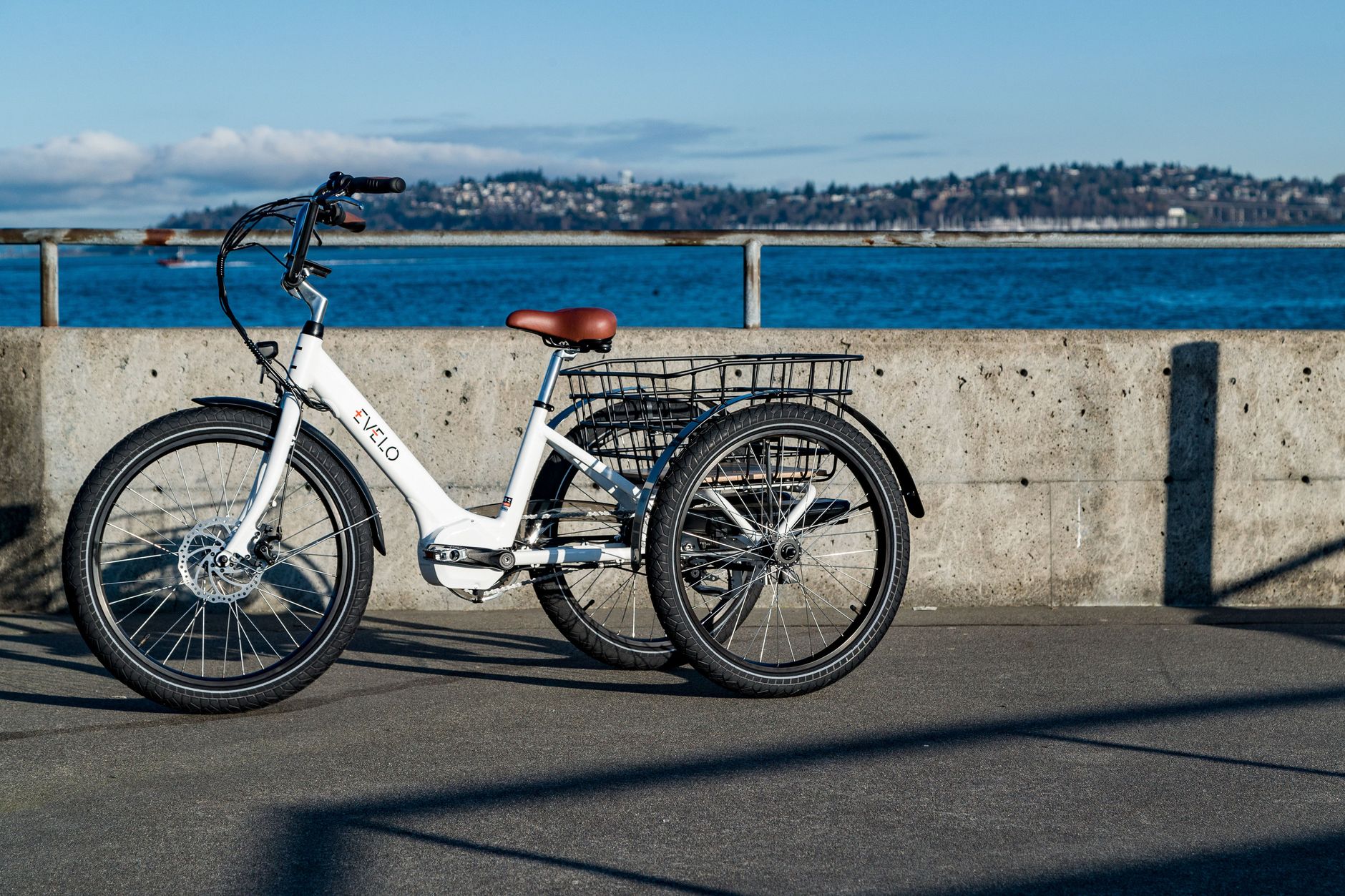
Photo by Team EVELO on Pexels
The first thing most people notice on a three-wheeled e-bike is that it does not fall over when they stop pedalling. The second thing they notice is that it corners nothing like a bicycle. Both facts matter more than any number on a spec sheet, and both are why choosing an electric trike for adults comes down to how the machine behaves at 8 mph on a cracked pavement — not how it looks in a product photo.
Short answer before the depth: pick the trike you can get on and off without thinking, with a seat height that lets you plant both feet flat at a stop, a rear basket rated for the actual weight of a grocery run, and a battery you assume will deliver roughly 50–60% of its headline range once you add hills, cargo, cold weather and throttle use. Everything below is how you check those four things on a product page instead of guessing.
How does an adult electric trike handle differently from a bike?
A two-wheeler stays upright because you steer into a lean. A trike cannot lean — the rear axle keeps both wheels planted — so all cornering force goes sideways through your body and the frame. In practice that means three habits to unlearn:
- Slow before the turn, not during it. Braking mid-corner on a delta trike (one wheel front, two rear) shifts weight forward and outward at the same time. Roll off, brake, then steer.
- Do not counter-steer. Any instinct to lean into the bend just lifts weight off the inside rear wheel. Sit upright, let the handlebars do the work.
- Expect a wide arc. Turning radius on adult trikes is typically in the 8–12 foot range. A tight garage entry or a curb-cut alley may need a three-point turn.
Tadpole layouts (two wheels front, one rear) corner more securely but are rare in the errand-and-comfort category. Most trikes marketed to adults and seniors — including the step-through models at a shop that specializes in adult and senior electric trikes — are deltas, because a delta gives you the flat cargo platform over the rear axle that makes the whole thing useful for shopping.
Differential or single-wheel drive?
This is the one drivetrain detail worth reading the fine print on. If the motor drives one rear wheel only, the trike pulls slightly to that side under hard acceleration and can scrub the inside tire in turns. A rear differential splits power between both wheels and makes cornering under power far smoother. Look for the words "differential" or "dual rear drive" in the specification table. If neither appears, assume single-wheel drive and test the pull on a flat surface first.
What seat and step-over height should you actually look for?
This is where most buyers get it wrong, and it is fixable in ten seconds with a tape measure.
Step-over height is the distance from the ground to the lowest point you must clear to get aboard. On a true step-through frame that is often 12–17 inches. On a "low-step" bike it can quietly be 20 inches or more. Measure the height of the highest step you climb comfortably at home — a standard stair riser is about 7 inches — and be honest about hip mobility, because you will do this maneuver twice per errand, sometimes with a bag in one hand.
Seat height is the separate question. On a bicycle you want a near-full leg extension. On a trike, prioritize being able to sit and put both feet flat on the ground, because that is your stability at every stop, every curb and every gate. Many riders end up running the saddle slightly lower than a bike-fit chart would suggest and accept the small loss in pedalling efficiency — the motor covers it.
Things to hunt for on the listing:
- A stated seat height range, not just "adjustable". A range of 28–36 inches tells you something; "fits most" does not.
- Rider height range and a separate maximum rider weight (commonly 250–350 lb on adult trikes).
- A swept-back or adjustable-angle handlebar, so you are not reaching forward while sitting upright.
- A wide sprung saddle or backrest. A backrest changes a trike from tolerable to genuinely comfortable on a 40-minute round trip.
- Reverse gear and a parking brake. Both sound like gimmicks until you are reversing 70-odd pounds of loaded trike out of a shed.
How much can the cargo basket really carry?
Trike baskets look enormous, which invites overloading. Two numbers govern what you can put in them, and the smaller one wins.
The first is the basket or rack load rating, usually 50–100 lb on a rear trike basket. The second is the total payload — rider plus cargo plus accessories — against the frame's maximum. A 330 lb payload with a 200 lb rider leaves 130 lb, which sounds generous until you add a child seat, a pannier and a full water bottle.
For scale, a typical grocery run is far lighter than people assume: a gallon of milk is about 8.6 lb, a 12-pack of cans roughly 10 lb, a bag of dry dog food 15–30 lb. Most weekly shops land between 30 and 50 lb. A 60 lb basket rating covers that comfortably. Where ratings get tested is bulk buys, bags of compost, or hauling tools.
Load placement matters as much as load weight. Keep heavy items low and centered over the rear axle, not stacked toward the tail, because weight behind the axle makes the front wheel light and the steering vague. If you shop in a way that produces tall, awkward loads, look for a basket with a flat floor and vertical sides rather than a tapered wire bin, plus mounting points or a cargo net — most baskets ship without one and a bungee net is the cheapest upgrade you will ever make.
Folding trikes and the storage question
Folding models solve a real problem if your trike lives in a hallway or the back of an SUV. Be realistic about what "folding" means: a folded adult trike is still bulky and often 60–80 lb, so ask whether you can lift it at all, or whether you simply need it narrower to roll through a door. Check the folded width against the doorway you actually use.
What range do you really get from an electric trike?
Headline range figures are produced under kind conditions: light rider, flat ground, lowest assist level, no wind, warm battery. Real errands are not kind. Treat the advertised number as a ceiling and plan around roughly half of it.
Work in watt-hours instead. Multiply battery volts by amp-hours: a 48V 15Ah pack is 720Wh. A trike is heavier and less aerodynamic than a bike, and on moderate pedal assist most riders draw somewhere around 20–30Wh per mile — more with cargo, hills, stop-start riding or throttle-only use. That 720Wh pack lands somewhere near 24–36 miles of honest mixed riding, and less in cold weather, when lithium packs temporarily deliver reduced capacity.
What to weigh up:
- Match capacity to your longest regular trip, doubled. A 4-mile round trip to the store three times a week does not need a 1,000Wh battery. A 12-mile round trip with hills does.
- Removable battery. If you park outside or in a shed with no socket, a pack you can carry indoors to charge is close to essential.
- Throttle versus pedal assist. Throttle-only riding is the fastest way to drain a pack. If you plan to use it a lot, size up.
- Charger output. A 2A charger on a large pack means an overnight wait; 3A or more shortens the turnaround between errands.
- Brakes over speed. A loaded trike carries momentum. Mechanical or hydraulic disc brakes on all three wheels, ideally with a locking parking brake, matter more than a few extra mph.
Which trike suits your errands?
Some field notes from the way people actually use these, rather than how they are marketed:
- Short local errands, flat streets: lowest step-through you can find, upright bars, mid-size battery, big flat basket. Range is not your constraint; getting on and off ten times an hour is.
- Hilly neighborhood: prioritize motor torque and battery capacity, and check that the brakes are disc rather than rim. Weight and gradient compound quickly.
- Long leisure rides: comfort first — backrest, sprung saddle, fat tires to absorb rough surfaces — then range.
- Tight storage: measure your door and your turning space before anything else, and consider a folding frame.
One last practical note: check the box arrives partly assembled and see whether the seller offers assembly guidance. Handlebars, front wheel, pedals and a brake adjustment are typical. A local bike shop safety check after assembly is money well spent, especially on the brake cable tension.
If you are still narrowing things down, it is worth browsing the step-through and folding trikes built around comfort and errands with the four numbers above written on a sticky note: step-over height, seat height range, basket rating, and watt-hours. No rush — measure first, buy second.
Common questions
Are electric trikes stable for seniors?
Three wheels stay upright at a standstill, which removes the balance demand of mounting and stopping a bicycle. The trade-off is cornering: trikes cannot lean, so they need slower, wider turns. Stability improves with a low seat that lets both feet reach the ground flat, weight carried low over the rear axle, and gentle speeds on turns and cambered roads.
How far will an electric trike go on one charge?
Plan on roughly half the advertised figure. Calculate watt-hours by multiplying battery volts by amp-hours — 48V x 15Ah is 720Wh — and assume about 20–30Wh per mile on moderate assist with a trike's extra weight. That gives roughly 24–36 miles of mixed riding, reduced further by hills, cargo, cold weather and throttle-only use.
How much weight can an adult trike basket hold?
Most rear trike baskets are rated between 50 and 100 lb, but the binding limit is total payload: rider plus cargo plus accessories against the frame maximum, often 250–350 lb. A typical weekly grocery run is 30–50 lb, so a 60 lb rating usually suffices. Keep heavy items low and centered over the rear axle for predictable steering.