Screen Protector for Rugged Case: Fit, Edges, Bezels
Choosing a screen protector for a rugged case? Learn how raised bezels, glue type and edge shape decide whether the glass sticks flat or peels at the corners.
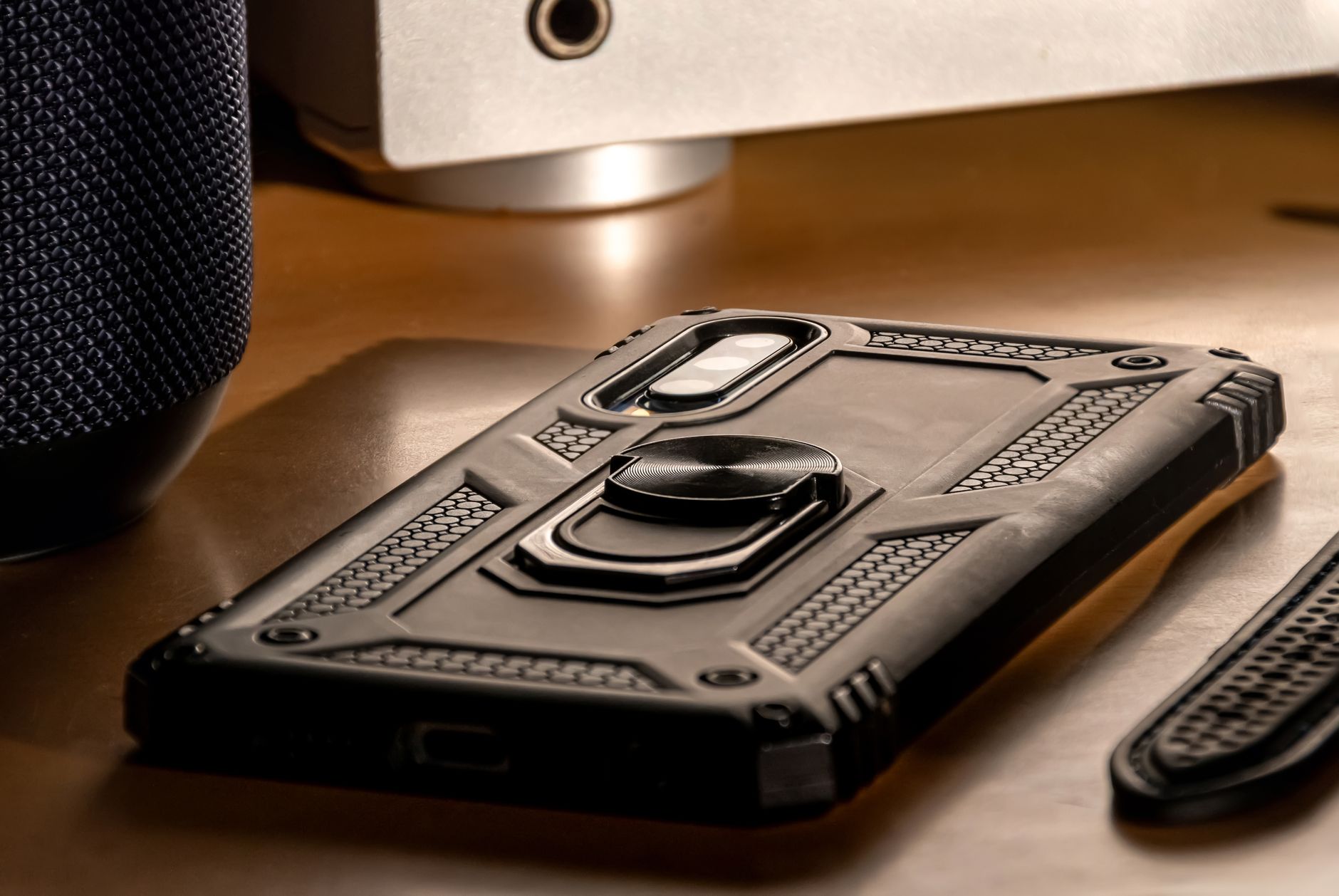
Photo by Fernando Arcos on Pexels
The glass went on perfectly. Flat, clear, no dust, no bubbles. Then you clicked the case back on and watched a thin rainbow of air creep in from the corner like a slow leak. Nothing was wrong with the protector — it was just never shaped to live inside a case lip. Picking a screen protector for a rugged case is less about hardness ratings and more about three boring measurements: how wide the glass is cut, how tall the case bezel stands, and where the adhesive actually sits.
The short answer: for a thick protective case, you want tempered glass cut noticeably narrower than the display so it clears the case lip, with full-surface adhesive rather than a glue ring around the edge, and ideally a protector sold by the same brand that made your case. Those three things solve almost every peeling, bubbling or "the case is pushing my glass off" complaint. Everything below is how to confirm each one before you hit buy.
Why does a screen protector peel inside a rugged case?
A rugged case does its job by standing proud of the screen. That raised lip — usually somewhere between about 1mm and 2mm above the glass on a heavy-duty case — is what stops the display touching the pavement when the phone lands face down. It's also what your screen protector has to negotiate with.
Three failure modes account for most of it:
- Lateral pressure. The protector is cut nearly edge-to-edge, so when the case snaps on, the inner wall of the lip presses against the side of the glass. The glass has nowhere to go but up, and the corners lift first.
- Edge-only adhesive. Many older-style protectors, and most privacy or matte films, use a ring of glue around the perimeter with a dry center. That perimeter is exactly the strip the case lip disturbs. Once the ring lifts anywhere, air walks all the way around it.
- Curved-edge geometry. On phones with any curvature at the display edge, a protector that tries to follow that curve is already under tension. Add a case lip crowding it and you get the classic dark halo along the long edges.
Notice what isn't on that list: 9H hardness, oleophobic coating, thickness in millimeters. Those matter for scratch resistance and feel. They have almost nothing to do with whether the thing stays stuck.
How do I check screen protector compatibility before buying?
You can do this from the product page, in about ninety seconds, without a ruler.
Look for the words "case friendly" or "case compatible"
This isn't marketing fluff — it's a specific design decision. A case-friendly protector is deliberately cut smaller than the display so there's a visible gap between the glass edge and the case wall. On a black phone that gap disappears into the bezel; you'll never notice it in use. Listings that say "full coverage edge to edge" and show glass reaching the very rim of the phone are telling you the opposite.
Confirm the adhesive covers the whole back
Product pages usually say "full adhesive", "full glue" or "complete coverage adhesive". If a listing only shows a diagram with a shaded border, that's a glue ring. Glue rings are fine on a naked phone and unreliable under a thick lip. Full-adhesive glass also transmits touch more evenly and won't develop that faint gray shadow across the middle.
Read the case listing, not just the protector listing
Case makers usually state their raised-lip height, often as something like "1.2mm raised bezel around the screen" or "raised edges for screen and camera". If a case advertises a tall lip and the protector says nothing about case compatibility, assume they will argue with each other.
Check whether it's a matched set
This is the single easiest shortcut. Brands that sell both halves cut the glass to clear their own lip. Rugged-case specialists like FNTCASE's military-grade cases and matching screen protectors list cases for iPhone, Samsung, Pixel and Motorola alongside the protectors and accessories designed to sit inside them, which removes the guesswork about whether the glass will clear the bezel. When one company designs both parts, the tolerance question is already answered.
What about built-in screen protectors on rugged cases?
Some heavy-duty and waterproof cases include an integrated plastic screen cover — the case wraps the whole phone and you touch the phone through a thin membrane. It's a genuinely different product with different trade-offs.
In its favour: nothing to align, nothing to peel, no dust under the glass, and full-body sealing against grit. It's a sensible choice for a phone that goes to a job site or on the water.
Against: integrated covers are plastic, not glass, so they scratch more easily and can develop a slightly cloudy patch where your thumb lives. Touch response feels marginally softer. Fingerprint readers under the display and face unlock can behave differently — check the listing for a note about biometric compatibility rather than assuming.
If you like the case but not the built-in film, some models let you use the case without it. If you like the film idea but want glass sharpness, a slim rugged case plus a separate case-friendly tempered glass is usually the happier combination.
Which protector types actually survive a thick case lip?
A quick field note from the flock on how the categories behave when there's a bezel crowding them:
- Flat tempered glass, case-friendly cut, full adhesive. The default recommendation for a rugged case, and the most forgiving to install. Look for a listing that shows the exact cutout for the earpiece and front camera on your specific model.
- Curved / 3D tempered glass. Designed to hug curved-edge displays. Bonds well when it works, but it needs the case lip to be shallow or generously cut. Under a thick lip it's the most likely to lift.
- TPU / hydrogel film. Flexible, self-healing on light scratches, and it tolerates being pressed by a lip because it bends instead of levering up. Trade-off: softer feel, no glass "click", and it can hold a small dimple if the case presses hard in one spot. Genuinely good for curved screens inside rugged cases.
- Privacy glass. The filter layer makes it thicker and it's frequently sold with a glue ring. Doable, but read the adhesive spec carefully and expect a dimmer screen off-axis.
- Anti-glare / matte glass. Nice outdoors, slightly softens text. Same compatibility rules apply; check the cut width first.
Two-packs are not a luxury
Almost every reputable protector now ships in pairs, and there's a practical reason to want that with a rugged case: your first fitting is partly a measuring exercise. If the fit isn't right, you'll want a spare rather than a second order.
How do I install it so the case doesn't lift the edges?
Order of operations matters more than technique here.
- Take the case off completely. Fitting glass with the case on is how you end up with it seated 1mm off-center.
- Clean in three passes: alcohol wipe, dry microfiber, then the dust sticker over anything the first two missed. Do it in a steamy bathroom after a shower if your room is dusty — settled air means less airborne lint.
- Use the alignment frame if one is included. Rugged-case brands often include one precisely because the margins are tight. Drop the glass in the frame, let it fall, don't push it around.
- Let it sit before caging it. Give full adhesive at least an hour — overnight is better — to fully wet out before the case goes on. Small bubbles at the edge often migrate out on their own in that window. Clamping a case over a still-curing edge locks the bubble in.
- Snap the case on from the bottom, not the sides. Squeezing the long sides first is what drives the lip inward against the glass edge.
If a corner does lift later, a piece of tape lifted gently and a re-press with a microfiber-wrapped card will usually re-bond it, so long as no dust got underneath.
A short pre-purchase checklist
- Exact phone model and variant matched — a "Plus" and a "Pro Max" are different cutouts.
- Listing says case-friendly, case-compatible, or shows a deliberate gap at the edge.
- Full adhesive stated, not a perimeter glue ring.
- Alignment frame or applicator tray included.
- Ships as a two-pack.
- A note about fingerprint sensor or face unlock compatibility if your phone uses either.
- Bonus: the same brand also makes your case.
If your rugged case came from somewhere that also stocks protectors and accessories, start there — it's the shortest path to a lip and a cut that agree with each other. Have a browse of the drop-tested cases and matched screen protection when you're ready, and if your gear-shopping list has wandered onto other shelves lately, our shared family calendar for the fridge is a quieter corner of the same aisle.
Common questions
Do I need a case-friendly screen protector with a rugged case?
Usually yes. Rugged cases have a raised lip around the display, often 1mm to 2mm tall. A protector cut edge-to-edge can be squeezed by that lip and lift at the corners. Case-friendly glass is cut slightly narrower so it clears the wall entirely. The small border it leaves is hidden by the phone's bezel in normal use.
Why does my screen protector bubble at the edges after I put the case on?
Two common causes. The protector uses a perimeter glue ring instead of full adhesive, so the edge is the weakest bond exactly where the case presses. Or the case was fitted before the adhesive fully wet out. Choose full-adhesive glass, let it settle for an hour or more, and snap the case on from the bottom rather than squeezing the sides.
Is tempered glass or a hydrogel film better under a thick case?
Tempered glass gives a harder surface, sharper clarity and a more natural swipe, and is the usual pick for flat displays. Hydrogel film flexes instead of levering up, which suits curved-edge screens and unusually tall case lips. Glass scratches less; film tolerates pressure better. Match the choice to your screen shape and how deep the case lip is.