RTA vs Pre-Assembled Cabinets: What Changes
RTA vs pre-assembled cabinets compared on damage risk, shipping volume, assembly time and tools, plus when paying for assembly genuinely pays off.
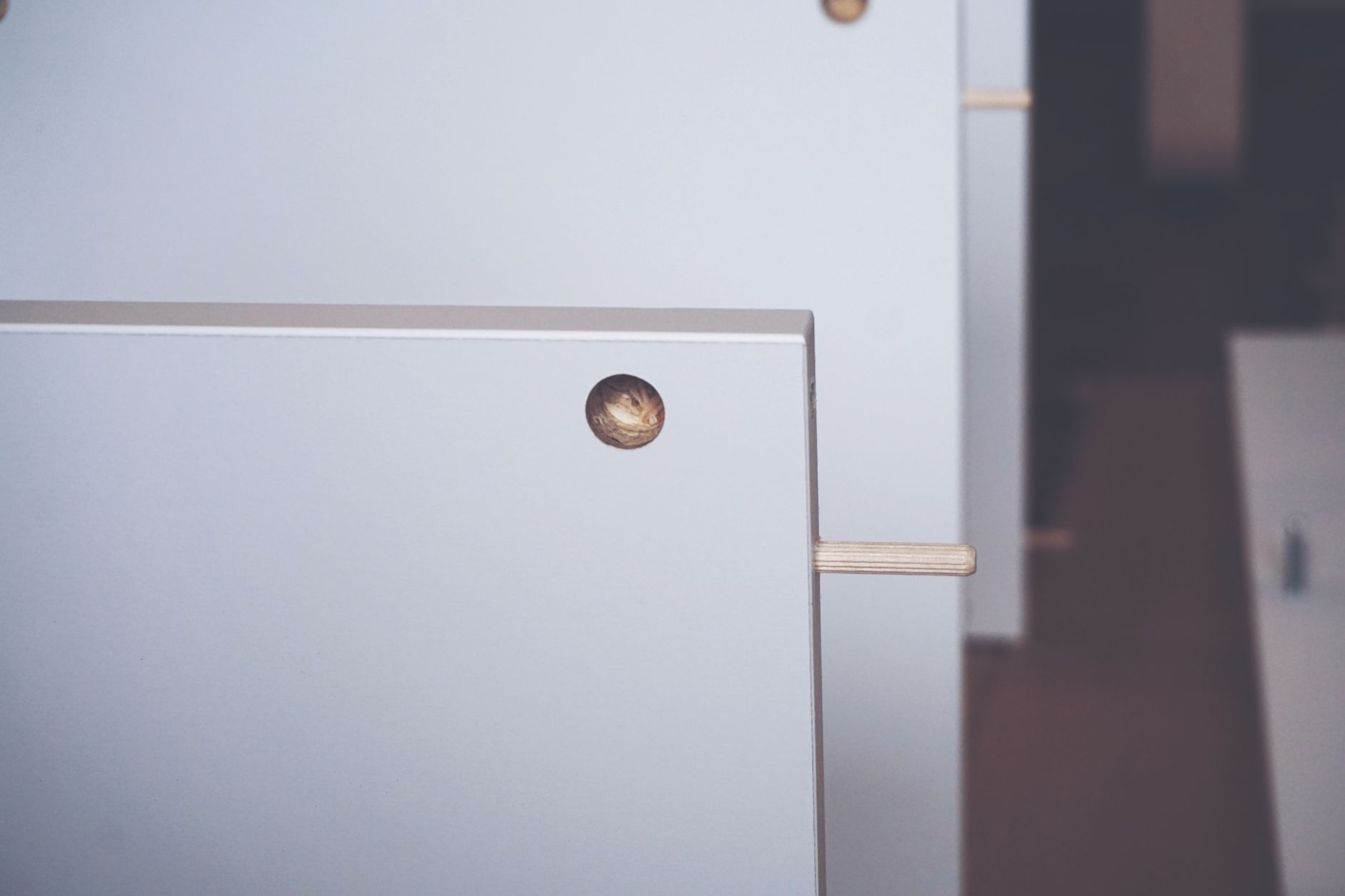
Photo by John (Giannis) Tekeridis on Pexels
The first time a kitchen order lands in your driveway, the pallet is bigger than you pictured and the delivery driver is not staying to help. That moment is where the RTA vs pre-assembled cabinets decision stops being a spreadsheet line and starts being a Saturday. Price gets all the attention, but the thing that actually changes your week is how those boxes arrive, how much room they take up, and how many hours stand between the pallet and a door that closes straight.
Short answer: ready-to-assemble cabinets ship flat, survive freight better, fit through tight spaces, and ask you for a few hours of patient screwdriver work per box. Fully assembled cabinets arrive as finished three-dimensional boxes you lift into place the same day, at the cost of far more shipping volume, more handling risk on the corners and face frames, and a bigger staging area in your house. Both can end up as the same kitchen on the wall. The difference is where the labor and the risk sit.
If you want to look at both formats side by side while you read, RaraRTACabinets sells factory-direct kitchen and closet cabinets in both ready-to-assemble and fully assembled versions, shipped from warehouses around the US — which makes it a useful place to compare the two options in the same door style instead of guessing across brands.
What actually arrives at your door?
An RTA cabinet comes as a flat carton: two side panels, a back, a bottom deck, stretchers or a top rail, a face frame (on framed cabinets), doors, drawer parts, hinges, hardware and instructions. The carton is typically a few inches thick and stacks like plywood. A 10x10 kitchen's worth of RTA boxes will often fit in a single-car garage with room to walk.
A pre-assembled cabinet arrives already built: box glued and fastened, face frame attached, doors hung, drawers installed, usually with corner protectors and a cardboard shell. It's heavier per unit, far bulkier, and you're paying freight on mostly air.
That volume difference drives a lot of downstream consequences people don't anticipate:
- Delivery method. Assembled cabinets for a full kitchen almost always mean freight on a pallet with a liftgate, and someone has to be home to inspect and sign. RTA for the same kitchen is often still freight, but smaller orders can ship as parcel cartons.
- Access. Narrow stairwells, apartment elevators, galley hallways, a 30-inch basement door — flat cartons go places built boxes won't. If your kitchen is up a tight turn, this alone can decide it.
- Staging space. Built boxes need floor area for the duration of the install. Flat cartons can lean against a wall until the day you need them.
- Two-person lifts. An assembled 36-inch sink base or a tall pantry is awkward and heavy. RTA components are carried in one hand at a time.
Which one is more likely to show up damaged?
This is the part first-time buyers underestimate, and it cuts in a direction that surprises people: flat-packed cabinets generally travel better. A flat carton has no protruding corners, no hung doors to rack out of square, and nothing cantilevered to take a forklift tine. Assembled cabinets have all of those, plus more surface area exposed to a strap or another pallet sliding into them.
The flip side is what damage means for each format. If one RTA panel arrives dinged, you request that panel. If an assembled cabinet arrives with a cracked face frame or a crushed corner, the whole unit has to go back and come again — and that's a big, heavy, slow replacement. With RTA, the replacement is usually a flat box that ships quickly.
How to inspect a delivery either way
Do this before the driver leaves, regardless of format. It's the single highest-value fifteen minutes of the project.
- Photograph the pallet still strapped, from all four sides, before anything is cut open.
- Walk the stack for crushed corners, punctures, water staining along the bottom edge, and shrink wrap that's torn in a way that suggests a fall.
- Count cartons against the packing list. Short shipments are far more common than damaged ones.
- If anything looks wrong, write the specific damage on the delivery receipt before signing. "Subject to inspection" is weaker than "carton 7 crushed on left corner."
- Open and check doors and drawer fronts within the window the seller specifies — finish damage is easiest to resolve when reported fast.
One field note from people who've done this twice: open every carton early even if you're not installing for two weeks. Discovering a missing hinge cup on install day is a different problem than discovering it on delivery day.
How long does RTA cabinet assembly really take?
Honest ranges, because this is where optimistic math ruins weekends. Your first cabinet will take noticeably longer than your tenth — most of the time is learning the system, not doing the work.
- First box: 45 to 60 minutes while you read everything twice.
- Standard base or wall cabinet once you're in rhythm: roughly 15 to 30 minutes.
- Drawer bases and tall pantries: longer, sometimes double, because of drawer slide alignment and more parts.
- A typical 10x10 kitchen: plan a full day for two people, or a weekend for one. Add time if you're also removing an old kitchen.
Note that assembly is separate from installation. Hanging, shimming, leveling and scribing cabinets to a wall takes about the same effort in both formats. Choosing assembled cabinets removes the build step, not the install step — and the install step is the one that needs skill. If you were hoping assembled boxes would turn this into a no-skill job, that's the expectation to adjust.
Tools you'll want for RTA
Nothing exotic, but having these on hand before you start is the difference between a smooth day and three trips to the hardware store.
- Cordless drill plus a separate driver, or at minimum a second battery, so you're not swapping bits constantly
- Square-drive and Phillips bits to match the hardware the manufacturer supplies
- A rubber mallet for cam and dowel joints
- Clamps — two bar clamps or a corner clamp keep boxes square while you fasten
- A framing square and a tape measure to check diagonals
- Wood glue, if the instructions call for it on dowel joints
- A level and shims for the install phase
- Moving blankets or flattened cardboard to work on so you don't scuff finished faces
The skill required is low. The patience required is moderate. If you can follow a numbered diagram and resist the urge to fully tighten every screw before the box is square, you can assemble cabinets.
When is paying for pre-assembled genuinely worth it?
Plenty of advice treats assembled cabinets as the lazy option. That's unfair — there are situations where it's clearly the right call:
- The kitchen is out of commission and the clock is loud. A rental turnover, a house going on the market, a family of five without a sink. Days matter more than dollars.
- You've hired an installer billing by the hour. Paying a pro to assemble boxes on site often costs more than the assembled upcharge, and they'll be happier for it.
- Grip strength, back or shoulder limitations make repetitive driving hard. Assembly is a lot of small, repeated motions.
- Small order. Three cabinets in a laundry room? The volume penalty barely registers and the convenience is real.
- You genuinely have no workspace. No garage, no spare room, winter outside. Building boxes in a living room is grim.
Conversely, RTA makes the most sense when you have a staging area, a helper, a flexible timeline, a tricky access route, or you simply want more cabinet for the same outlay. It's also the better call if you're doing a phased remodel, since flat cartons store easily for months.
What to look for on the product page before ordering
Format is one decision; build quality is another, and it's where you should spend your attention. Whatever you're comparing, scan the spec list for these:
- Box construction: plywood versus particleboard sides, and the thickness. Half-inch or thicker plywood sides are the usual marker of a sturdier box.
- Back panel: full-depth plywood back versus a thin panel with a hanging rail. Matters for how it hangs and holds.
- Drawer box: solid wood with dovetail joinery versus stapled. Also check for undermount, soft-close slides and their weight rating.
- Doors: solid wood versus MDF center panels, and whether the finish is a catalyzed/conversion coating.
- Hinges: six-way adjustable, soft-close, and whether they're included.
- Assembly system: cam-lock, dowel-and-glue, or metal clip. Each builds differently and affects your time estimate.
- Finish consistency: whether the line is available in both RTA and assembled, so the door style you love isn't locked to one format.
- Shipping origin and lead time: which warehouse serves your state and whether the sizes you need are in stock together — split shipments stall installs.
- Returns and damage policy: the reporting window, whether they ship replacement parts versus whole units, and who pays return freight.
Order a door sample before committing if the seller offers one. Finish on a screen is not finish in your kitchen light, and a sample costs you a week, not a kitchen.
Common questions
Are RTA cabinets as strong as pre-assembled cabinets?
Strength comes from materials and joinery, not from who did the assembly. An RTA cabinet built from plywood with glued dowels and a full back can be sturdier than an assembled particleboard box. Compare side thickness, back panel type and drawer joinery rather than the format. Assembling carefully — square, glued where specified, fully seated — matters more than where it was built.
How much space do I need to assemble kitchen cabinets?
Plan on a clear area of roughly 8 by 10 feet with a padded work surface, plus somewhere to stack finished boxes out of the way. A garage, basement or empty dining room works. You'll also want room to open cartons flat. If you can't clear that space for a weekend, assembled cabinets are a reasonable trade.
Do fully assembled cabinets cost more to ship?
Generally yes, because freight is priced on volume as much as weight, and a built cabinet is mostly air. Assembled orders usually require palletized freight with a liftgate and an appointment, while flat cartons pack tighter and sometimes ship as parcels. Check whether the seller quotes shipping separately or builds it into the listed price before comparing totals.
Where to start looking
If you're still weighing formats, the most useful thing you can do is open one door style and read both spec sheets — RTA and assembled — against the checklist above. Our flock has RaraRTACabinets in the lineup for exactly that: factory-direct kitchen and closet cabinets in both formats, shipped from US warehouses, with enough spec detail on the page to judge the box rather than the photo. Browse at your own pace — kitchens reward slow decisions.