Level 2 Home EV Charger: Amps, Breaker and Plug Checks
How to choose a Level 2 home EV charger by amperage, breaker size and plug type — panel capacity, NEMA 14-50 vs hardwired, and cable length checks.
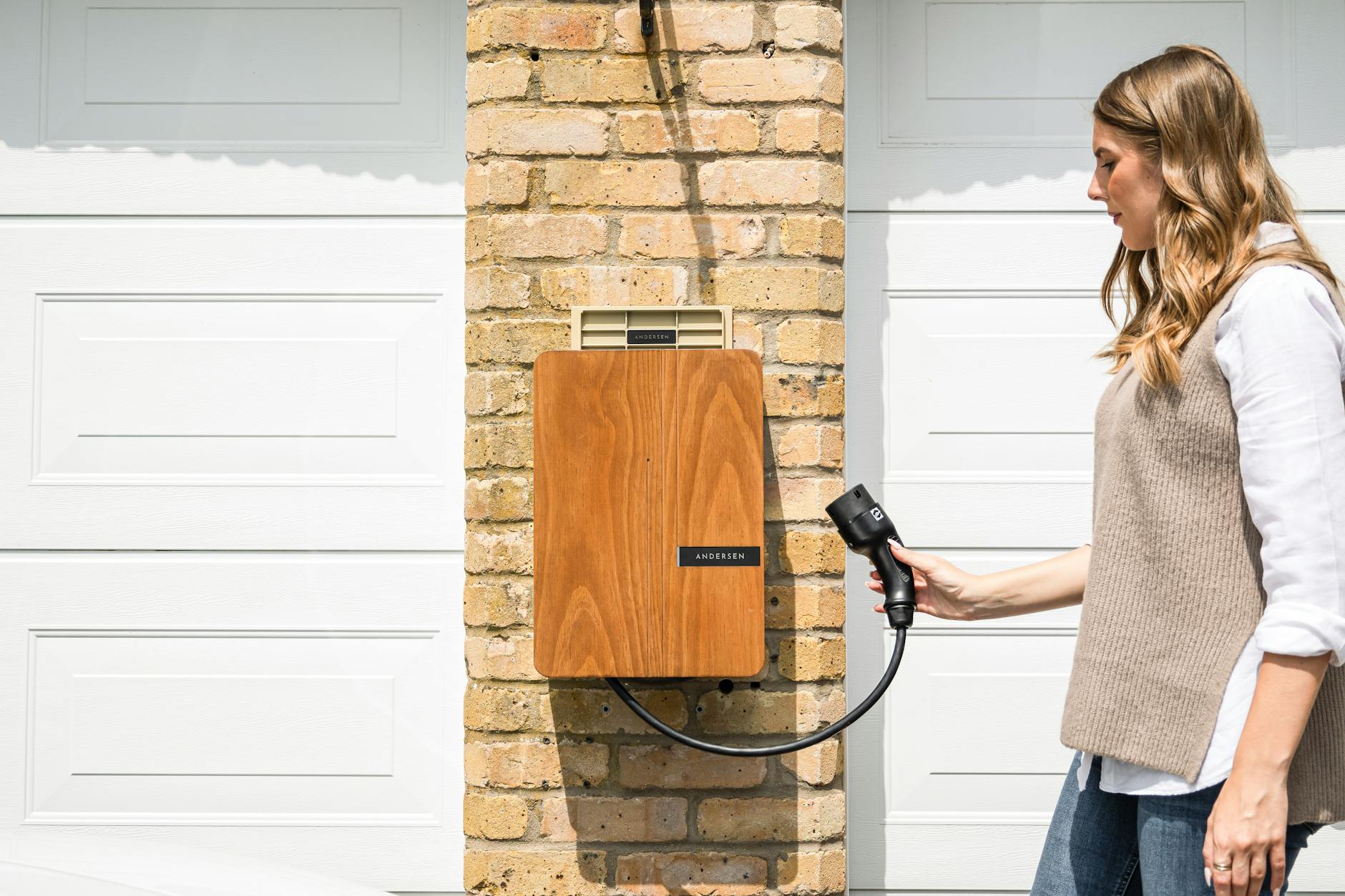
Photo by Andersen EV on Pexels
The box on the shelf says 48 amps. Your electrical panel, quietly, says otherwise. That gap is where most home charging projects go sideways — and it's why choosing a Level 2 home EV charger starts with a walk to the panel, not a scroll through brand names.
Here's the short answer: pick your amperage first, based on what your panel and breaker can actually support, then pick the plug type — a NEMA 14-50 outlet unit if you want portability and a simpler install, or a hardwired unit if you're going above 40 amps of continuous draw. A charger's breaker must be rated at least 125% of the charger's continuous output, so a 40-amp charger needs a 50-amp circuit and a 48-amp charger needs a 60-amp circuit. Everything else — app features, cable jacket, screen — is a preference. The circuit is the constraint.
What amperage do you actually need for home charging?
It's tempting to buy the biggest number available, on the theory that faster is always better. But charging speed at home is a question of hours you're asleep, not minutes you're waiting.
Rough math worth memorizing: a 240-volt circuit delivers roughly its amperage times 240, minus a little loss. So a 32-amp charger puts out about 7.7 kW, a 40-amp about 9.6 kW, and a 48-amp about 11.5 kW. Most EVs gain somewhere in the range of 25 to 40 miles of range per hour at 40 amps. Overnight, that's a full battery from nearly empty for the vast majority of drivers.
Which means the real question isn't "how fast can I go," it's "does my driving pattern ever exceed what a slower circuit gives me overnight?" A few honest scenarios:
- You drive under 40 miles a day and park 10+ hours. A 16 to 32-amp unit is plenty. You will almost never notice the ceiling.
- You drive 60 to 100 miles a day, or share the charger between two EVs. 40 amps is the sweet spot — meaningfully faster, still installable on a 50-amp circuit.
- You have a large-battery truck or SUV, or you frequently come home nearly empty and leave again in a few hours. 48 amps earns its keep, if your panel allows it.
One more limit that surprises people: your car's onboard AC charger caps the speed regardless of what the wall can deliver. Plenty of EVs accept only 7.7 kW or 11 kW on AC. If your vehicle tops out at 7.7 kW, a 48-amp charger will simply run at 32 amps. Look up your model's "maximum AC charging rate" before you pay for headroom you can't use. Buying a higher-amperage unit can still make sense if you expect to change cars, but know that's what you're paying for.
Adjustable amperage is the feature that ages well
The most useful spec on a home charger listing is a dial or app setting that lets you cap output — say, a 48-amp-capable unit you can set to 24, 32 or 40 amps. That flexibility means you can install on the circuit you have now, then turn it up if you upgrade the panel or move. When you're comparing units, whether at a big-box retailer or a specialist like EVDANCE's range of Level 2 home chargers and adapters, check the product page for the selectable current range rather than just the headline number.
How do you check your breaker and panel capacity?
This is the part buyers skip, and it's the part that decides everything. You are looking for three things.
1. Panel service size
Open the panel door and read the main breaker at the top — it'll say 100, 125, 150 or 200. That's your total service in amps. A 200-amp service in a modest house usually has room for a 50 or 60-amp charger circuit. A 100-amp service in an all-electric home with a heat pump, electric range, dryer and water heater may not, at least not without help.
2. Free breaker spaces
A 240-volt charger circuit needs a double-pole breaker, which occupies two adjacent slots. Count your empty slots. If you have none, don't panic — tandem breakers or a subpanel are common solutions, and an electrician will tell you which applies. Also check whether your panel brand accepts current breakers; some older panels are hard to source parts for.
3. Existing load
Electricians run a load calculation to see whether adding a charger pushes you over. If it does, there are three well-trodden paths: install a lower-amperage charger, add a load-management device that pauses charging when the house draws heavily, or upgrade the service. Load management is worth asking about specifically — some chargers support it natively and it can save a lot of trenching.
Field note from the flock: get the load calculation before you buy, not after. It is a short conversation with an electrician and it converts a shopping guess into a spec.
The 125% rule, in plain numbers
Continuous loads get an 80% derate, which means the breaker is sized 25% above the charger's output. Memorize this table and you'll read product pages faster:
- 16-amp charger → 20-amp breaker
- 24-amp charger → 30-amp breaker
- 32-amp charger → 40-amp breaker
- 40-amp charger → 50-amp breaker
- 48-amp charger → 60-amp breaker
- 80-amp charger → 100-amp breaker (rare in homes)
Wire gauge follows the breaker, and distance matters — a long run from panel to garage may need heavier wire than the minimum to keep voltage drop in check. That's a licensed-electrician decision, and permits and inspection are normal parts of the job in most jurisdictions. Don't treat them as optional paperwork.
Plug type checks: NEMA 14-50, 6-50 or hardwired?
Now the outlet question. Look at what's on the wall — or what could be.
NEMA 14-50 is the four-prong, 50-amp receptacle common in RV pedestals and behind electric ranges. It's the most widely supported plug on portable Level 2 chargers, and it supports up to 40 amps of continuous charging. If you already have one in the garage, you may be a plug-in away from home charging.
NEMA 6-50 is the three-prong 50-amp welder outlet. Also common, also good for 40 amps, but fewer chargers ship with that plug natively — you'd want an adapter or a swappable plug design.
NEMA 14-30 and 10-30 are dryer outlets, good for 24 amps of charging. Slower, but a legitimate option if the dryer circuit is near the parking spot and you're comfortable not using both at once.
Hardwired means the charger's cable connects directly into a junction inside the unit — no plug, no receptacle. Above 40 amps this isn't a preference, it's usually the requirement: 48-amp charging is not permitted on a standard 50-amp receptacle. Hardwiring is also the better call outdoors and in damp garages, since you remove a connection point.
What to look for on the product page
- Connector standard: J1772 covers essentially every non-Tesla EV in North America, and Teslas via the included adapter. NACS-native units are appearing; if you drive a Tesla, either route works with the right adapter.
- Cable length: 20 to 25 feet is the comfortable range. Measure from the mounting spot to your car's charge port with the car parked how you actually park it — nose-in, backed in, both.
- NEMA enclosure rating: NEMA 4 or better for outdoor mounting; check the stated operating temperature range if you have real winters.
- Safety listing: UL, ETL or a comparable third-party listing. This is non-negotiable and insurers may ask.
- Adjustable output and load management: covered above, and the single best hedge against a panel surprise.
If you're comparing units side by side, specialist shops tend to list amperage, plug type and cable length in one block, which makes the sorting easier. EVDANCE stocks plug-in and hardwired home units plus portable chargers and adapters — handy if you land on a 14-50 install and want a travel unit that shares the same receptacle standard.
Common questions
What size breaker do I need for a Level 2 EV charger?
Size the breaker at 125% of the charger's continuous output. A 32-amp charger needs a 40-amp breaker, a 40-amp charger needs a 50-amp breaker, and a 48-amp charger needs a 60-amp breaker. Wire gauge is matched to the breaker and to the run length by a licensed electrician, who should also confirm your panel has capacity and free slots.
Can I plug a Level 2 charger into an existing dryer outlet?
Often yes, at reduced speed. A NEMA 14-30 or 10-30 dryer circuit supports about 24 amps of charging, roughly 5.8 kW. You'll need a charger with the matching plug or a proper adapter, and you should not run the dryer and the charger simultaneously on that circuit. Have an electrician confirm the wiring and outlet condition first.
Is a hardwired EV charger better than a plug-in one?
They serve different needs. Hardwiring is required above 40 amps, removes a connection point outdoors, and looks tidier. Plug-in units on a NEMA 14-50 are easier to swap, take with you when you move, and simplify replacement under warranty. If you're staying at 40 amps or below and want flexibility, plug-in is a reasonable choice.
Sort out the panel, the breaker size and the plug type, and the shopping part gets refreshingly boring — you're just matching numbers. When you're ready to compare units against the circuit you've actually got, EVDANCE is the EV charging store in our lineup, and it's a sensible place to browse amperage options, cable lengths and plug configurations without the guesswork.