Colored Wigs and Skin Tone: How to Pick Your Shade
A practical guide to choosing colored wigs for your skin tone: reading undertone, why root shadowing matters, and how dye lots shift on human hair.
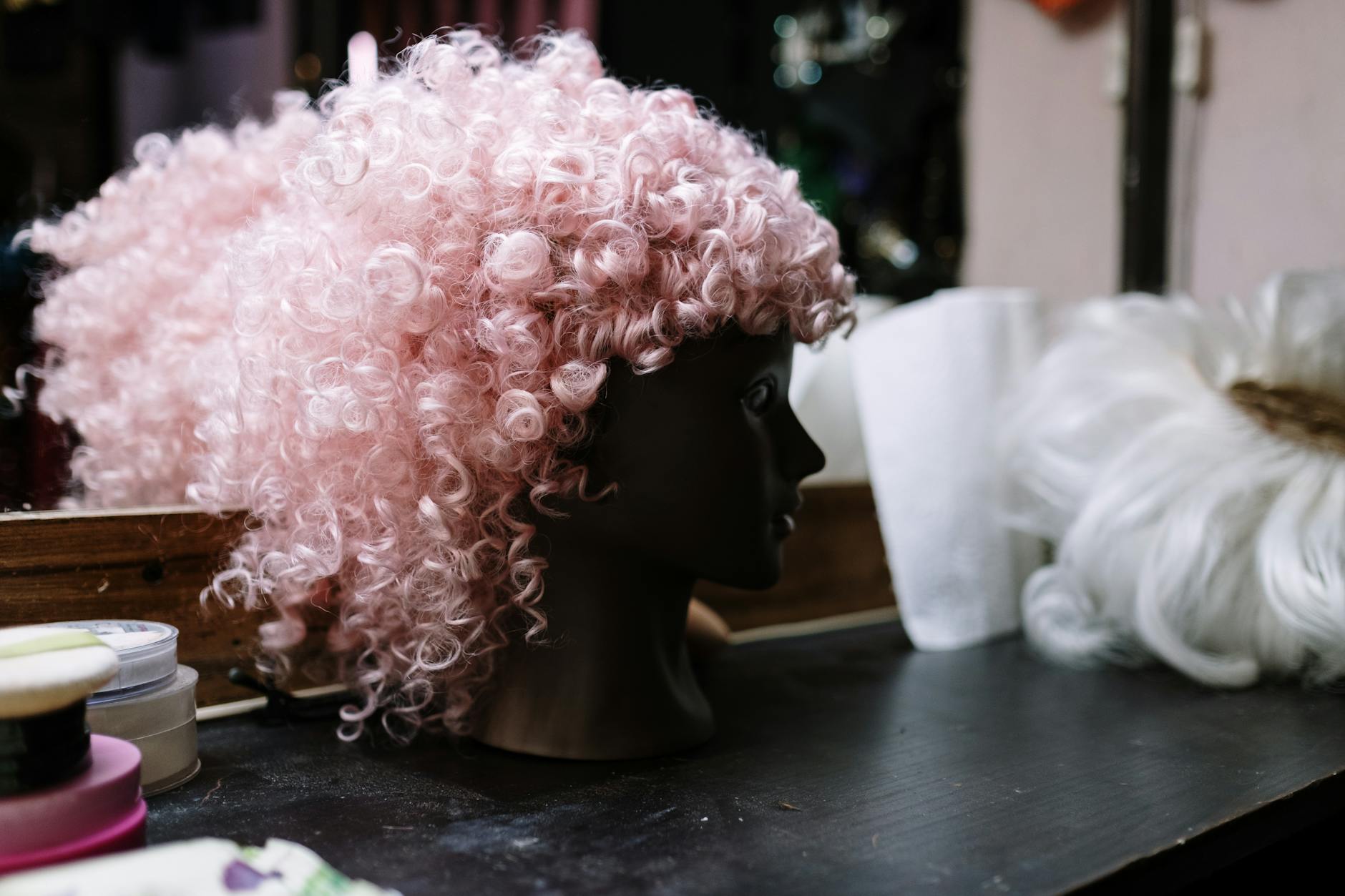
Photo by cottonbro studio on Pexels
The wig arrives, you open the bag, and the color is exactly what the photo showed — and it still looks wrong on you. That gap between the product image and the mirror is almost never a quality problem. It's a matching problem. Choosing colored wigs for your skin tone comes down to three things the photo can't tell you: your undertone, whether the color has a shadowed root, and how that particular dye lot landed on that particular batch of hair.
The short answer, if you want it now: match the temperature of the color to your undertone, not the brightness. Cool undertones (pink, red, blue casts in the skin) sit comfortably under ash browns, cool blondes, burgundy, plum, jet black and silver. Warm undertones (golden, peachy, yellow casts) come alive with honey, caramel, copper, ginger, chestnut and warm chocolate. Neutral undertones get the widest menu and should judge on depth instead — how light or dark the color reads next to the face. Everything below is how to figure out which camp you're in and how to read a listing accurately before you buy.
How do you find your undertone before buying a colored wig?
Undertone is the permanent cast underneath your surface color. It doesn't change when you tan, and it's what decides whether a copper wig makes you glow or makes you look tired.
Three quick reads, done in daylight near a window — never under a bathroom's yellow bulbs or a store's fluorescents:
- The jewelry test. Hold gold against your jaw, then silver. Whichever one makes your skin look brighter and more even is pointing at your temperature. Gold flatters warm, silver flatters cool, and if both look fine, you're likely neutral.
- The white-paper test. Hold a sheet of plain white paper next to your bare face. Warm skin looks yellow or golden by comparison. Cool skin looks pink or slightly blue. Neutral looks beige — neither pull is obvious.
- The vein check. On the inside of the wrist, greenish veins lean warm, blue or purple lean cool, and a mix means neutral. It's the least reliable of the three, so treat it as a tiebreaker.
Do all three. If two agree, that's your answer. And separate undertone from depth — depth is how light or dark your skin is, and it's a different decision. Deep skin with cool undertones is stunning in true burgundy and blue-black; deep skin with warm undertones does beautiful things with copper and honey-caramel. Depth tells you how much contrast you can carry. Undertone tells you which direction to go.
Contrast: the step most people skip
A high-contrast color (platinum on deep skin, jet black on very fair skin) is a statement and it will draw every eye straight to your face. That's great if you want it. If you want the color to look like it grew there, stay within two or three shades of your natural depth and change only the temperature. Low-contrast color is far more forgiving on days when you haven't done a full face of makeup.
Why does root shadowing make a bright color look natural?
Look at anyone whose color genuinely suits them and you'll notice their hair isn't one flat shade from scalp to ends. The roots are darker. Light hits the mid-lengths differently than the ends. A wig dyed one solid tone from part to tip reads as a wig from across the room, no matter how good the hair is — because scalps don't grow neon at the hairline.
Root shadowing (sometimes labeled shadow root, rooted, or dark root) is a deliberately darker band at the base, usually an inch or two, blending into the main color. It does three useful things at once:
- It mimics natural regrowth, so the part looks like skin and hair rather than a dyed cap.
- It creates a buffer between a bold color and your face, which softens a shade that might otherwise clash with your undertone.
- It buys you time — a rooted wig doesn't develop an obvious "line" the way a solid platinum does when it sheds or the part shifts.
This matters most on light and bright shades. Platinum, silver, ginger and pastel all benefit enormously from a shadowed root. If you're shopping the colored human hair wigs and lace pieces at Ishow Hair, look for rooted options in the listing photos and check whether the darker band is visible in the close-up of the parting. It's one of the fastest ways to tell a well-constructed color from a flat one.
What to look for on the product page
Scroll past the model shot and read the detail images like field notes:
- A close-up of the parting. You want to see the knots and the base, not a filtered halo.
- At least one photo in natural light. Ring lights flatten tone and hide warmth or ashiness completely.
- Video, if there is one. Color reads differently in motion; a flat dye job shows itself the second the hair swings.
- The hair origin and texture. Straight hair reflects more light and looks lighter than the same dye lot on a body wave or curly texture.
- Whether the lace is pre-bleached or pre-plucked. A bold color against unbleached knots creates a visible dotted line at the hairline.
Why do dye lots read differently on human hair?
Here's the thing about human hair that synthetic buyers find surprising: it isn't a uniform material. Every bundle comes from different donors with different natural pigment, different porosity, different cuticle condition. When a colorist lifts and deposits on that hair, the same formula lands slightly differently each time.
So two wigs listed under the same color name, ordered months apart, can be a half-shade off from each other. This isn't a flaw — it's what happens with real hair and it's the same reason a salon color never comes out identical twice. But it has practical consequences for you as a buyer.
Order in one go. If you want a wig and matching bundles, or two of the same wig for rotation, buy them together rather than months apart. Same order, much better odds of the same lot.
Expect photos to be optimistic on the cool end. Studio lighting and white balance tend to push blondes cooler and browns more neutral than they are in daylight. Assume a fraction more warmth than you see, especially in honey, beige and "ash" blondes on human hair — ash is genuinely hard to hold on hair that has any underlying red.
Bright fashion colors fade toward their base. Burgundy softens toward red-brown. Blue drifts toward teal, then green-gray. Pastels wash toward beige. That fade is normal on human hair and it's another argument for picking a shade whose faded version you'd also be happy wearing.
Shades that tend to be forgiving
If you're buying your first colored piece and you'd rather not gamble:
- Warm undertones: honey brown, caramel highlights on a dark base, chestnut, soft copper. Highlighted or balayage styles hide any mismatch better than solid color.
- Cool undertones: ash brown, cool-toned burgundy, espresso, blue-black, mushroom brown. Approach warm golden blonde with caution — it can pull brassy against pink skin.
- Neutral undertones: almost anything; choose by depth and by how much contrast you want against your face.
- Anyone unsure: a highlighted or ombré piece with a dark shadowed root, where the color starts below the cheekbone and never touches the face directly.
Does the color that suits you change with makeup and wardrobe?
Yes, and this is the escape hatch nobody mentions. A wig that felt slightly off with bare skin often looks intentional the moment you add a lip in the same temperature family. Copper hair with a warm terracotta lip. Burgundy hair with a cool berry. The color stops competing and starts looking like a choice.
The same goes for what you wear. If your closet is mostly cool jewel tones, a warm copper wig will fight half your outfits. Take a quick look at what's actually hanging in there before you commit to a shade that only works with three shirts you own.
One more practical note: a colored human hair wig can be toned, glossed or deepened later by a stylist, but it generally can't be lightened much further without stressing hair that's already been processed. Buy at or slightly lighter than the shade you want, not several levels above it hoping to fix it at home.
Common questions
What wig color is best for warm skin tones?
Warm skin tones — the ones with golden, peachy or yellow casts — generally look best in colors on the same side of the wheel: honey blonde, caramel, copper, ginger, chestnut and warm chocolate brown. Highlighted or balayage styles are especially forgiving because the lighter pieces sit away from the face. Very ashy or blue-based shades can make warm skin look dull or slightly sallow.
Should I get a colored wig with a dark root?
For most people, yes — especially with light or bold colors. A shadowed root mimics natural regrowth, makes the part look like real scalp, and creates a buffer between a bright shade and your face, which softens any clash with your undertone. Solid, root-to-tip color can look striking, but it needs a well-bleached, well-plucked hairline to read naturally.
Will my colored human hair wig match a wig I bought before?
Not necessarily. Human hair comes from different donors with different natural pigment and porosity, so the same dye formula lands slightly differently on each batch. Two wigs in the same listed shade, ordered months apart, can be a half-shade off. If you want matching pieces or bundles, order them in a single purchase so they're more likely to come from the same lot.
If you're ready to start comparing shades, spend a few minutes with the detail photos rather than the model shots — the parting close-up and any natural-light image will tell you more than the color name ever will. The colored, glueless and lace front human hair wigs at Ishow Hair are a reasonable place to browse while you figure out which direction your undertone is pointing. No rush — the right shade is worth a second look.